Showing posts with label bud vase. Show all posts

Tuesday, 20 September 2022

Steve's History of Things 7 - The Pottery Detective


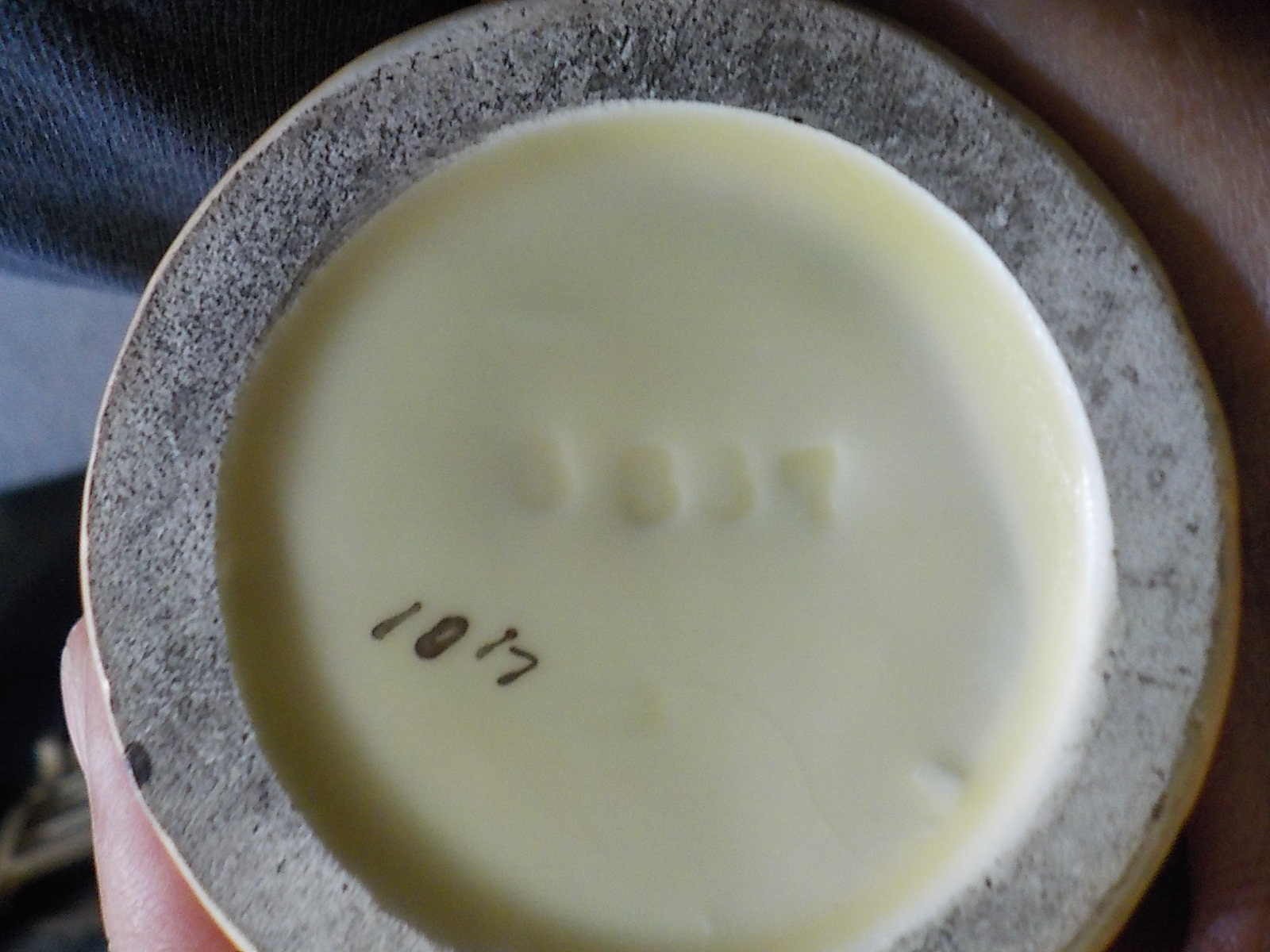
Sometimes, an item comes into your possession that requires a real bit of detective work. Such was the case with this vase, which was part of a mixed lot. The first step in identification is to turn the thing over and have a look at the base. Here, you will usually find some sort of makers mark which will lead you straight to the source. This one had nothing bar an impressed number (L101) which, I'm guessing, is the mould number, and the number 401 hand painted in gold. Not a lot to go on.


The next thing to try is a Google image search, and here you have to be creative with your search terms. 'Vase' on it's own is too vague, so what else can we say about it? It has two handles, which narrows it down a bit. Probably antique (the style is Art Nouveau from the late 19th-early 20th century) and it could be described as an urn vase or a bud vase, although at 21cm tall it's a bit big for the latter. Let's settle on 'antique double handled art nouveau ceramic floral urn vase'.


That threw up quite a few similar examples. The graduation of shading from ochre to cream seems to be particularly favoured by Austrian ceramics manufacturers. So, if we add Austrian into our search term... and substitute porcelain for ceramic (see 6 Chodov Porcelain). There are plenty of lookalikes. Those marked Royal Wettina, designed by Robert Henke in particular. I notice that a number of these items on sale do not show any base marks, but without them I would not claim that this vase of mine is Royal Wettina, merely in the style of Robert Henke.


It has also given me a good guideline for pricing and £25 seems fair (£22.50 to you, as a reader of this blog – use the coupon below).


Happy antiques hunting,


Steve


Steve's History in association with Steve's Vintage Collectables


10% Off all this item, exclusively for readers of this blog. Use this link

 https://www.etsy.com/uk/shop/SVCwithEtsy?coupon=SVCBLOG


Previous posts in Steve's History of Things


1 Introduction

2 Five Good Reasons to Buy EPNS

3 Fieldings Musical Tankards

4 Jasperware

5 Blood Pressure Monitors

6 Chodov Porcelain


Tuesday, 12 July 2022

5 Good reasons to buy EPNS (Electro-plated Nickel Silver)


EPNS is a bling thing! Antiques for fun, if you like. And pretty well indispensable if you're doing a retro makeover.


  1. It looks classy. This is all EPNS except for the toothpick holder which is solid silver. Can you spot the difference?

  2. It comes in various styles: from the chintzy Victorian up to 1901; then a simpler style evolved, influenced by the Arts & Craft and Art Noveau movements; and finally the more angular, offbeat Art Deco of the mid twenties to 1930s came through. Choose your style!

  3. It’s durable. Obviously. It still looks good after 100 years.

  4. It’s affordable. A modern manufactured tea pot, milk jug and sugar bowl in stainless steel will set you back about £30. The same set, made 100 years ago, is also about £30 and you get the lovely silver finish, and an antique to boot.

  5. It’s recycling. Why encourage needless manufacturing when an item already exists?


Early 20th Century style tea set


What is it? (The technical bit)


It is a process of coating a metal object with a nickel alloy to which a layer of silver is then overlaid using electrolysis. This compares with silver plating which is simply coating a metal object with a layer of silver. The advantage of EPNS is that the silver doesn’t rub off after a lot of polishing. Silver Plate, on the other hand, refers to an object that is made entirely of a silver alloy (of various degrees of fineness, depending upon the percentage of silver in the alloy). Solid Silver has to be 90% pure as a minimum for silver bullion, 92.5% pure for Sterling Silver (1852-1920), 95.8% pure for Britannia Silver and 99% pure to be described as Pure or Solid Silver.


Is it valuable?


Not yet. EPNS was developed in the 1840s, so anything between then and 1922 would be classified as an antique. There is still a lot of it around but, as it was often melted down as scrap, then certain items may well become collectable in the future. The things to look for, as with any ‘collectable’ will be a makers name or mark.


This mark, for instance, belongs to George Cutts & Sons of Sheffield who were active from 1882 to 1889. Prior to that the mark was just GC (George Cutts) and in 1889 they went bankrupt. Seems the sons didn't have a head for business.

So, if you're giving your dining room or kitchen a retro makeover, don't forget the tableware and go for EPNS! They make stylish wedding presents, too!

10% Off all EPNS items, exclusively for readers of this blog. Use this link

 https://www.etsy.com/uk/shop/SVCwithEtsy?coupon=SVCBLOG 


Find loads more great stuff at Steve's Vintage Collectables

Recent Posts