Showing posts with label ceramics. Show all posts

Tuesday, 20 September 2022

Steve's History of Things 7 - The Pottery Detective


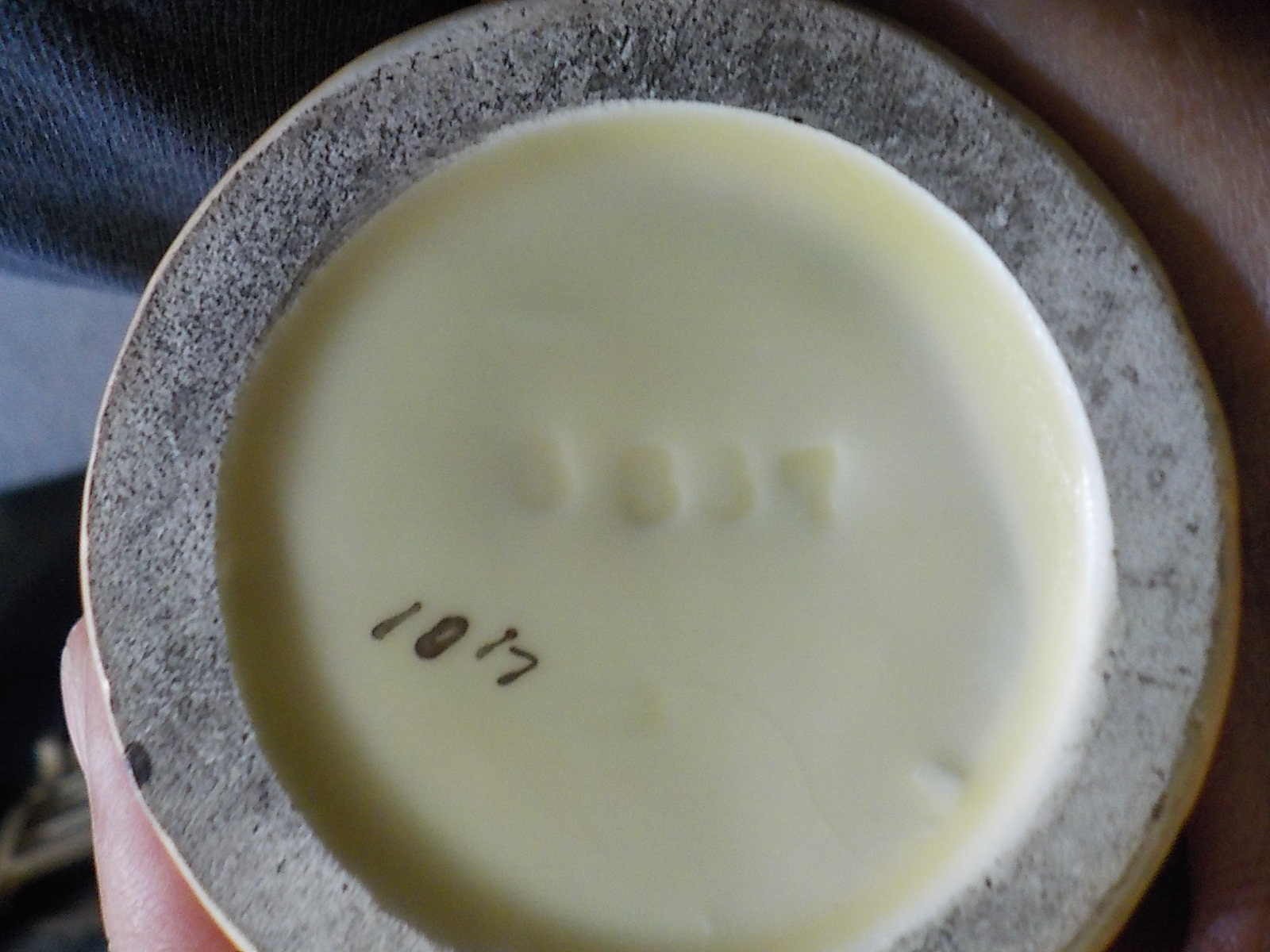
Sometimes, an item comes into your possession that requires a real bit of detective work. Such was the case with this vase, which was part of a mixed lot. The first step in identification is to turn the thing over and have a look at the base. Here, you will usually find some sort of makers mark which will lead you straight to the source. This one had nothing bar an impressed number (L101) which, I'm guessing, is the mould number, and the number 401 hand painted in gold. Not a lot to go on.


The next thing to try is a Google image search, and here you have to be creative with your search terms. 'Vase' on it's own is too vague, so what else can we say about it? It has two handles, which narrows it down a bit. Probably antique (the style is Art Nouveau from the late 19th-early 20th century) and it could be described as an urn vase or a bud vase, although at 21cm tall it's a bit big for the latter. Let's settle on 'antique double handled art nouveau ceramic floral urn vase'.


That threw up quite a few similar examples. The graduation of shading from ochre to cream seems to be particularly favoured by Austrian ceramics manufacturers. So, if we add Austrian into our search term... and substitute porcelain for ceramic (see 6 Chodov Porcelain). There are plenty of lookalikes. Those marked Royal Wettina, designed by Robert Henke in particular. I notice that a number of these items on sale do not show any base marks, but without them I would not claim that this vase of mine is Royal Wettina, merely in the style of Robert Henke.


It has also given me a good guideline for pricing and £25 seems fair (£22.50 to you, as a reader of this blog – use the coupon below).


Happy antiques hunting,


Steve


Steve's History in association with Steve's Vintage Collectables


10% Off all this item, exclusively for readers of this blog. Use this link

 https://www.etsy.com/uk/shop/SVCwithEtsy?coupon=SVCBLOG


Previous posts in Steve's History of Things


1 Introduction

2 Five Good Reasons to Buy EPNS

3 Fieldings Musical Tankards

4 Jasperware

5 Blood Pressure Monitors

6 Chodov Porcelain


Tuesday, 13 September 2022

Steve's History of Things 6 - Chodov Porcelain


Before we begin, Chodov is now a suburb of Prague, capital of the Czech Republic. Previously, the Kingdom of Bohemia occupied the western half of said republic and included Chodov. It was, and is, buried in the middle of Europe, somewhere. Now that we're all vaguely geographically oriented, here is how it all began:


1811 Franz Miessi, a Bohemian mine owner (i.e. a resident of said Kingdom of Bohemia, as opposed to a socially unconventional person or, for that matter, a resident of the small hamlet of Bohemia in Wiltshire), acquired a licence to produce pottery, using clay deposits from his aforementioned mine. He set up a factory for production of same, and ran it quite nicely, thank you, for twenty or more years.


1834 Enter Messrs. Huttner, Dieter, and Schreyerow who were potty about the place and bought it from him. Exit Franz with oodles of the old spondooliks. They renamed the company Huttner and Co. (H & C – a masterful stroke of marketing as they had their brand on every pair of taps, or fawcets, in the English speaking world). Feeling that mere pottery was beneath them, they obtained a licence for the production of porcelain. For those of you who's knowledge of ceramics is a little shaky, pottery is made from natural clay, whereas porcelain is a mixture of clay and kaolin, which makes for a higher quality of pot, both in terms of aesthetics and durability.


1945 After changing hands a couple of times, and surviving a brace of world wars, the factory was nationalized, which did it not one jot of good.


1958 Over the hill came the cavalry, in the shape of Karlovarsky Pottery, who continue to make the distinctive high quality, hand painted, pink porcelain (rosa porzelain) to this day.


At SVC, we have this fine example of an H&C rosa porzelain ginger pot, in its original box, from the 1980s. It's a lovely thing to start a collection with, or would make a beautiful wedding or housewarming present. As usual, blog readers get a 10% discount with the coupon below and there's FREE DELIVERY in the UK. (Delivery to anywhere else in the world would be £14).


10% Off this item, exclusively for readers of this blog. Use this link

 https://www.etsy.com/uk/shop/SVCwithEtsy?coupon=SVCBLOG

Recent Posts