Showing posts with label robin. Show all posts

Wednesday, 14 December 2022

Too Beautiful For Words


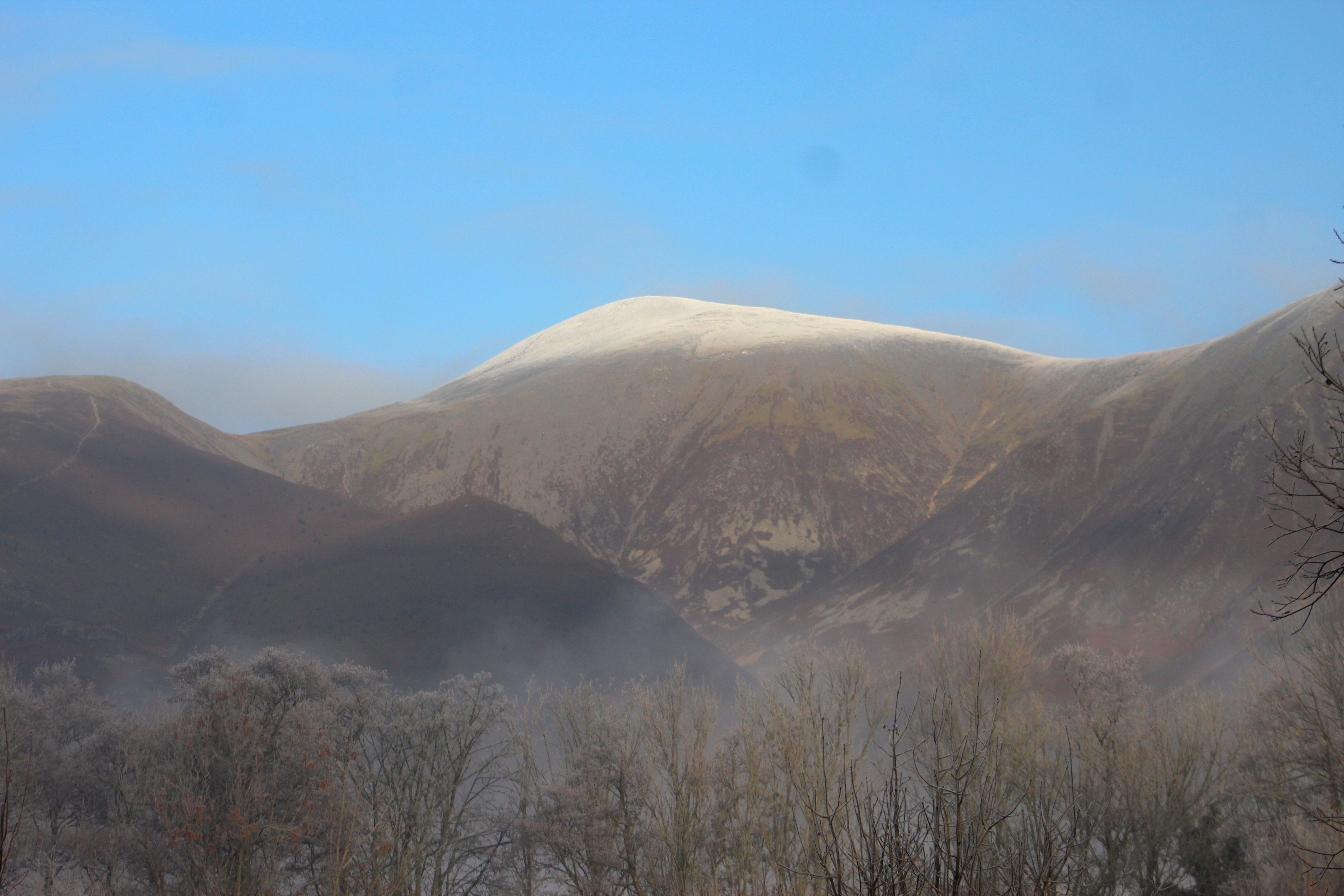
 On a frosty December morning, with temperatures struggling to get to zero, and the sun as dim as an old man's eyes, the landscape is too beautiful for words. So, I'm not going to waffle on this week, I'll let the pictures tell the story for me. Sit back and enjoy this walk, along the banks of the Derwent, from Portinscale to Keswick.


It's the Winter Solstice next week, heralding the joys of Yuletide. However you are celebrating winter, we wish you a happy one. 

Steve, Ishbel, and Mattie

And if you're still searching for Christmas present ideas:


Visit Steve's Vintage Collectables at


SVCwithEtsy


and Steve's Books on Amazon

Thursday, 13 October 2022

The Seventeen Assassins - Poisonous Fungi Special


On the north west corner of Bassenthwaite Lake lies the little known Castle How Hill Fort. This is an Iron Age hill fort and the start of our weekend peregrinations which involved a lot of fungi photography. Mycology, the study of fungi, is a fascinating hobby (Beatrix Potter was a noted mycologist) but, if 'shrooms for the pot are all that interests you, then the first thing you need to know, is how to identify The Seventeen Assassins. OK, so they won't all necessarily kill you, but they will give you an unpleasant time. One such, is this iconic toadstool, Fly Agaric (Amanita muscaria). The muscaria part of its scientific name indicates that it contains muscarine, a poison which causes nausea and sweating and a fair few other unpleasant symptoms. It also contains another nauseating substance called ibotenic acid. This is the one that causes you to lose control of your mind and limbs. It's psychotropic.


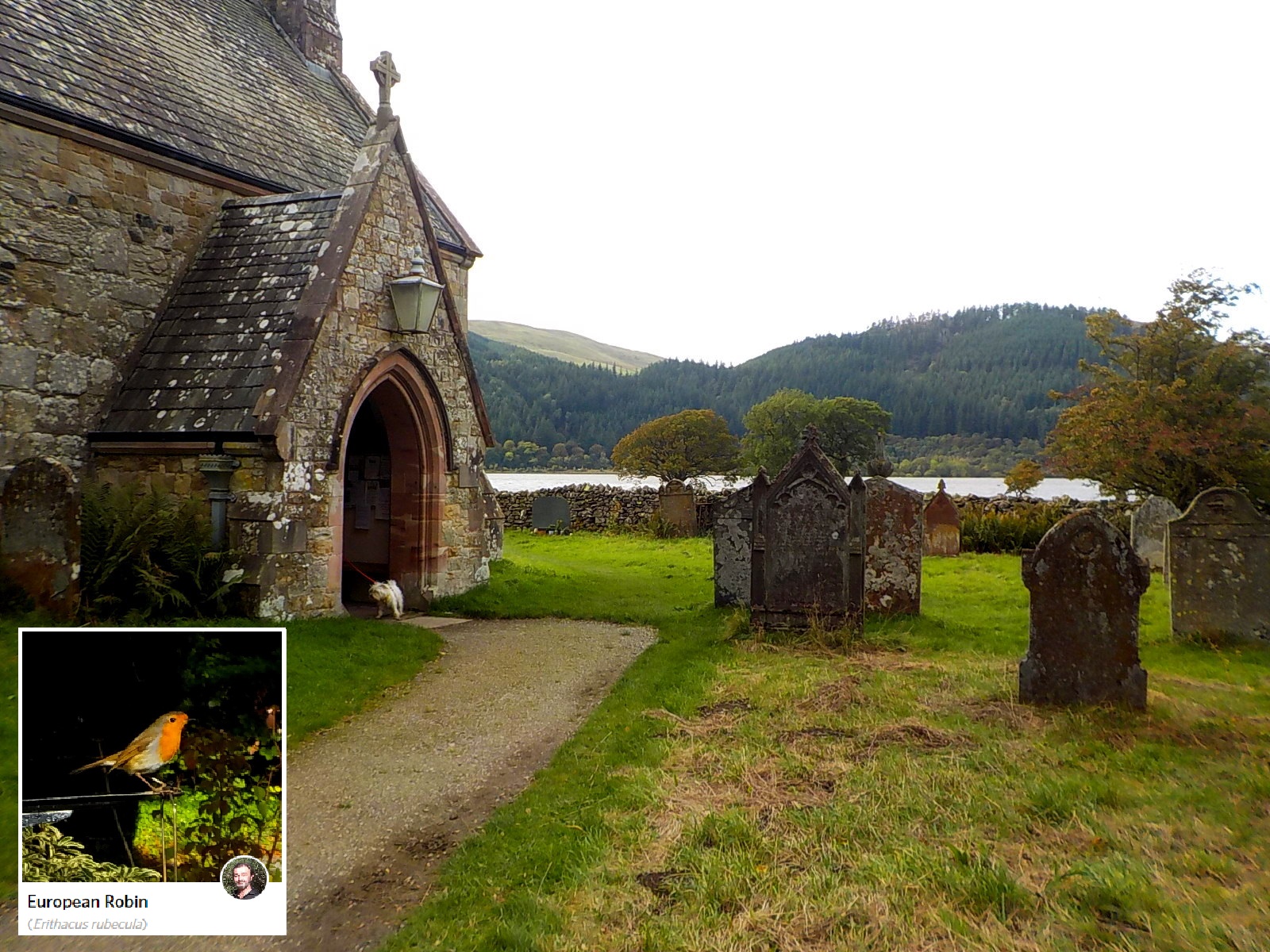
Moving around to the other side of the lake, there is a lovely walk from Ravenscroft, down to St. Briga's church, up by Mirehouse, and then back through Dodd Wood. Here, you will encounter more fungi than you can shake a stick at. Some, such as the Sulphur Tuft (Hypholoma fasciculare), which grows in large clumps on dead wood, is another of The Seventeen Assassins. Again, not deadly, but decidedly unpleasant. The Hairy Curtain Crust, or False Turkey Tail (Stereum hirsutum) is one of the, roughly, 90% of fungi that are neither poisonous nor edible. The trick with mushroom collecting for the pot, is to positively identify the edible and poisonous mushrooms that grow close to your home (many mushrooms do not travel well). You'll do well if you can find half a dozen of each. At the bottom of this post I'll give you links to The Seventeen Assassins to get you started.


Taking our eyes from the ground for a moment, there's a roe deer in the trees, at the edge of that field. This one is a male. You can tell, because the white patch on his rump is vaguely kidney shaped. Females have a heart shaped white patch. Roe deer are the major source of venison. On a foraging note, you don't need a licence to shoot deer in the UK, other than at night, or in the close season. Open season dates for deer can be found here, for those who are into huntin' shootin' and fishin'. Some of you may think that last sentence inappropriate for a nature blog. However, I am of the opinion that humans are a part of nature. We are naturally designed to be omnivorous, and taking meat, as well as plants, from the countryside, is an environmentally friendly option.


I've been bemoaning the lack of insects recently (flying insects have declined by 60% in the UK over the past 20 years). I am now beginning to notice the decline in birds (they have declined by about 20% in Europe and the UK over the past 40 years). As many birds feed their young on insects, the two facts are not unrelated. Today we've seen a few crows, a couple of wood pigeons, and a robin. Thankfully, these iconic little birds are one of the few songbirds to have shown an increase in recent years.


Robins are associated with Christmas, of course, and the more organised of you will already be thinking about Christmas presents. Not just for other people, but for yourselves. Most of us, when asked 'What do you want for Christmas', start with 'um' and finish with 'I'll have to let you know'. Books always make good presents (they are easy to wrap for a start) and I can heartily recommend John Wright's The Forager's Calendar. (A lot of the initial fungi information in this post was culled from the poisonous fungi section of the book, and all stood up to verification). But if foraging is not your thing, and you are merely interested in enjoying nature for its own sake, The Quick Guide to Creepy-Crawlies is a lovely introduction to the smaller, but vitally important, animals with which we share the planet.


All the best,


Steve


Beetles and Butterflies; spiders and scorpions; woodlice and worms. How do you tell them all apart? To say nothing of crane flies, dragonflies, bee flies and yet more butterflies. Are they all flies? If not, why call them so? If you're fascinated but confused by the beautiful world of the very small, then this is the book for you.


82 pages of information on all aspects of the world of minibeasts, with over 100 photographs and illustrations, this book will help you track down and identify any arthropod, in its adult or juvenile state, anywhere in the world.


See all of my books at author.to/SteveDaniels


The Seventeen Assassins


  1. Death Cap (Amanita phalloides)

  2. Panther Cap (Amanita panthrina)

  3. Fly Agaric (Amanita muscaria)

  4. Deadly Webcap (Cortinarius rubellus)

  5. Deadly Fibrecap (Inosperma erubescens)

  6. Dapperlings (Lepiota spp.)

  7. Brown Roll-rim (Paxillus involutus)

  8. Livid Pinkgill (Entoloma sinuatum)

  9. Fool's Funnel (Clitocybe rivulosa)

  10. False Morel (Gyromitra esculenta)

  11. Angel Wings (Pleurocybella porrigens)

  12. Yellow Stainer (Agaricus xanthodermus)

  13. The Sickener (Russula emetica)

  14. Beechwood Sickener (Russula nobilis)

  15. Sulphur Tuft (Hypholoma fasciculare)

  16. Earthballs (Scleroderma spp.)

  17. Bitter Bolete (Tylopilus felleus)


Follow me on Steve's Nature Plus

and also on


Steve's Nature


Steve Daniels Naturalists


Steve Daniels Cumbria


Wednesday, 13 January 2021

Lanthwaite Woods


2021 has arrived and, although we are all still locked down in our little bubbles, there is hope on the horizon. One thing has remained unchanged: the wonders of our natural world are still free to explore for everyone, and even if you don't have magnificent lakes and mountains on your doorstep, there is plenty to see if you look closely. So, come with me, down to Lanthwaite Woods and we'll see what we can find.


Trees, obviously, like these magnificent Larches. Quite easy to recognise, they are very tall and straight with a small crown at the top, and their thin branches stick out at right angles from the trunk. Unusually, they are deciduous conifers. That is, they are pine trees which lose their needles in winter. They are very hardy and can be found growing right up to thye polar ice cap.


Not much in the way of fungi on the woodland floor today but there's a nice polypore, or bracket fungus, growing on a tall stump up the hill. Could be a beefsteak fungus but it's too far away to see clearly (and I'm not trotting up the hill, only to find that it's too far up the trunk to get at. Why do you think I bought a zoom lens?)


Lanthwaite Woods run alongside the River Cocker which, after joining the River Derwent at Cockermouth, flows past my front door at the Old Cornmill. But today, I'm more interested in the puddles along the river's edge. The water in these puddles freezes at different rates due to the daily variations in level and temperature, giving rise to these fascinating ice contours. It would be interesting to watch these form, using time-lapse photography. I wonder if anyone has done that?


On to a different habitat now. There is a small canal, running out of Crummock water, towards Loweswater. Beyond this is an area of marshland which I hope will be good for a spot of birdwatching. Or maybe not. The occasional crow and our old friend, the robin, which I am now totally convinced that our intrepid local guide carries around in her pocket just to keep me amused and to prevent me from bemoaning the lack of bird life.


News from The Old Cornmill


I am now writing this from the laboratory bench. True, much of my scientific equipment is still packed in cardboard boxes awaiting a home, but I've found the microscope and hope to get that up and running in the next few days. Meanwhile, the flood defences were completed earlier in the week so I should be safe unless the little needle goes off the scale. It's all looking very pastoral this frosty morning, with the sheep coming down to the water's edge and a demented cock pheasant running back and forth, this side of the fence. I'll just go and remind him that there's another dimension called 'up'.


Steve's Books


A bit of book news: The Eggs of Saramova and Other Stories is now available in paperback from Amazon priced £7.50. You can read the first two and a half chapters here in an extended preview: viewbook.at/Saramova


The Quick Guide to Creepy-Crawlies

All you need to know to identify any type of insect, spider, worm or snail very simply and find out more about it.

Yvonne: This was a gift for a family so that the children can understand what they see on days out. The second was for me. Logical and easy to use. If you know anyone who likes nature you can be confident that gifting this book will give years of pleasure.


The Eggs of Saramova

A science fiction novella for those who don't like science fiction. A fast-paced thriller that is, literally, out of this world (and it starts right here in Crete).

Too new for reviews yet!


Not Just For Twisted Women by Steve Daniels 

A light-hearted look at life through the eyes of the fairer sex.

Janet: If you are short on time but enjoy reading and are maybe not into long extended novels then Not Just For... Twisted Women provides readers with concise stories that stand alone and most certainly entertain with their ultimate twists. Loved it.

Helen: A very good read! Well written and entertaining!

Margaret: Each quick tale gives a glimpse into a character's life and has an often humorous twist at the end. I would love to read more.

Yvonne: These days many people find it hard to find the time to read a novel, so this book of short stories is ideal to dip into. It is also makes a good gift.


Wednesday, 9 December 2020

Wonderful Whinlatter


Bassenthwaite Lake from Whinlatter Forest

At the end of the First World War England had a timber shortage. To combat this, the government embarked (no pun intended) on a program of tree planting. Now, a little over one hundred years later, we have the wonderful Whinlatter Forest, England’s only true mountain forest. There are miles of well marked walking tracks, magnificent views, adventure areas for children and wicked mountain biking routes. This is where we’re off to today.


Robin, Erithacus rubecula  and Treecreeper, Certhia familiaris 

Somewhat inevitably, we have a Robin accompanying us on our walk (I think that our intrepid local guide secretly brings one with her). We also have some Treecreepers, making their way, stealthily up the trunks of the trees in search of insects. If you see a bird going up a tree, like this, then it’s probably a Treecreeper. If you see one coming down head first then it’s probably a Nuthatch.


Whinlatter is all about trees and, at this time of year, they do a roaring trade in Christmas trees. In fact, there are so many people wandering about with a section of forest under their arms, that it’s a wonder that there is any left to walk in. There’s a choice of Fir, Pine or Spruce and a handy guide as to the advantages and disadvantages of each type. For instance; Spruce is the traditional one that smells of the Christmases of childhood. It is also the one that has you picking needles out of the carpet at Easter. Pine and Fir keep their needles better and Fir has well spaced branches, ideal for decorating. Pine is a much bushier tree and has an invigorating aroma. So you pays your penny and you takes your pick. Slightly more pennies for Pine and Fir, than for Spruce.


Some of the trees have fungi growing on them. These, with their delicate, conical caps and slender stems are Bonnets, of the Mycena genus. There are over 500 of these worldwide, and telling one from another usually requires a microscope. Some are edible, some are poisonous and most aren’t worth bothering about from a culinary viewpoint. Some of them even glow in the dark. I see that Jack the navigator hound has photobombed the picture again. I wonder if we can retrain him as a truffle hound? 


News from the Corn Mill

River Derwent at Cockermouth

One of the many beauties of living here is that it’s only a ten minute walk to the middle of town, and most of that is alongside the River Derwent through the Memorial Gardens. As you can see, the river has been behaving itself very well for the past week. Hopefully it will keep doing so for the next month as the flood barrier for the front door won’t be here until next month. Must go now as the dining table and chairs have just arrived. So, until next time,


Stay happy and stay safe,


Steve

Steve's Books


The Quick Guide to Creepy-Crawlies

All you need to know to identify any type of insect, spider, worm or snail very simply and find out more about it.

Yvonne: This was a gift for a family so that the children can understand what they see on days out. The second was for me. Logical and easy to use. If you know anyone who likes nature you can be confident that gifting this book will give years of pleasure.


The Eggs of Saramova

A science fiction novella for those who don't like science fiction. A fast-paced thriller that is, literally, out of this world (and it starts right here in Crete).

Too new for reviews yet!


Not Just For Twisted Women by Steve Daniels 

A light-hearted look at life through the eyes of the fairer sex.

Janet: If you are short on time but enjoy reading and are maybe not into long extended novels then Not Just For... Twisted Women provides readers with concise stories that stand alone and most certainly entertain with their ultimate twists. Loved it.

Helen: A very good read! Well written and entertaining!

Margaret: Each quick tale gives a glimpse into a character's life and has an often humorous twist at the end. I would love to read more.

Yvonne: These days many people find it hard to find the time to read a novel, so this book of short stories is ideal to dip into. It is also makes a good gift.


See sample pages of all my books and latest blogs, and keep abreast of latest publications here:

http://author.to/SteveDaniels


Crete Nature Catch-up

Series 1 - Welcome to Lasithi

Series 2 - The Rhythm Of Life

Series 3 - A Journey Begins

Series 4 - The Milonas Valley

Series 5 - This Is Ferma

Series 6 - Upland Villages

Series 7 - The Forty saints

Series 8 - Sunday Strolls

Series 9 -Stormy Weather

*********************************************************************

LINKS:

Share your nature thoughts, photos and comments on Naturalists (the facebook page that accompanies this blog)


Explore the region with the #CreteNature interactive Hiking and Nature Map


Cretan Flora Flowers of Crete BIRDS OF CRETE Crete Birding

Greek Butterflies and Moths Aquaworld Aquarium

Visit Greece (National Government Tourist Office)


Thursday, 14 February 2019

The Art of Nature


Out & About

This week I'm taking you up to a little place in the hills called Psychro but instead of hiking up to the church of St. George as most people do (and indeed, as we did back in October 2016 – see Into The Woods), we're going for a short stroll down the valley on the other side of the road to look at the sometimes overlooked beauties of nature.


Starting with the obvious, sublime winter landscapes can be found almost anywhere on a crisp winter's day. This is especially so if you have a background of blue skies and mountains, an interesting old man-made structure in the mid ground (in this case a long defunct watermill) and you are looking at it through a trio of stark and leafless trees.


Landscapes are a great favourite with artists and photographers, as are the common 'pretties' such as flowers, birds and butterflies but take a closer look at any damp wood or rock and you will find an almost limitless array of interesting shapes among the world of the mosses.


There are others who enjoy their art by taking brass rubbings in old churches. Bark rubbing of trees, which employs the same techniques, is also practised by a lesser number of devotees. If however, you strip away the bark of many a fallen branch or log that has not yet had time to decay, you will find the intricate tunnels of beetle larvae which are surely worth rubbing.


The sounds of nature are amplified on a cold winter's day and as you may have noticed as we've been poking and prodding about down here, we've been followed all morning by the song of the robin, bouncing around the limestone walls. He's been trailing our progress and has finally paused for breath in that mass of ivy up there.


We started with the sublime so we may as well finish with the ridiculous which has its own kind of beauty. As we've been sitting here at the end of our little whiffle through the tulgey wood, as it were, I've been watching the honey bees delicately sipping nectar and collecting pollen from the wood sorrel; the flower heads gently dipping on their long, pendulous stalks. A couple of carpenter bees have also been watching them and, thinking that it looks a simple idea, have tried the same trick. What they haven't allowed for is the fact that they are substantially larger and heavier than honey bees. At every attempt the flower heads have arced down, with great rapidity, leaving the carpenter bees clinging on like a drowning mariner to a piece of wood or, finding themselves unceremoniously dumped in the foliage. Like Rabbie Burns' spider they try, try and try again but I fear that success has eluded them so far.

Walking Notes

This is a short and relatively easy stroll which you can extend down further if you wish but the route gets progressively more difficult. I should not advise going much further in winter or early spring as there are places where you can only pass through narrow defiles. If water trapped further upstream suddenly breaks through then it would be all too easy to get trapped in a flash flood. As always, when walking in this type of terrain, make sure that you have an escape route. To get here follow the route from Ierapetra to Ferma and turn left in the village of Koutsounari signposted to Agios Ioannes. Continue through village (Psychro is signposted) and you will find the entrance to the path leading to the Church of St. George of Psychro well marked at an obvious picnic site on the left hand side of a hairpin bend. Just make your way down into the valley on the opposite side of the road. (If you reach the village of Schinokapsala you have overshot by a couple of kilometres). 

Fieldcraft & Foraging

The last bit of foraging that we did involved Wood Sorrel leaves (see Steve's Wild Kitchen - 1970s Prawn Cocktail with Wood Sorrel Garnish) . That was a very basic 'recipe' barely worthy of the name but as Wood Sorrel is still very abundant at the moment I thought we'd stick with it but have a look at the roots. The two largest that you can see here are a bit yellowish as it's been struggling to grow out from beneath this log that I've just turned over. But look at the third largest one at the back; does it remind you of anything? Wood Sorrel root can be used as a substitute for that staple of Asian cooking – the bean sprout. Simply grasp the whole plant at the base and gently pull it from the ground. Top and tail the root and keep the white part. Note: you shouldn't do this with all plants as some are rare and it may even be illegal to uproot them but this one is native to South Africa and is classed as an invasive species in many parts of the world. So this week's recipe from Steve's Wild Kitchen is for a tasty Chicken Chow Mein using crunchy Wood Sorrel roots in place of bean sprouts. 

In The Lab

There are times when you wish to study a small insect up close in the field but they can be quite uncooperative when you approach them with a hand lens. They turn their backs on you, tumble off flowers and lose themselves in the foliage, or simply fly away. It is at times like this that one needs a pooter. It is simply a device for sneaking up on specimens and sucking them into a tube so that you can bring them back to study in the lab or inspect them more closely on the spot. The inset photo here, of this small wasp, was taken at the side of the road. Satisfied that the photograph was good enough for identification purposes (at least to family level) I was then able to let him go about his business. As you can see, it wouldn't be difficult to make such a device yourself but this one I bought from my regular equipment suppliers,Watkins & Doncaster, for less than 15 pounds.


PS. If The Ritz in Picadilly would care to put me up for a night or two I'd be happy to do a blog from their gardens if only to use the blog post title “Pootin' on the Ritz”. (Sorry about that folks – still, you never know!)


Crete Nature Catch-up

Steve's Books (well, just the one at the moment)

Not Just For Twisted Women by Steve Daniels 
A light-hearted look at life through the eyes of the fairer sex.
Kindle Edition 1.99 pounds sterling (or equivalent).
Paperback Edition 4.99 pounds sterling (or equivalent)..
Read snippets, samples and stuff at Steve's Books


*********************************************************************
LINKS:
Share your nature thoughts, photos and comments on Naturalists (the facebook page that accompanies this blog)

Explore the region with the #CreteNature interactive Hiking and Nature Map


Recent Posts