Showing posts with label Fungi. Show all posts

Thursday, 11 May 2023

Up With The Lark


Elvis the campervan is still languishing in a garage down in Morecambe somewhere, so we took the on loan van up to Mawbray on the Solway coast at the weekend. It's a great spot for birding, and we were regaled by Skylarks from morning until night, with click accompaniment from the numerous Stonechats. Down on the beach, the sand martins were nesting, and the Oystercatchers and Sanderlings were having their breakfast. All very calming and peaceful after last weekend's shenanigans.


Flowers are beginning to make more of a show now, with blues and reds appearing among the yellow and whites of April. I'll just draw your attention to the little, inconspicuous plant at top left – Sea Sandwort. This is a marvellous little succulent, packed full of vitamins A and C. Where it grows, it does so profusely. You can cook it as a greens, or add it raw to salads to add a bit of crunch. Pick from the middle of a patch rather than the outside so that it continues to spread along the coast.


Insects continue to be worryingly scarce. Six species was the entire haul for the weekend. The Hawthorn flies had just hatched in considerable numbers, and there were other dipterans about. A Red-tailed bumble bee was looking for a nest site, and a lonely Green-veined White butterfly was flitting around in the grass. All little white butterflies look the same at first glance, but there are quite a few different species with various markings, so they're worth a closer look. A bit of stone flipping revealed a couple of beetles which I've provisionally identified, but have yet to have confirmed. I also turned up a Crane fly larva, looking a bit like a caterpillar. You can tell it isn't because it has no prolegs. You can also tell that it's not a beetle larva as it is soft headed. The Quick Guide to Creepy-Crawlies has two pages of larvae identification keys; one for terrestrial larvae and one for aquatic larvae. A must have book for any budding entomologist.
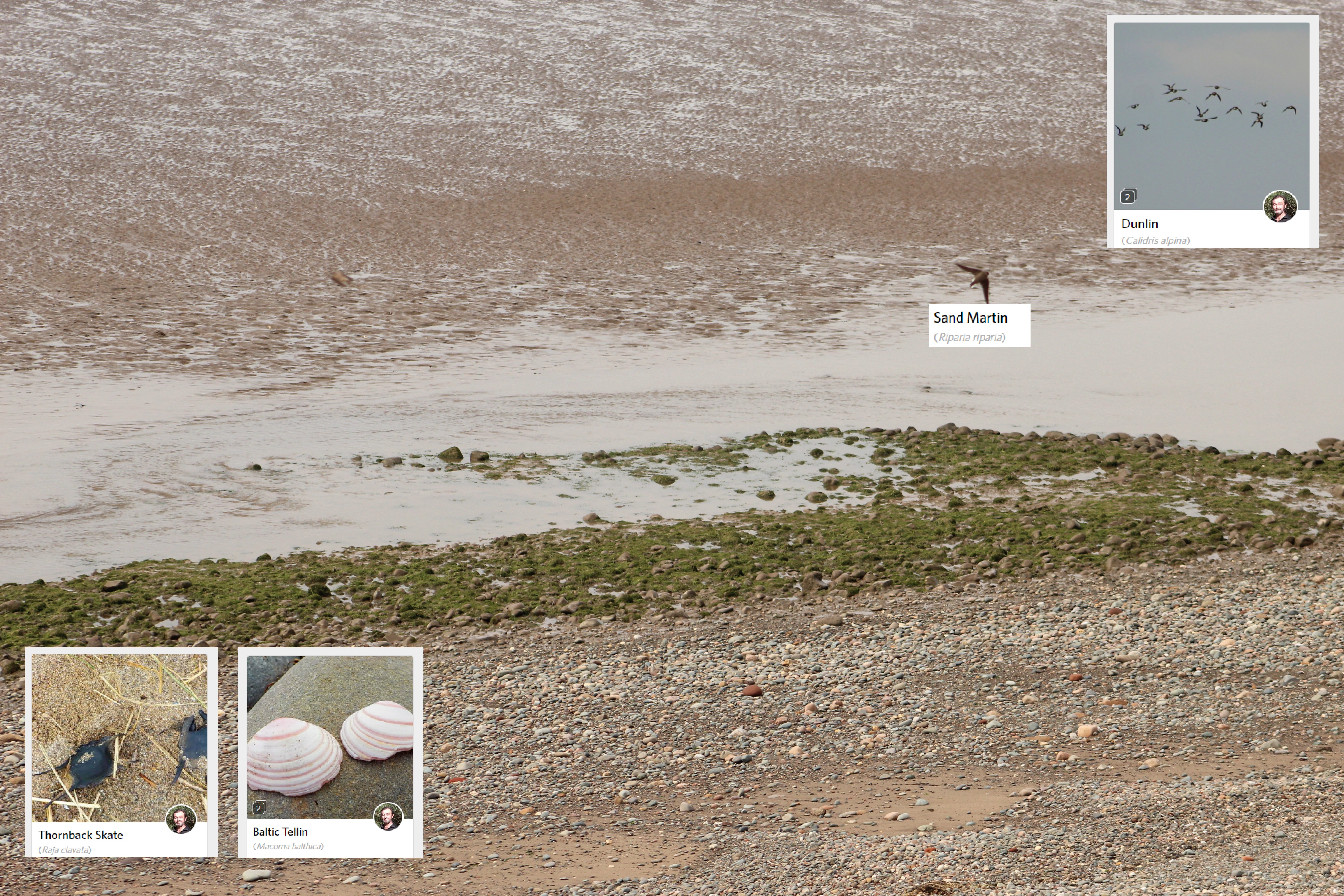


Back down on the beach and a flight of Dunlin take to the air whilst the Sand martins cavort along the shore line. Quite a few Thornback Skate egg cases lying around (see Shark!) and a Baltic Tellin shell looking very pretty in pink. Most Baltic Tellins are white, but they also come in orange and yellow as well as this rather fetching pink example.


Mawbray is famous for it's Natterjack Toads, so we took a look in the ponds. Plenty of Common Frog tadpoles but no sign of their illustrious cousins unfortunately. Natterjacks are very vocal at night, but we didn't hear any either. In the grass around the ponds St. George's Mushrooms were reasonably prolific (a good edible mushroom) and there were a few Dung Roundheads among the cow pats.


A lovely weekend, rounded off by this beautiful sunset, reflected multiple times across the Solway Firth, with the Scottish hills in the background.


Steve's Vintage Collectables. (click to visit)

I'm still showcasing the royal memorabilia, but this will gradually be replaced as new items get added to the shop. If you're looking for the royal thimbles, they went out to America earlier this week, and the Hillstonia vase sold yesterday evening.


Steve's Books (click to visit)

A good time to buy The Quick Guide to Creepy-Crawlies as the minibeasts start to appear in all their variations.


Follow me on Steve's Nature Plus and also on Twitter (@Steve's Nature), Facebook (Steve Daniels),and Instagram (Steve Daniels Cumbria)

Or why not join the 2.5k members of our Naturalists group?


All the best,


Steve


Wednesday, 7 December 2022

Between the Lakes


Just to the north of Keswick, beyond the dual carriageway of the A66, lies a remnant of the old coach road from Penrith to Cockermouth. This is where we begin our journey, exploring the area between Derwent Water and Bassenthwaite Lake. It's a bit damp today, and Skiddaw is wearing the clouds like a feather boa, but it's not raining. If you're wondering what that expanse of brown is, in the middle distance, it's an osier plantation. But we'll come to that later... unfortunately.


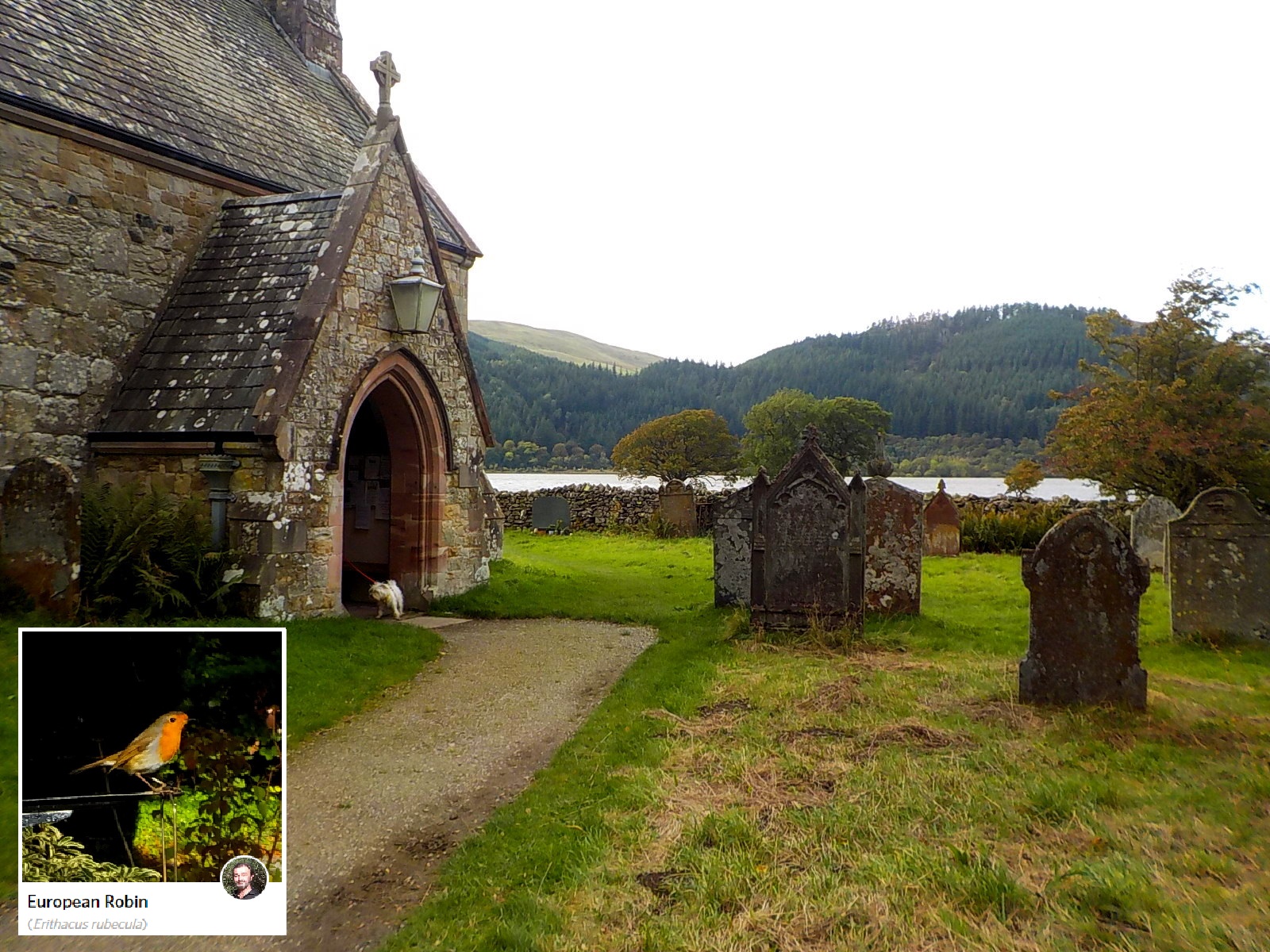
The old coach road crosses Pow Beck, one of many becks that feed Bassenthwaite Lake, along with the river Derwent, which flows in from Derwent Water. Next to this, there used to be a very good campsite, so Ishbel tells me (she, being a repository of all knowledge on Cumbrian campsites). Sadly, it has now been abandoned, and is overgrown with seeding dock. A lonely apple tree sits in the centre, and on a pile of wood chippings, what look to be Common Funnel mushrooms have found the perfect home.


Heading up a little lane, the sheep grazed fields to our left provide perfect conditions for rabblts, whilst the long, tussocky grass to our right is the preferred feeding grounds for pheasants. I have recently acquired a six volume set of Cassells Natural History, published in 1881, and it has this to say on the feeding habits of the common pheasant:

[the pheasant] seeks its food, which consists of grain, seeds, green shoots, and insects, among hedge-bottoms and thickets with long grass and tolerably dense undergrowth; it also affects damp ground and osier beds.


Note the words 'damp ground' and 'osier beds'. The footpath leads us into both. They don't shy away from saying what they mean up here in Cumbria. If your house nestles on the edge of a bog, you call it Bog House (and for those of you who's first language is not English, this is also a euphamism for the lavatory). We emerged from the osier bed with sea boots and a two-toned dog.


Crossing a field, we managed to dislodge about half of the accumulated mud, and emerged onto the old Penrith to Cockermouth railway line. A magnificent Birch Polypore was growing at the base of a silver birch, and nearby, in a discarded plastic bucket, a small amount of rainwater had proved sufficient for some Winter Midges to breed. These are Chironomids, or non-biting midges.


In other news, for those of you who are local, CADS are putting on the hilariously funny

'The Farndale Avenue Townswomen Guild Drama Society's production of A Christmas Carol'

I can say this because I'm not in it, merely making sure you can see it by operating the lights. This Saturday (10th) 2pm and Sunday (11th) 7pm. Buy your tickets here.


The reason that I have recently acquired a six volume set of Cassells Natural History, published in 1881, is because I have opened up an antiquarian book department in my online shop. A geographical theme this week, but the Cassells will be up for sale later – if I can bear to part with it. Pop in and take a look: Steve's Vintage Collectables – Beautiful Books.

And talking of books...


Beetles and Butterflies; spiders and scorpions; woodlice and worms. How do you tell them all apart? To say nothing of crane flies, dragonflies, bee flies and yet more butterflies. Are they all flies? If not, why call them so? If you're fascinated but confused by the beautiful world of the very small, then this is the book for you.


82 pages of information on all aspects of the world of minibeasts, with over 100 photographs and illustrations, this book will help you track down and identify any arthropod, in its adult or juvenile state, anywhere in the world.


See all of my books at author.to/SteveDaniels


All the best,


Steve

Follow me on Steve's Nature Plus

and also on Twitter Steve's Nature, Facebook Steve Daniels Naturalistsand Instagram

Steve Daniels Cumbria


Wednesday, 9 November 2022

Fine Weather For Ducks


It's Cumbria. It's November. It's raining. Obviously. The River Cocker is filling nicely, as it exits Crummock Water, wends its way down into Cockermouth, where it joins the Derwent, and flows past my front door. Both rivers are now above their normal high level, but still behaving themselves for the moment. Prodding around in the wet leaf litter, and beneath the bark of rotting logs, turns up a White-legged Snake Millipede. These are one of our commonest millipedes and useful little creepy-crawlies. They chomp their way through decaying vegetation, liberally seasoned with mildew and algae, and return the nutrients to the soil.


The path to the lake takes us through mixed woodland and there are a few fungi to examine. The first one is an important one to recognise, because it looks like a puffball (many of which are edible). However, the edible puffballs are white, whereas this one is a dirty brown colour. It won't kill you but it will make you ill. As young puffballs are one of the best 'shrooms to forage, it's important to recognise this look-alike; the Common Earthball. Wild Food UK has an excellent article on puffballs which you can read here. The other two look to be Honey Fungus (edible when young but can be confused with a nasty little 'shroom called the Funeral Bell), and Yellow Staghorn (which is rubbery and tasteless).


Crummock Water is not looking it's best today, as there seems to be more water in the sky than in the lake. The water temperature is about 5C. This I know, because my little sister went swimming in it the other day. She is in Wim Hof mode. Personally, when it comes to dousing my body in cold water, I'm more Wimp Off. I've just found something I've never seen before. It's a baby Oak tree. I think I'll take it home and watch it grow.


It's fine weather for ducks, so let's go over to Siddick Ponds and see if we can find some. The usual gang of mallards, moorhens and mute swans, but we also have a Little Grebe out there, and a pair of Domesticated Swan Geese. These delightful looking geese originally hail from China and the far east, but escaped domesticated versions can be found almost anywhere in the world. Having said that, they're not common, and I haven't seen them before.


We've some Great Cormorants out there as well, but turn your attention to the path for a moment, because those swathes of orange berries up there are Sea Buckthorn, one of the richest berries in vitamin C that you'll find anywhere. One teaspoon of berry juice will give you all the vitamin C you need for a day. It is also rich in vitamins A, K and E and is ridiculously expensive in health food shops. Grab a handful and make a cup of tea with it.


And finally, back in the lab, look what I picked up at the auction house last week. This beautiful stereomicroscope. It was manufactured by Cooke, Troughton and Simms, probably in the latter part of the 1940s, and has the registration number M60907. I'm intrigued by the ornate brasswork and wooden base, which makes me suspect that it is not a standard production model. The wooden box contains four interchangeable lenses (which I haven't worked out how to change yet) and a Carl Zeiss binocular loupe. As you can see from the inset picture of some moss, it is still in perfect working order. I had intended to sell it through my shop Steve's Vintage Collectables but, somewhat selfishly, I've decided to keep it for myself. There's some pretty nice stuff on the shelves though, if you're looking for ideas for Christmas presents:


All the best,

Steve


And books always make good presents. They're easy to wrap for a start!


£14.99

Beetles and Butterflies; spiders and scorpions; woodlice and worms. How do you tell them all apart? To say nothing of crane flies, dragonflies, bee flies and yet more butterflies. Are they all flies? If not, why call them so? If you're fascinated but confused by the beautiful world of the very small, then this is the book for you.


82 pages of information on all aspects of the world of minibeasts, with over 100 photographs and illustrations, this book will help you track down and identify any arthropod, in its adult or juvenile state, anywhere in the world.


See all of my books at author.to/SteveDaniels


Follow me on Steve's Nature Plus

and also on


Steve's Nature


Steve Daniels Naturalists


Steve Daniels Cumbria


Thursday, 13 October 2022

The Seventeen Assassins - Poisonous Fungi Special


On the north west corner of Bassenthwaite Lake lies the little known Castle How Hill Fort. This is an Iron Age hill fort and the start of our weekend peregrinations which involved a lot of fungi photography. Mycology, the study of fungi, is a fascinating hobby (Beatrix Potter was a noted mycologist) but, if 'shrooms for the pot are all that interests you, then the first thing you need to know, is how to identify The Seventeen Assassins. OK, so they won't all necessarily kill you, but they will give you an unpleasant time. One such, is this iconic toadstool, Fly Agaric (Amanita muscaria). The muscaria part of its scientific name indicates that it contains muscarine, a poison which causes nausea and sweating and a fair few other unpleasant symptoms. It also contains another nauseating substance called ibotenic acid. This is the one that causes you to lose control of your mind and limbs. It's psychotropic.


Moving around to the other side of the lake, there is a lovely walk from Ravenscroft, down to St. Briga's church, up by Mirehouse, and then back through Dodd Wood. Here, you will encounter more fungi than you can shake a stick at. Some, such as the Sulphur Tuft (Hypholoma fasciculare), which grows in large clumps on dead wood, is another of The Seventeen Assassins. Again, not deadly, but decidedly unpleasant. The Hairy Curtain Crust, or False Turkey Tail (Stereum hirsutum) is one of the, roughly, 90% of fungi that are neither poisonous nor edible. The trick with mushroom collecting for the pot, is to positively identify the edible and poisonous mushrooms that grow close to your home (many mushrooms do not travel well). You'll do well if you can find half a dozen of each. At the bottom of this post I'll give you links to The Seventeen Assassins to get you started.


Taking our eyes from the ground for a moment, there's a roe deer in the trees, at the edge of that field. This one is a male. You can tell, because the white patch on his rump is vaguely kidney shaped. Females have a heart shaped white patch. Roe deer are the major source of venison. On a foraging note, you don't need a licence to shoot deer in the UK, other than at night, or in the close season. Open season dates for deer can be found here, for those who are into huntin' shootin' and fishin'. Some of you may think that last sentence inappropriate for a nature blog. However, I am of the opinion that humans are a part of nature. We are naturally designed to be omnivorous, and taking meat, as well as plants, from the countryside, is an environmentally friendly option.


I've been bemoaning the lack of insects recently (flying insects have declined by 60% in the UK over the past 20 years). I am now beginning to notice the decline in birds (they have declined by about 20% in Europe and the UK over the past 40 years). As many birds feed their young on insects, the two facts are not unrelated. Today we've seen a few crows, a couple of wood pigeons, and a robin. Thankfully, these iconic little birds are one of the few songbirds to have shown an increase in recent years.


Robins are associated with Christmas, of course, and the more organised of you will already be thinking about Christmas presents. Not just for other people, but for yourselves. Most of us, when asked 'What do you want for Christmas', start with 'um' and finish with 'I'll have to let you know'. Books always make good presents (they are easy to wrap for a start) and I can heartily recommend John Wright's The Forager's Calendar. (A lot of the initial fungi information in this post was culled from the poisonous fungi section of the book, and all stood up to verification). But if foraging is not your thing, and you are merely interested in enjoying nature for its own sake, The Quick Guide to Creepy-Crawlies is a lovely introduction to the smaller, but vitally important, animals with which we share the planet.


All the best,


Steve


Beetles and Butterflies; spiders and scorpions; woodlice and worms. How do you tell them all apart? To say nothing of crane flies, dragonflies, bee flies and yet more butterflies. Are they all flies? If not, why call them so? If you're fascinated but confused by the beautiful world of the very small, then this is the book for you.


82 pages of information on all aspects of the world of minibeasts, with over 100 photographs and illustrations, this book will help you track down and identify any arthropod, in its adult or juvenile state, anywhere in the world.


See all of my books at author.to/SteveDaniels


The Seventeen Assassins


  1. Death Cap (Amanita phalloides)

  2. Panther Cap (Amanita panthrina)

  3. Fly Agaric (Amanita muscaria)

  4. Deadly Webcap (Cortinarius rubellus)

  5. Deadly Fibrecap (Inosperma erubescens)

  6. Dapperlings (Lepiota spp.)

  7. Brown Roll-rim (Paxillus involutus)

  8. Livid Pinkgill (Entoloma sinuatum)

  9. Fool's Funnel (Clitocybe rivulosa)

  10. False Morel (Gyromitra esculenta)

  11. Angel Wings (Pleurocybella porrigens)

  12. Yellow Stainer (Agaricus xanthodermus)

  13. The Sickener (Russula emetica)

  14. Beechwood Sickener (Russula nobilis)

  15. Sulphur Tuft (Hypholoma fasciculare)

  16. Earthballs (Scleroderma spp.)

  17. Bitter Bolete (Tylopilus felleus)


Follow me on Steve's Nature Plus

and also on


Steve's Nature


Steve Daniels Naturalists


Steve Daniels Cumbria


Wednesday, 13 October 2021

Wythop Woods in Autumn


One of the great joys of Autumn is a walk in the woods. On a fine October morning, what can be better than to immerse yourself in the shades of yellow,red, brown and green and the earthy scent of a mixed woodland. Probe around in the moss at the base of a tree and you'll find a host of fascinating fungi. Last Autumn, when we visited Loweswater, I showed you the three main types of fungi that you are likely to come across, the Agarics, Boletes and Brackets. Wythop Woods, at the northern end of Bassenthwaite, has all three, but is particularly rich in Boletes. These tend to be large mushrooms with chunky stems and the underside of the cap is sponge-like as opposed to having gills like the agarics. None of them are deadly and some are really good to eat, so they are a good group to study. I only found Slippery Jacks and Dyeballs (Boletes have fabulous names) whilst I was living in Crete, so most of the British Boletes are new to me.


The Good, The Bad and The Edible


You're probably all familiar with these little pink flowers which grow in great profusion in temperate climes. This particular one is Herb-Robert, named after an 11th century French Abbot, herbalist and, post-mortem, saint. The majority of flowers in this family are either Cranesbills (Geranium) or Storksbills (Erodium) (Herb-Robert is a Cranesbill). The Geraniums in your garden are actually Pelargoniums (Pelargonium) which, although in the same family, naturally occur in warm temperate or tropical regions of the world.

Herb-Robert is not an edible plant but neither is it poisonous. The reason that it is inedible is that it doesn't taste very nice – not only to us, but also to rabbits and deer apparently. Gardeners have reported that allowing Herb-Robert to grow amongst their veg prevents rabbits and deer from munching on their prize exhibits. Mediaeval herbalists made many claims for its healing properties but modern research has discovered that the leaves can reduce blood sugar levels, so it may come into play in diabetes medications.


As we climb up through the trees we get tantalizing views of the lake below us. A few birds are flitting around, and I can hear a pair of ravens cronking above us, but the only bird that is sitting and posing for a photograph is our friend, the Robin (and I still swear that Ishbel keeps one in her pocket just to keep me happy when the other birds are playing hide-and-seek).


The lack of photogenic birds suddenly pales into insignificance as a Red Squirrel darts up a nearby pine tree. It's great to see one in its natural habitat as they've been driven out of much of England by the introduced Grey Squirrel. The map on the right shows their distribution as recorded by the British Mammals census of 2018.


And now... a bit of a moan about air pollution in Cumbria and a plea to those who are causing it – cyclists! We have some lovely routes around the county which are great for cycling, but they are rather narrow and twisting. Bicycles, in themselves, don't cause any pollution of course, but while you're cycling along, enjoying the scenery and chatting to your mate, the thirty or so cars crawling along at 15mph behind you are belching out exhaust fumes. So, please ride in single file and pull in to one of the many passing spaces to chat, admire the scenery and let the crocodile pass. Thanks.


All the best


Steve


PS There will be no blog for the next couple of weeks as we're off to Crete. See you when we get back.


I hate to remind you, but Christmas is coming. Books make great Christmas presents (and if you order now, you can read them before you wrap them!). The Quick Guide to Creepy-Crawlies, in particular, is ideal for children of all ages, giving them all the stuff they need to know about the world of minibeasts (and maybe giving them a new lifetime interest).


Steve's Books


Clicking on any title below will take you to the relevant Amazon page where you can read the first few pages, then click to buy if you so desire.


Chubby's Crematorium & Burger Bar

A book of humorous poems to cheer, amuse and entertain your friends with.


The Quick Guide to Creepy-Crawlies

All you need to know to identify any type of insect, spider, worm or snail very simply and find out more about it.

Yvonne: This was a gift for a family so that the children can understand what they see on days out. The second was for me. Logical and easy to use. If you know anyone who likes nature you can be confident that gifting this book will give years of pleasure.


The Eggs of Saramova

A science fiction novella for those who don't like science fiction. A fast-paced thriller that is, literally, out of this world (and it starts right here in Crete).

Too new for reviews yet!


Not Just For Twisted Women by Steve Daniels 

A light-hearted look at life through the eyes of the fairer sex.

Janet: If you are short on time but enjoy reading and are maybe not into long extended novels then Not Just For... Twisted Women provides readers with concise stories that stand alone and most certainly entertain with their ultimate twists. Loved it.

Helen: A very good read! Well written and entertaining!

Margaret: Each quick tale gives a glimpse into a character's life and has an often humorous twist at the end. I would love to read more.

Yvonne: These days many people find it hard to find the time to read a novel, so this book of short stories is ideal to dip into. It is also makes a good gift.


Recent Posts