Showing posts with label svcwithEtsy. Show all posts

Friday, 13 October 2023

Wet and Dry


It had been my intention, on returning from my summer break from blogging, to bring you a whole series of blogs, featuring the diverse wildlife of Scotland, Hungary, Austria and Germany. However, the best laid plans and all that. As we all know, the weather has become ever more unpredictable, and to cut a long story short, Scotland was too wet for wildlife and central Europe was too dry.


The first picture above shows the Falls of Dochart at the western end of Loch Tay where Ishbel, Mattie and I spent four days studying clouds... from the inside. It was only on our return journey, when we visited the lower reaches of the Tay in a vain attempt to find some Bearded Tits, that we spotted a few Fallow Deer. Other than that, a couple of Buzzards, pretending to be Golden Eagles, and a lone Kestrel were all that we could find.


A week or so later, my mother, my sister and I, took a cruise up the river Danube. Here, I was hoping to bring you something along the lines of My Family and Other Animals, but unfortunately, the other animals were conspicuous by their absence. Apart from a handful of wasps, three butterflies and a dragonfly, the only other insect I saw was this Green Shieldbug, who hitched a lift with us somewhere near the Hungary/Austria border.


Of birds, mammals and amphibians there was scant sign, even though I walked the river banks at various stops. This may, in part, have been due to the long dry summer in central Europe. So dry, in fact, that the cruise had to be abandoned at Passau as the river level had dropped so much that the Danube had become unnavigable above that point.


This got me thinking. We are being bombarded with information about climate change and the state of the planet. So much so, that it's hard to take it all in. What I wanted was a short, readable, book that would put everything into context. So I've decided to write one. It will be called British Mammals: Then and Now.


I have a number of antiquarian natural history books that tell me the state of British mammals in days gone by, which I will contrast and compare with current information to try to establish what has happened, why it has happened, and what will happen in the future if we either intervene or let things continue as they are. Give me a few weeks to get the initial research done, and then I'll be back with some updates and a few fascinating tidbits about the 100+ mammals that we have in the UK. (No, I didn't realise we had that many either).


All the best for now.


Steve

PS When I've finished with some of my antiquarian sources, I''l probably put them up for sale, so keep an eye on Steve's Vintage Collectables (which is also a good place to look for Christmas presents. Vintage and antique items are a lot more environmentally friendly than modern, manufactured stuff).


Steve's Vintage Collectables. (click to visit)


Steve's Books (click to visit)


Follow me on Steve's Nature Plus and also on Twitter (@Steve's Nature), Facebook (Steve Daniels),and Instagram (Steve Daniels Cumbria)

Or why not join the 2.5k members of our Naturalists group?


All the best,


Steve


Wednesday, 2 August 2023

Thyme for a Cumbrian Cassoulet


The botanists are trying to confuse me again! The plant on the left used to be known as Mediterranean Thyme, Thymus capitata. It looked like thyme, it tasted like thyme and, as far as I was concerned, it was thyme. Now it has been reclassified as Thymbra capitata. It is still known as Mediterranean Thyme, but also as Spanish Oregano, despite the fact that it looks and tastes nothing like oregano. OK, there are biological differences between the genera, but in culinary terms there's not much difference between Mediterranean Thyme, which was a mainstay of my Cretan diet when I was out there, and good old British Wild Thyme, Thymus praecox britannicus. Both go well with fish, and if you're in France – sausages.


Ishbel and I were wandering around the auction house last week when I spotted a box of pots and pans which looked strangely familiar. “I think those are French,” I said to her, enthusiastically. “Hmm?”, said a man standing close by. Ishbel had wandered off somewhere. I turned a pot over, and sure enough, stamped on the bottom, were the words L'incomparable – Vallauris Co – Made in France. I'd last seen a pot like this in 1969, when visiting the rest of the family, who were living in a village near Toulouse. It was in our concierge's kitchen, and she was making the local variation of the French dish, cassoulet.


Cassoulet has many regional variations, but is basically a meat and bean stew, flavoured with garlic and herbs. Mme. Caner was making hers with local sausage and duck, and the herb she was using was thyme. Anyhow, I bought the pots and pans at auction, and determined to make a Cumberland Cassoulet, using our local Cumberland sausage and a few sprigs of British Wild Thyme. If I say so myself, the result was excellent, and I've posted the recipe in Steve's Wild Kitchen. I'd recommend a good Côtes du Rhône Villages to go with it.


A couple of weeks ago, when we were in Sunderland, I spotted a chrysalis, partially wrapped in a bramble leaf. It wasn't one I immediately recognised, so I put it in my pocket and brought it home. Yesterday morning, I came into my study-cum-lab to find a Red Admiral sitting at the computer. Even at my age, I still get excited by the hatching of a butterfly.


Steve's Vintage Collectables. (click to visit)


The cassoulet pot can be found here.


Steve's Books (click to visit)


Follow me on Steve's Nature Plus and also on Twitter (@Steve's Nature), Facebook (Steve Daniels),and Instagram (Steve Daniels Cumbria)

Or why not join the 2.7k members of our Naturalists group?


All the best,


Steve


Wednesday, 7 June 2023

England Coast Path - Flimby to Workington


Last week we walked the King Charles III England Coast Path from Maryport to Flimby. This week, I thought we'd continue along the path from Flimby to Workington. It's a beautiful sunny day for strolling by the Solway and everything is bursting into bloom. Eight new flowers this week including a few of my old favourites from my time in Crete, the Yellow-horned Poppy, Kidney Vetch and European Searocket.


The butterflies and moths are taking full advantage of nature's largesse. Look for the little yellow/green packets attached to grass stalks. These are the chrysalises of the Burnet Moth, a black day flying moth with red spots (not to be confused with the Cinnabar Moth which is a black day flying moth with red spots and stripes, like this one here). There's a Small Tortoiseshell over there. Their caterpillars feed on nettles but I haven't seen any this year, have you? We saw some Common Blues last week and today there are quite a few Small Blues about. They're unmistakably smaller and grey/black with white borders. Finally some Large Skippers. Skippers have a family all to themselves, the Hesperiidae.


The Lepidoptera are not the only ones taking advantage of the flowers, so are the bees. However the bee over there on the Bloody Cranesbill is an imposter. It's actually a hover fly doing a very good impression of a bumble bee. Flies only have one pair of wings, whereas all other winged insects have two pairs. This is not always easy to see, neither is the fact that flies have compound eyes and bees don't. I find that the easiest way to tell a bee from a fly mimic is to look at the antennae. All flies have very short antennae, whereas a bee's antennae are much more robust.


The path dips down onto the shore here, so let's see who's about in the bird world. A nice flight of Sanderlings for a start, and further out, a flight of Black-headed Gulls. Last week I introduced you to the Passerines, perching birds, including the Stonechats, Linnets and Starlings that we've just left behind us. This week, I'll introduce you to the Charadriiformes, or shorebirds. This group includes nearly all of the small to medium/large birds that you see around our coasts, including the Sanderlings and Gulls as well as the Ringed Plover and Dunlin that are pootling about in the shallows here.


One of the great bonuses of the Cumbrian section of the England Coast Path, is that the west coast railway line follows the same course. This means that we don't have to walk all the way back. We can hop on the train at Workington and admire the scenery from a different vantage point on our way back to Flimby. Meanwhile, there's a nice pile of rocks ahead where we can sit and rest awhile. We'll be sharing them with a number of mobile red dots, which, on closer inspection, are a group of mites (I think these are Whirligig mites). Although mites have eight legs, they are not spiders. On the whole, these are harmless little arachnids, although the Varroa Mite is the curse of beekeepers, and the Itch Mite (Sarcoptes scabiei var. hominis) is the little devil that transmits scabies. Rest assured, these are neither of them.


And so we reach Workington, where the River Derwent flows serenely down to the port. I must confess, being a southern softie, that the name 'Workington' always conjured up images of a gritty, industrial, northern town. Nothing could be further from the truth. The 'working' in Workington has nothing to do with labour. The name is mediaeval and means simply the town or settlement of Weorc or Wirc's people. As you can see, it's actually quite a beautiful place and there are even fish in the river. Some quite good sized Mullet down there, if you fancy a spot of fishing.

Steve's Vintage Collectables. (click to visit)

We've been busy on a buying spree this last week so look out for an eclectic collection of quirky items from vintage electric bed warmers, to novelty tea pots and a WW2 Aldis lamp. SVCwithEtsy is rapidly becoming one of Britain's best loved, on line, pre-loved gift shops, with over 100 items always in stock for every occasion. (And don't forget, it's Father's day a week on Sunday, so now is a good time to start looking).


Steve's Books (click to visit)


Or if you're looking for a book for Father's Day..


Follow me on Steve's Nature Plus and also on Twitter (@Steve's Nature), Facebook (Steve Daniels),and Instagram (Steve Daniels Cumbria)

Or why not join the 2.5k members of our Naturalists group?


All the best,


Steve


Wednesday, 5 April 2023

Shark!


“What do you want to do on your birthday?” asked Ishbel.

“Go hunting for mermaid's purses,” I replied.

Ishbel wasn't phazed. After all, she's getting to know my eccentricities now, and she's savvy enough, natural hitory wise, to know that mermaid's purses are the egg sacs of sharks and rays. And so, on the bright sunny morning of April 3rd, we went off to Allonby on the Solway Firth to begin our hunt. This is part of a citizen science project, details of which can be found at https://www.sharktrust.org/greateggcasehunt if you want to take part.


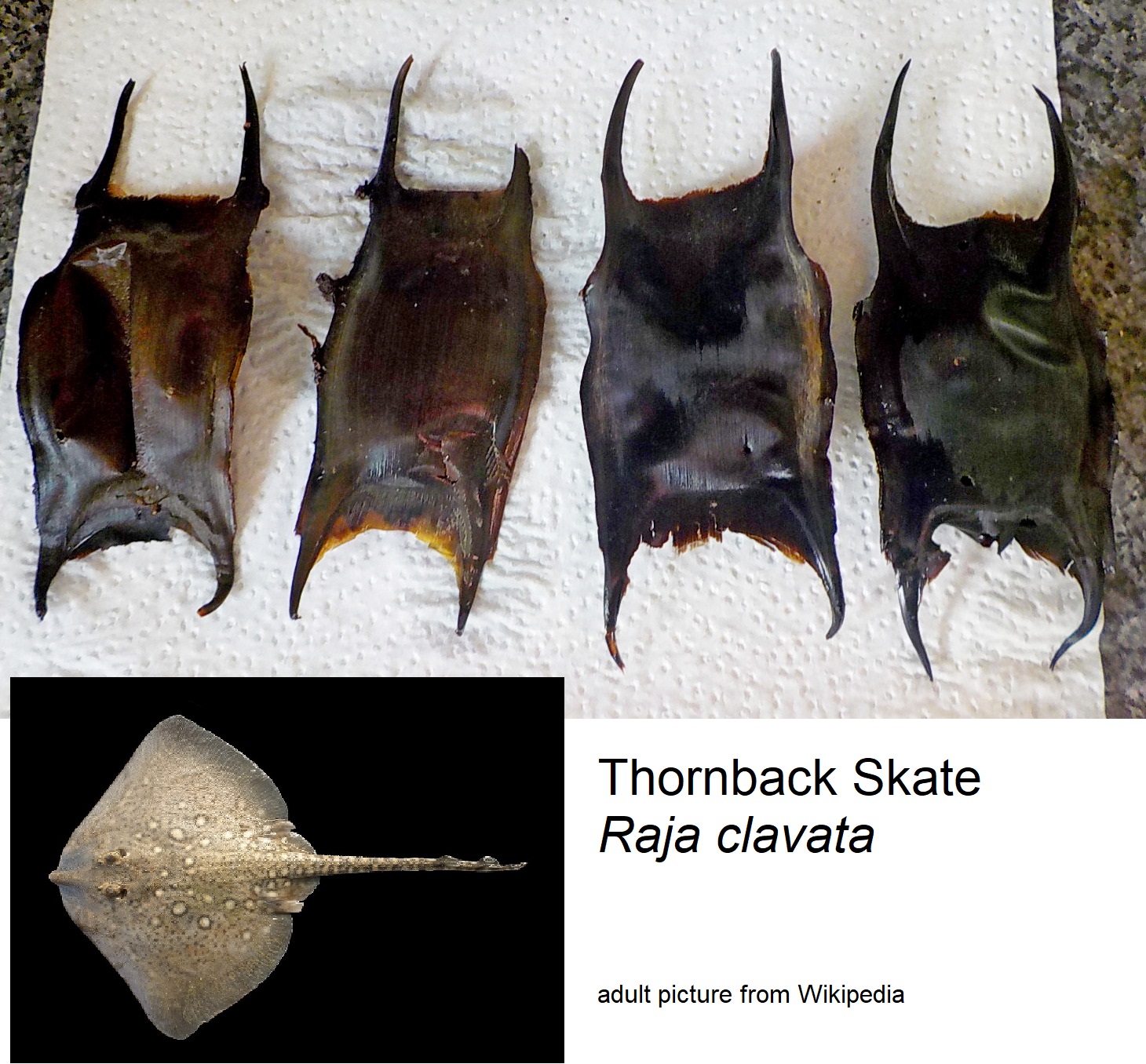
The first egg cases we found were those of the Thornback Skate. The name is confusing as the terms skate and ray are interchangeable and if you look up Thornback Skate on Wikipedia you will find it endemic to Australia. The much more widespread fish is referred to as the Thornback Ray. This is one of the reasons we use scientific names. The egg cases we found were those of Raja clavata.


A little further on, we spotted these odd structures, which I had to check out on iNaturalist, as I hadn't come across them before. Turns out, they are called egg clouds, and they belong to the Common Whelk, Buccinum undatum. Learning all the time.


After an hour or so, we came upon a cluster of shark egg cases. You can tell that they are shark egg cases as they come with noodles attached. They are actually tendrils that anchor the egg cases to structures on the sea bed. These particular ones belong to the Small Spotted Cat Shark, Scyliorhinus canicula. This used to be a staple of fish and chip shops, sold under the name of rock salmon, but it seems to have gone out of fashion these days.


Having got a crick in the neck from peering myopically at the wrack line (the line of seaweed left on shore at high tide), we wandered back along the dunes. As we sat with a coffee, looking at Scotland across the firth, the first butterfly of the year landed nearby; a Small Tortoiseshell.


We rounded off the morning with a nice bit of home made chicken and leek pie at The Lowther Arms at Mawbray. This pub nearly died, but was brought back from the brink of extinction by the villagers who, along with other shareholders, bought it, and now run it as a community pub. Cheers!


News From The Old Cornmill


Last year, a mouse used to feed at my bird feeder, where he was quite welcome. This year, however, he found a way into my cupboard under the sink where he was not so desirable. He has now been deported to the old Cockermouth railway line where I hope he'll be very happy.

Meanwhile, the antiques shop continues to ship orders worldwide. A vintage copy of John Bunyan's Pilgrims Progress flew out to Australia yesterday, and, to mark my birthday, I'm offering a 10% discount on all glassware this week, so pop in and have a browse for some preloved gifts (much more environmentally friendly than buying new, and better value too).

What with nature blogging and running a shop, I haven't had time to promote my novel, The Magic of Nature of Nature, but you can read the beginning for free on Amazon by clicking on Steve's Books below.


All the best,


Steve


Steve's Vintage Collectables.


Steve's Books


Follow me on Steve's Nature Plus

and also on Twitter Steve's Nature, Facebook Steve Daniels Naturalistsand Instagram

Steve Daniels Cumbria


Monday, 27 February 2023

Beyond Crete


For sixteen years, I lived a somewhat idyllic life on the island of Crete in the Mediterranean, and many of you know me from The Crete Nature Blog. I returned to the UK in 2020, settling in Cockermouth in Cumbria, where my life has changed, almost beyond recognition. It is now, I am glad to say, just as idyllic (albeit somehat damper) and new adventures await.


As well as having a host of new wildlife to observe, new plants to pluck from the hedgerows and cook in Steve's Wild Kitchen, I have also developed an interest in human history and begun to collect various curios to adorn my new 'bachelor pad' set in The Old Cornmill, on the banks of the River Derwent. These, I live with for a while and then sell on through my little online antiques shop, SVCwithEtsy. It makes a little beer money, but it's mainly for the joy of finding out the history behind the object.


I have also acquired a new life partner in Ishbel, who shares my love of nature and objects from a byegone age, which is presumably what she sees in me. Apart from me, she has also recently invested in a turn of the century campervan. It is in this, along with Mattie the hyperpup, that we intend to explore this beautiful country. So, join us, if you will, as we explore the countryside, take in a few antiques fairs along the way, sample as much local produce as we can, and generally appreciate Cumbria, Westmorland and beyond.


Make a note now, to subscribe to Steve's Nature Plus.


PS You may have noticed, in the second picture, a set of volumes held between two industrial book ends. This is my first full length novel, The MONOM, which is now available as a paperback and ebook on Amazon. This is the fifth book I've written since leaving Crete, and you can see them all on my author page.


All the best,


Steve


SVCwithEtsy.


Follow me on Steve's Nature Plus

and also on Twitter Steve's Nature, Facebook Steve Daniels Naturalistsand Instagram

Steve Daniels Cumbria


Wednesday, 4 January 2023

Remotest Cumbria


With all the razzmatazz of Yuletide in full swing, it's nice to take some time out and look out over the fells, in a remote spot, miles from anywhere.


The only civilisation for miles, nestled alongside a powerful beck called the Cald, is the appropriately named village of Caldbeck. Here, you can walk alongside the beck for miles in perfect peace and tranquility.


The beck is so powerful that it provided the motive force for The Howk bobbin mill, which turned coppiced wood into bobbins for the textile industry from 1857 to 1924. The beck also powered fulling, corn, flax, wool, wood, paper and smelting mills. There was also a barytes crushing works and a brewery in the village. Quite a hive of industry back in the day.


You can see and hear the force of the water in a series of falls above the bobbin mill. Not much wildlife about today, apart from a phalanx of ducks on the village green and a buzzard in the sky above. Hart's-tongue ferns and Dog's Mercury line the path, and various mosses and orange Jelly Spot fungus add a little colour to the fence posts.


In fact, most of the invertebrate life that I've seen over winter so far, has taken up residence with me in the Old Corn Mill. This moth of the Tortricidae family seems perfectly content in the bathroom.


Talking of the Old Corn Mill. Do you remember that sprouting acorn we found, back in November? (see Fine Weather For Ducks) I promised to let you know how it was getting on, and it's doing just fine on the kitchen windowsill. maybe I'll take up bonzai this year!


Meanwhile, back in Caldbeck, it's beginning to rain, so it's time to retreat to The Oddfellows Arms. This year, I thought I'd introduce you to some of the Cumbrian hostelries, for those of you who are thinking of visiting the area. We didn't eat here (too much food in the fridge at home) but the menu looks good and they also do accommodation. 


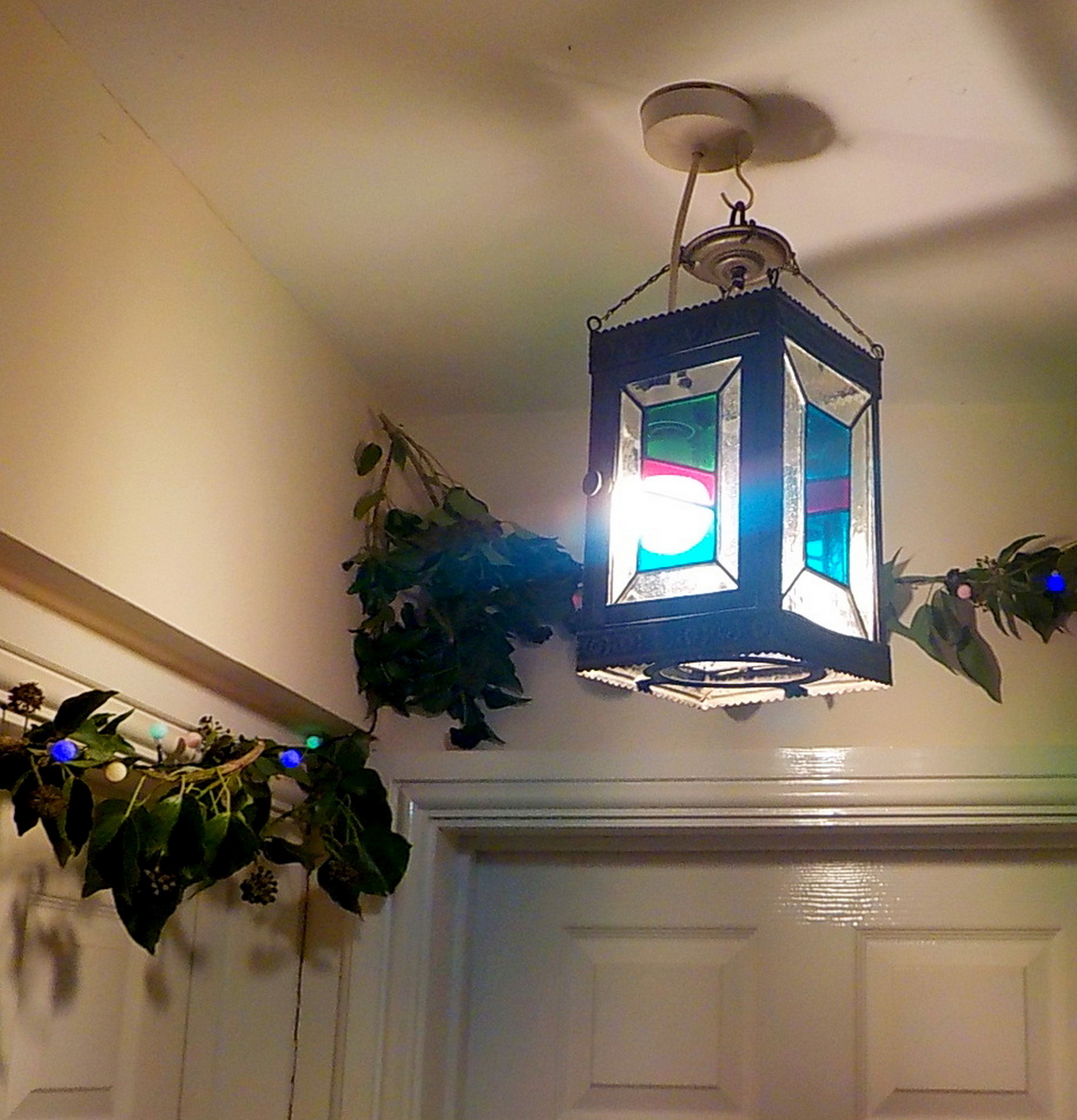
Ah well, it's twelfth night tomorrow, so the decorations will have to come down. Don't want bad luck for the rest of the year. The Victorian lantern, by the way, is one of many items on sale at my little on-line shop, SVCwithEtsy. If you enjoy my nature blogs, you may also like my history blogs. Mainly shop news at the moment, but I'm going to expand it into fascinating insights behind the products. This week I'll be covering the silver trade and tobacconalia.


One other bit of news to tell you about; my first full length novel, The MONOM (The Magic of Nature of Magic) will be published later this month. It's an intriguing tale of the natural and supernatural worlds, in which you, the reader, are one of the four main characters. I am one of the other main characters, and of course, we have a nemesis. It is one of your jobs to uncover their identity. We are all linked together by a nineteenth century naturalist named Singent Hellington-White, and the journey we undertake spans from 1858 to the present day from Crete, to London, to Haiti. 400 pages of adventure to lose yourself in.

You can keep up with all my blogs and books, and a load more besides, by subscribing to my website Steve's Nature Plus

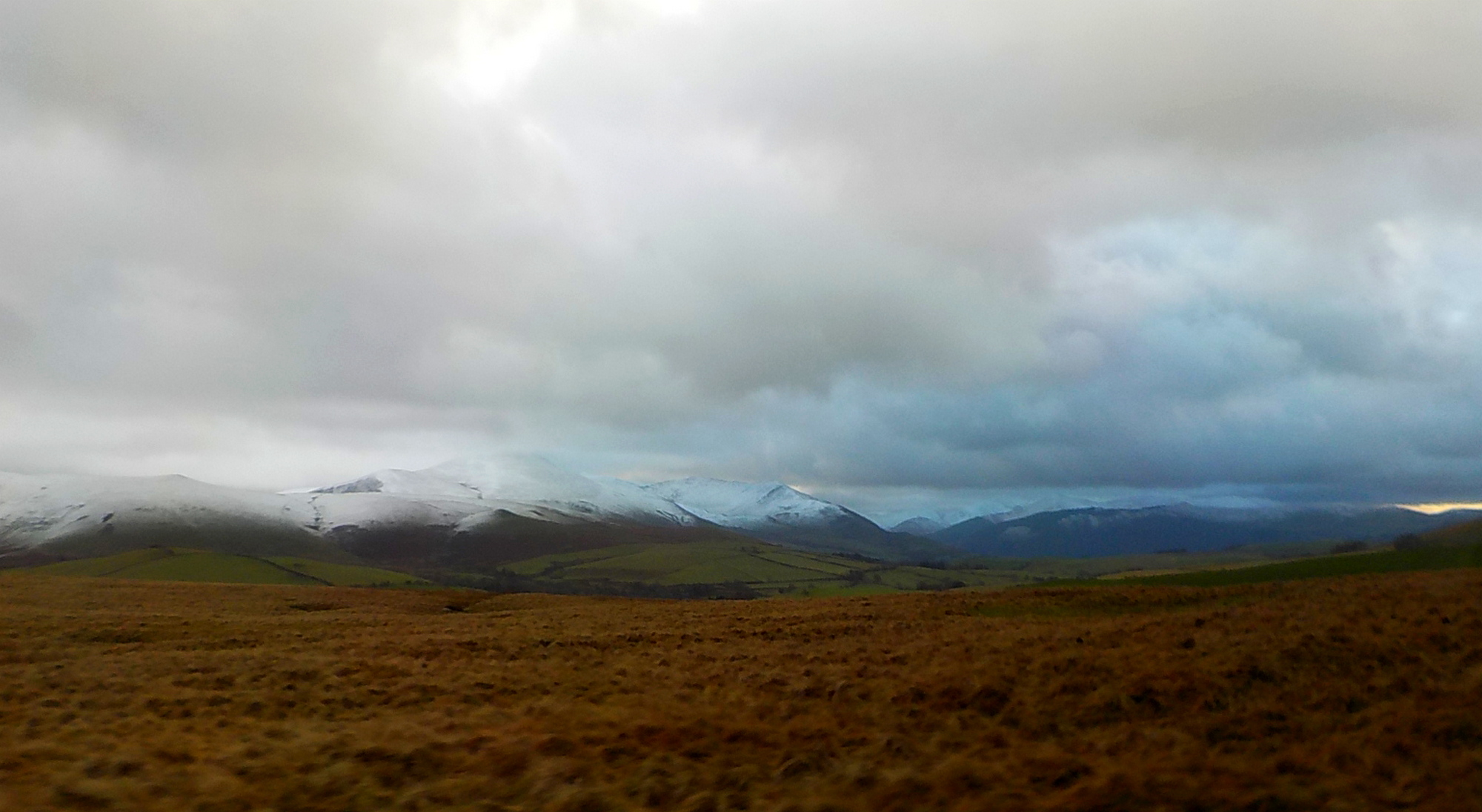
All that remains is for me to wish you all A Happy New Year, and I'll leave you with this panorama of the snow covered Cumbrian fells.

All the best,

Steve


Tuesday, 13 September 2022

Steve's History of Things 6 - Chodov Porcelain


Before we begin, Chodov is now a suburb of Prague, capital of the Czech Republic. Previously, the Kingdom of Bohemia occupied the western half of said republic and included Chodov. It was, and is, buried in the middle of Europe, somewhere. Now that we're all vaguely geographically oriented, here is how it all began:


1811 Franz Miessi, a Bohemian mine owner (i.e. a resident of said Kingdom of Bohemia, as opposed to a socially unconventional person or, for that matter, a resident of the small hamlet of Bohemia in Wiltshire), acquired a licence to produce pottery, using clay deposits from his aforementioned mine. He set up a factory for production of same, and ran it quite nicely, thank you, for twenty or more years.


1834 Enter Messrs. Huttner, Dieter, and Schreyerow who were potty about the place and bought it from him. Exit Franz with oodles of the old spondooliks. They renamed the company Huttner and Co. (H & C – a masterful stroke of marketing as they had their brand on every pair of taps, or fawcets, in the English speaking world). Feeling that mere pottery was beneath them, they obtained a licence for the production of porcelain. For those of you who's knowledge of ceramics is a little shaky, pottery is made from natural clay, whereas porcelain is a mixture of clay and kaolin, which makes for a higher quality of pot, both in terms of aesthetics and durability.


1945 After changing hands a couple of times, and surviving a brace of world wars, the factory was nationalized, which did it not one jot of good.


1958 Over the hill came the cavalry, in the shape of Karlovarsky Pottery, who continue to make the distinctive high quality, hand painted, pink porcelain (rosa porzelain) to this day.


At SVC, we have this fine example of an H&C rosa porzelain ginger pot, in its original box, from the 1980s. It's a lovely thing to start a collection with, or would make a beautiful wedding or housewarming present. As usual, blog readers get a 10% discount with the coupon below and there's FREE DELIVERY in the UK. (Delivery to anywhere else in the world would be £14).


10% Off this item, exclusively for readers of this blog. Use this link

 https://www.etsy.com/uk/shop/SVCwithEtsy?coupon=SVCBLOG

Recent Posts