Showing posts with label Derventio. Show all posts

Saturday, 25 March 2023

Threlkeld Mining Museum


It's been a while since the last blog post, mainly due to the poor weather, but we have managed to make one excursion: to the Threkeld Mining Museum (I take you to all the best places). Unfortunately, despite the website saying it was open, it wasn't. Still, if you're up for a little tramping around in the cold Cumbrian drizzle, here it is.


More like a machinery mausoleum than a mining museum,” Ishbel observed, as we tried to avoid the suspiciously grey puddles. A raven forlornly cronked his agreement overhead. Even so, there was a certain contrapuntal beauty between the gaudy, angular leviathans, and the muted natural colours, and contours, of the landscape.


There were, however, signs of spring arriving. Amongst the leafless trees, the willows were in full bud, and in one of the cleaner ditches, the pool frogs had spawned.


And, joy of joys, the first adult insects of the year have emerged. A pair of water crickets. These are in the family Veliidae (the riffle bugs) and are closely related to the Gerridae (water striders). The differences are mainly internal and must have been discovered in the 20th century as my 1896 Cassell's Natural History doesn't mention them.


Meanwhile, there are strange goings-on, going on across the river from the Old Cornmill (where I live). Fearing a new housing estate, I made enquiries. But no, it is an archaeological dig. I am lucky enough to live on the outskirts of the old Roman settlement of Derventio and history, being a relatively new interest of mine, is literally on my doorstep. I'll let you know what they dig up.


Talking of things historical, my little on-line shop is still growing nicely with just short of a hundred items on the shelves at any one time. Come in and have a browse. Steve's Vintage Collectables.


Last time, I mentioned that my new novel, The MONOM (The Magic of Nature of Magic) is now available as a paperback and an ebook. I suppose it would have helped if I'd included the link! Here it is. 
https://www.amazon.com/stores/Steve-Daniels/author/B081Z8FNK5
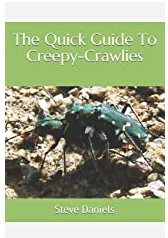


(And as the insects are now beginning to appear, it's a good time to get a copy of The Quick Guide To Creepy-Crawlies which you'll find on the same page). 

All the best,


Steve


Follow me on Steve's Nature Plus

and also on Twitter Steve's Nature, Facebook Steve Daniels Naturalistsand Instagram

Steve Daniels Cumbria


Wednesday, 4 May 2022

Walking With Romans at Derventio


Northern Cumbria 1900 years ago

I live in an old corn mill on the banks of the River Derwent, on the borderline between the town of Cockermouth and the village of Papcastle. A quiet little spot in the north west of England, but it hasn't always been so. Go back one thousand nine hundred years to 122AD, when the first foundation stones of Hadrian's Wall were being laid, and Papcastle was a thriving metropolis, and known, in those days as Derventio. It was a major fort and settlement at an important crossroads between Luguvalium (Carlisle), Tunnocelum (Moresby), Alauna (Maryport), and Voreda (old Penrith). Part of the road between Derventio and Alauna (where there is a great little Roman museum) still exists as a footpath, and this is where I'm going to take you today.


The remains of the road at the start is pretty well a stream bed now, but you can still see shaped paving stones in places. The banks either side have a great biodiversity of plants, befitting an ancient roadway. The Bluebells along here are mainly of the common (English) variety as opposed to the introduced Spanish variety. Side by side, they are easy to tell apart. Our native variety has longer flowers of a deeper blue than the paler, blowsier Spanish imports. They are also scented, but the key feature to look out for is this: Common Bluebells flower on one side of the stem only. Spanish Bluebells erupt from all sides of the stem.


At the end of this section, the course of the road moves in to sheep pasture and we can look back over Derventio to the northern fells in the distance. Patches of Dock occur here and there, and this is the home of the Green Dock Beetle. These beautiful iridescent beetles breed from March to October during which the female will lay over 1,000 yellow eggs on the underside of dock leaves (or other plants of the Rumex genus) in batches of 50 or less. 3-6 days later they hatch into larvae which undergo three moults as they munch their way through the leaves, after which they drop to the ground, burrow down a couple of centimetres, and pupate. 6-9 days later they emerge as adults. For those of you following Getting to Know Your Beetles these are Leaf Beetles (Family Chrysomelidae), POLYPHAGANS from the infraorder CUCUJIFORMIA.


We'll leave the Roman road now and cross Priest's Bridge to walk back along the banks of a gently flowing beck and rest awhile in the meadow. Look closely and you can see that the grass is liberally dotted with Field Woodrush. This is also known as Good Friday Grass, presumably because this is when it traditionally appears. There is also an interesting plant called Butterbur here (after which, Tolkein's hobbit, Barliman Butterbur is named). Clinical trials have established that its roots have anti-migraine properties and that it provides relief from hayfever. However, the dosage has to be strictly controlled as it is also carcinogenic, so don't try making home remedies with it! Oh look, we've been joined by a Heron, I wonder if it's Sally? I haven't seen her for a few days down on the main river. Good job she wasn't here in Roman days; she'd have been for the pot. You're not allowed to eat them nowadays as they are no longer considered a game bird, but they were still 'fair game' at the beginning of the 20th century. Apparently, you had to take the meat off the bone before cooking as the bones contained a fluid that was overpoweringly fishy. Who knew?


Whilst at the Senhouse Roman Museum in Maryport (well worth a visit) I chanced upon a trunk of old Roman themed books. Digging through, like a demented archaeologist, I unearthed this little gem. It wasn't for sale so I surreptitiously photographed a few pages of recipes. I'm sure that one, or more, of them will provide inspiration for Steve's Wild Kitchen. Unfortunately, it is no longer in print, but here are a few more modern tomes, if you fancy a bit of 1st century cooking, or a themed dinner party.

Paperback £8.50


Paperback £8.45

Kindle £7.19


Paperback £11.99

Kindle £3.99

Build Your Own Nature Library


I've just remembered that I have written a blog about foraging for a Roman meal, a few years ago, from Crete, featuring a massive Roman fish trap. You can find it here: In Search of a Roman Repast.


All the best,


Steve


Follow me on Steve's Nature Plus


and also on


Steve's Nature


Steve Daniels Naturalists


Steve Daniels Cumbria


Recent Posts