Showing posts with label Cumbria. Show all posts

Wednesday, 28 June 2023

Rivers, Lakes, and Tarns


Firstly, let me wish you all a happy summer. The solstice passed last week, so where better to start our journey than at a stone circle. No-one has come up with a definitive reason as to why these were built, but solstices and equinoxes figure in most theories. 

Cumbria is particularly rich in these megalithic monuments, with over fifty of them. This is probably a numbers game: given Cumbria's climate, there's a reasonable chance that an errant shaft of sunlight will fall upon at least one of them on Midsummer's Day. This one is Blakely Raise, near Ennerdale, which is where we're off to next. It's pretty well windswept moorland up here, but there are odd patches of Cotton Grass dotted about. It's quite a useful little plant of the sedge family, having been used for candle wicks, paper making, wound dressings, and pillow stuffing. The leaves and roots are edible, and it has been used medicinally for the treatment of gastrointestinal disorders. It is also the county flower of Greater Manchester. The last two facts are probably unconnected.


Meanwhile, over at Ennerdale, the Lepidoptera are out in force. Meadow Browns are two a penny, and the Burnet Moths are hatching in great abundance. Unfortunately, the Cleg Flies are also pretty numerous. Although attractive to look at (as flies go), they have a vicious bite. It is only the females that bite; they need a blood meal in order to reproduce (and who would begrudge them that?).


Let's head south now to Devoke Water. Although the Lake District is famous for its sixteen lakes, there are also nearly two hundred smaller bodies of water; the tarns. This is the largest of them and it is magnificently remote. Buzzards wheel in the sky overhead, Swallows skim the water, and the occasional Northern Wheatear stands guard. In the drystone walls that line the lane, Pied wagtails and Wrens are nesting and escort us down the road, politely asking us to be on our way. The shallow puddles around the edge of the tarn are a great place for dragonflies, a true harbinger of long, hot summer days.


Heading north via the village of Ulpha, we run alongside the upper reaches of the River Duddon (the estuary of which, we visited last summer). A lovely spot to stop and have a picnic. There are minnows in the shallows, and a Grey Wagtail flitting about. Growing on a rock, down in the rapids is a lonely little Selfheal. A nice little pot herb that can be eaten raw or boiled, it's name derives from its use in traditional medicine. Good for cuts, scratches and boils apparently.


And finally... some news from the Old Corn Mill. We have a new young Heron on the block, possibly the offspring of Harry and Sally. One of the Mallards has had five ducklings, and she's sharing our neck of the Derwent with a Goosander and her brood of four. It's a veritable avian soap opera outside my front door.

Steve's Vintage Collectables. (click to visit)

I've just opened a new section in the shop this week: Terrific Toys & Games. Pretty self indulgent really, as I love old board games. Pop in and take a look.


Steve's Books (click to visit)


Keep an eye out for me at Wordsworth House on Saturday lunchtime. Poets Out Loud are part of Cockermouth Live and I may even give you a blast of comic poetry from Chubby's Crematorium and Burger Bar.


Follow me on Steve's Nature Plus and also on Twitter (@Steve's Nature), Facebook (Steve Daniels),and Instagram (Steve Daniels Cumbria)

Or why not join the 2.5k members of our Naturalists group?


All the best,


Steve


Wednesday, 7 June 2023

England Coast Path - Flimby to Workington


Last week we walked the King Charles III England Coast Path from Maryport to Flimby. This week, I thought we'd continue along the path from Flimby to Workington. It's a beautiful sunny day for strolling by the Solway and everything is bursting into bloom. Eight new flowers this week including a few of my old favourites from my time in Crete, the Yellow-horned Poppy, Kidney Vetch and European Searocket.


The butterflies and moths are taking full advantage of nature's largesse. Look for the little yellow/green packets attached to grass stalks. These are the chrysalises of the Burnet Moth, a black day flying moth with red spots (not to be confused with the Cinnabar Moth which is a black day flying moth with red spots and stripes, like this one here). There's a Small Tortoiseshell over there. Their caterpillars feed on nettles but I haven't seen any this year, have you? We saw some Common Blues last week and today there are quite a few Small Blues about. They're unmistakably smaller and grey/black with white borders. Finally some Large Skippers. Skippers have a family all to themselves, the Hesperiidae.


The Lepidoptera are not the only ones taking advantage of the flowers, so are the bees. However the bee over there on the Bloody Cranesbill is an imposter. It's actually a hover fly doing a very good impression of a bumble bee. Flies only have one pair of wings, whereas all other winged insects have two pairs. This is not always easy to see, neither is the fact that flies have compound eyes and bees don't. I find that the easiest way to tell a bee from a fly mimic is to look at the antennae. All flies have very short antennae, whereas a bee's antennae are much more robust.


The path dips down onto the shore here, so let's see who's about in the bird world. A nice flight of Sanderlings for a start, and further out, a flight of Black-headed Gulls. Last week I introduced you to the Passerines, perching birds, including the Stonechats, Linnets and Starlings that we've just left behind us. This week, I'll introduce you to the Charadriiformes, or shorebirds. This group includes nearly all of the small to medium/large birds that you see around our coasts, including the Sanderlings and Gulls as well as the Ringed Plover and Dunlin that are pootling about in the shallows here.


One of the great bonuses of the Cumbrian section of the England Coast Path, is that the west coast railway line follows the same course. This means that we don't have to walk all the way back. We can hop on the train at Workington and admire the scenery from a different vantage point on our way back to Flimby. Meanwhile, there's a nice pile of rocks ahead where we can sit and rest awhile. We'll be sharing them with a number of mobile red dots, which, on closer inspection, are a group of mites (I think these are Whirligig mites). Although mites have eight legs, they are not spiders. On the whole, these are harmless little arachnids, although the Varroa Mite is the curse of beekeepers, and the Itch Mite (Sarcoptes scabiei var. hominis) is the little devil that transmits scabies. Rest assured, these are neither of them.


And so we reach Workington, where the River Derwent flows serenely down to the port. I must confess, being a southern softie, that the name 'Workington' always conjured up images of a gritty, industrial, northern town. Nothing could be further from the truth. The 'working' in Workington has nothing to do with labour. The name is mediaeval and means simply the town or settlement of Weorc or Wirc's people. As you can see, it's actually quite a beautiful place and there are even fish in the river. Some quite good sized Mullet down there, if you fancy a spot of fishing.

Steve's Vintage Collectables. (click to visit)

We've been busy on a buying spree this last week so look out for an eclectic collection of quirky items from vintage electric bed warmers, to novelty tea pots and a WW2 Aldis lamp. SVCwithEtsy is rapidly becoming one of Britain's best loved, on line, pre-loved gift shops, with over 100 items always in stock for every occasion. (And don't forget, it's Father's day a week on Sunday, so now is a good time to start looking).


Steve's Books (click to visit)


Or if you're looking for a book for Father's Day..


Follow me on Steve's Nature Plus and also on Twitter (@Steve's Nature), Facebook (Steve Daniels),and Instagram (Steve Daniels Cumbria)

Or why not join the 2.5k members of our Naturalists group?


All the best,


Steve


Wednesday, 31 May 2023

England Coast Path - Maryport to Flimby


We are very fortunate in that the England Coast Path now covers virtually all of the Cumbrian coastline. You can walk from Green Road Station in the south of the county to Allonby in the north, a distance of around seventy miles. A lovely week's walking holiday, if you fancy it. Today we're going to start at Maryport pier and walk south to Flimby, about two and a quarter miles. Right at the start of the walk, on the shingle beach next to the pier, an Oystercatcher has chosen to nest.


There are plenty of other birds about such as these Whitethroats, Dunnocks and Linnets. These are all passerines, or perching birds (Order: Passeriformes). This is a very large order of birds, all of which have three toes facing forward and one toe facing backwards. The perfect arrangement for clinging on to long, thin branches, swaying in the wind.


It's a botanist's paradise along here. We have Northern Marsh Orchids, Wild Mignonette (a source of the yellow dye called weld), and down on the beach, some Sea Kale. The forced, blanched shoots of this plant used to be a highly expensive Victorian delicacy. The leaves are good as well, so I think we'll gather a few for us tea tonight (us tea = dinner northern dialect). There are a couple of other useful plants up here too: Ribwort Plantain and Comfrey. Both can be applied to the skin to relieve bites and stings, although comfrey is better known for using as a poultice to promote the healing of broken bones (it's old English name was knit-bone). As it happens, we can do a little experiment. Ishbel was stung by one of her bees yesterday, so we can use her as a guinea pig. (I like to live dangerously). The verdict? Both work, but comfrey is the more efficacious.


The flowers attract the butterflies, of course, including the Common Blue that we saw last week down at Drigg. This week, we've a chance to study them in a bit more detail. As you can see, the female (on the left) is very different to the male (on the right), but the markings on the underwing are the same. Unfortunately the Common Blue is not as common as it used to be. One of the reasons for this being the massive reduction in it's preferred host plant (Bird's Foot Trefoil, which you can see them feeding on here) due to habitat loss. There are also some Green-veined Whites about, which for some reason, seem to be more prevalent than the ubiquitous Small White this year. Finally, we have some very small, pale moths drifting about. These are Grass Rivulets who's larvae feed on the seeds of Yellow Rattle.


Here we are, down at Flimby, and there are some fabulous rock pools about. Unfortunately we don't have time to investigate them now as the tide's coming in. Just a note on the tides here on The Solway Firth: they are big (4-5m on average), quick, and have a disconcerting habit of coming in behind you. So, I think we'll make our way back to land while we can still do so without getting our feet wet. Come on Mattie! Before you have to swim for shore.

Steve's Vintage Collectables. (click to visit)

Although you can simply boil Sea-kale as a vegetable, if you're feeling a bit more creative, here's a recipe from Mrs. Beeton's 1930s edition of her Household Management, This is just one of the books in the Beautiful Books Collection at SVCwithEtsy.


Steve's Books (click to visit)


Follow me on Steve's Nature Plus and also on Twitter (@Steve's Nature), Facebook (Steve Daniels),and Instagram (Steve Daniels Cumbria)

Or why not join the 2.5k members of our Naturalists group?


All the best,


Steve


Thursday, 11 May 2023

Up With The Lark


Elvis the campervan is still languishing in a garage down in Morecambe somewhere, so we took the on loan van up to Mawbray on the Solway coast at the weekend. It's a great spot for birding, and we were regaled by Skylarks from morning until night, with click accompaniment from the numerous Stonechats. Down on the beach, the sand martins were nesting, and the Oystercatchers and Sanderlings were having their breakfast. All very calming and peaceful after last weekend's shenanigans.


Flowers are beginning to make more of a show now, with blues and reds appearing among the yellow and whites of April. I'll just draw your attention to the little, inconspicuous plant at top left – Sea Sandwort. This is a marvellous little succulent, packed full of vitamins A and C. Where it grows, it does so profusely. You can cook it as a greens, or add it raw to salads to add a bit of crunch. Pick from the middle of a patch rather than the outside so that it continues to spread along the coast.


Insects continue to be worryingly scarce. Six species was the entire haul for the weekend. The Hawthorn flies had just hatched in considerable numbers, and there were other dipterans about. A Red-tailed bumble bee was looking for a nest site, and a lonely Green-veined White butterfly was flitting around in the grass. All little white butterflies look the same at first glance, but there are quite a few different species with various markings, so they're worth a closer look. A bit of stone flipping revealed a couple of beetles which I've provisionally identified, but have yet to have confirmed. I also turned up a Crane fly larva, looking a bit like a caterpillar. You can tell it isn't because it has no prolegs. You can also tell that it's not a beetle larva as it is soft headed. The Quick Guide to Creepy-Crawlies has two pages of larvae identification keys; one for terrestrial larvae and one for aquatic larvae. A must have book for any budding entomologist.


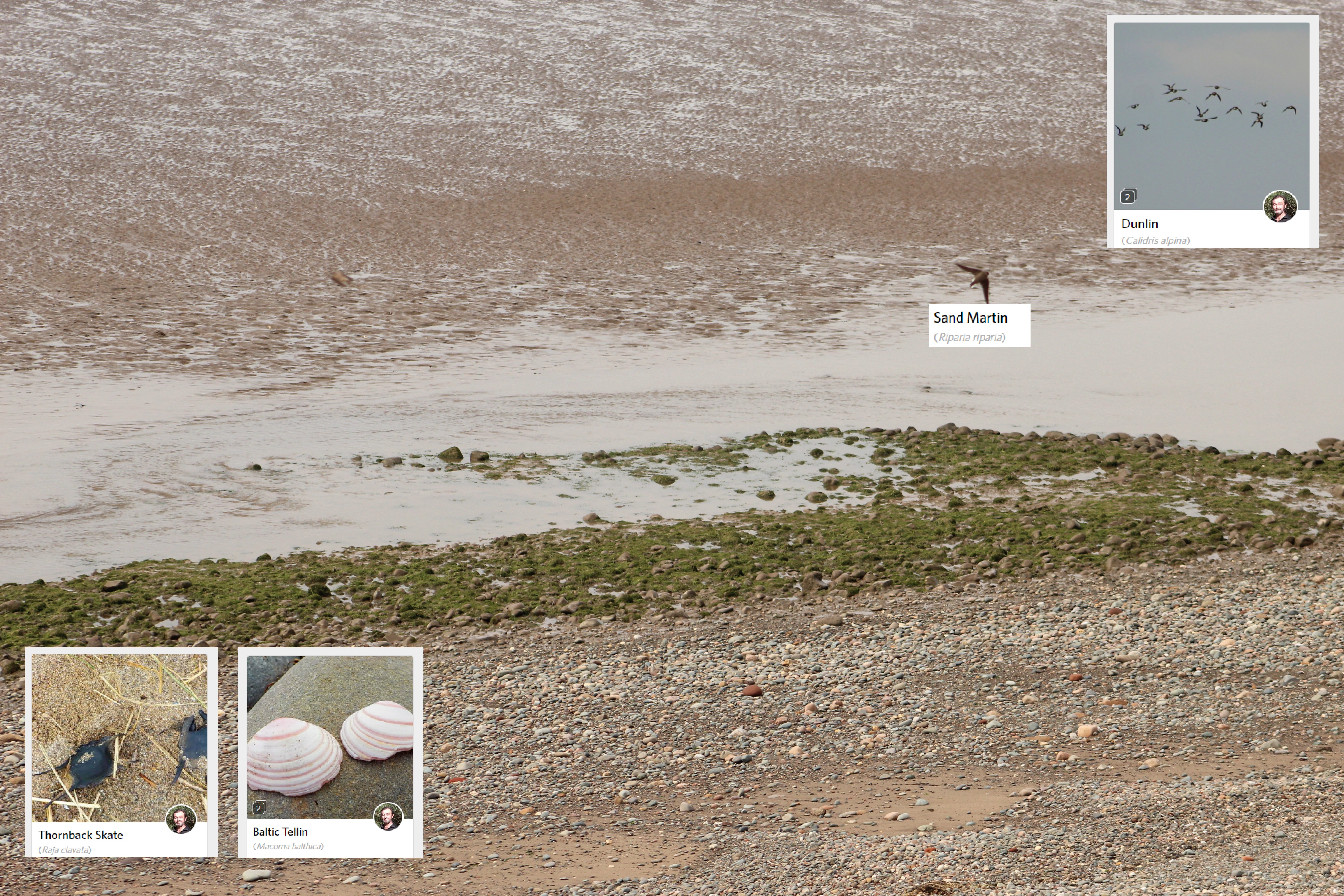
Back down on the beach and a flight of Dunlin take to the air whilst the Sand martins cavort along the shore line. Quite a few Thornback Skate egg cases lying around (see Shark!) and a Baltic Tellin shell looking very pretty in pink. Most Baltic Tellins are white, but they also come in orange and yellow as well as this rather fetching pink example.


Mawbray is famous for it's Natterjack Toads, so we took a look in the ponds. Plenty of Common Frog tadpoles but no sign of their illustrious cousins unfortunately. Natterjacks are very vocal at night, but we didn't hear any either. In the grass around the ponds St. George's Mushrooms were reasonably prolific (a good edible mushroom) and there were a few Dung Roundheads among the cow pats.


A lovely weekend, rounded off by this beautiful sunset, reflected multiple times across the Solway Firth, with the Scottish hills in the background.


Steve's Vintage Collectables. (click to visit)

I'm still showcasing the royal memorabilia, but this will gradually be replaced as new items get added to the shop. If you're looking for the royal thimbles, they went out to America earlier this week, and the Hillstonia vase sold yesterday evening.


Steve's Books (click to visit)

A good time to buy The Quick Guide to Creepy-Crawlies as the minibeasts start to appear in all their variations.


Follow me on Steve's Nature Plus and also on Twitter (@Steve's Nature), Facebook (Steve Daniels),and Instagram (Steve Daniels Cumbria)

Or why not join the 2.5k members of our Naturalists group?


All the best,


Steve


Monday, 27 February 2023

Beyond Crete


For sixteen years, I lived a somewhat idyllic life on the island of Crete in the Mediterranean, and many of you know me from The Crete Nature Blog. I returned to the UK in 2020, settling in Cockermouth in Cumbria, where my life has changed, almost beyond recognition. It is now, I am glad to say, just as idyllic (albeit somehat damper) and new adventures await.


As well as having a host of new wildlife to observe, new plants to pluck from the hedgerows and cook in Steve's Wild Kitchen, I have also developed an interest in human history and begun to collect various curios to adorn my new 'bachelor pad' set in The Old Cornmill, on the banks of the River Derwent. These, I live with for a while and then sell on through my little online antiques shop, SVCwithEtsy. It makes a little beer money, but it's mainly for the joy of finding out the history behind the object.


I have also acquired a new life partner in Ishbel, who shares my love of nature and objects from a byegone age, which is presumably what she sees in me. Apart from me, she has also recently invested in a turn of the century campervan. It is in this, along with Mattie the hyperpup, that we intend to explore this beautiful country. So, join us, if you will, as we explore the countryside, take in a few antiques fairs along the way, sample as much local produce as we can, and generally appreciate Cumbria, Westmorland and beyond.


Make a note now, to subscribe to Steve's Nature Plus.


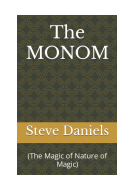
PS You may have noticed, in the second picture, a set of volumes held between two industrial book ends. This is my first full length novel, The MONOM, which is now available as a paperback and ebook on Amazon. This is the fifth book I've written since leaving Crete, and you can see them all on my author page.


All the best,


Steve


SVCwithEtsy.


Follow me on Steve's Nature Plus

and also on Twitter Steve's Nature, Facebook Steve Daniels Naturalistsand Instagram

Steve Daniels Cumbria


Wednesday, 4 January 2023

Remotest Cumbria


With all the razzmatazz of Yuletide in full swing, it's nice to take some time out and look out over the fells, in a remote spot, miles from anywhere.


The only civilisation for miles, nestled alongside a powerful beck called the Cald, is the appropriately named village of Caldbeck. Here, you can walk alongside the beck for miles in perfect peace and tranquility.


The beck is so powerful that it provided the motive force for The Howk bobbin mill, which turned coppiced wood into bobbins for the textile industry from 1857 to 1924. The beck also powered fulling, corn, flax, wool, wood, paper and smelting mills. There was also a barytes crushing works and a brewery in the village. Quite a hive of industry back in the day.


You can see and hear the force of the water in a series of falls above the bobbin mill. Not much wildlife about today, apart from a phalanx of ducks on the village green and a buzzard in the sky above. Hart's-tongue ferns and Dog's Mercury line the path, and various mosses and orange Jelly Spot fungus add a little colour to the fence posts.


In fact, most of the invertebrate life that I've seen over winter so far, has taken up residence with me in the Old Corn Mill. This moth of the Tortricidae family seems perfectly content in the bathroom.


Talking of the Old Corn Mill. Do you remember that sprouting acorn we found, back in November? (see Fine Weather For Ducks) I promised to let you know how it was getting on, and it's doing just fine on the kitchen windowsill. maybe I'll take up bonzai this year!


Meanwhile, back in Caldbeck, it's beginning to rain, so it's time to retreat to The Oddfellows Arms. This year, I thought I'd introduce you to some of the Cumbrian hostelries, for those of you who are thinking of visiting the area. We didn't eat here (too much food in the fridge at home) but the menu looks good and they also do accommodation. 


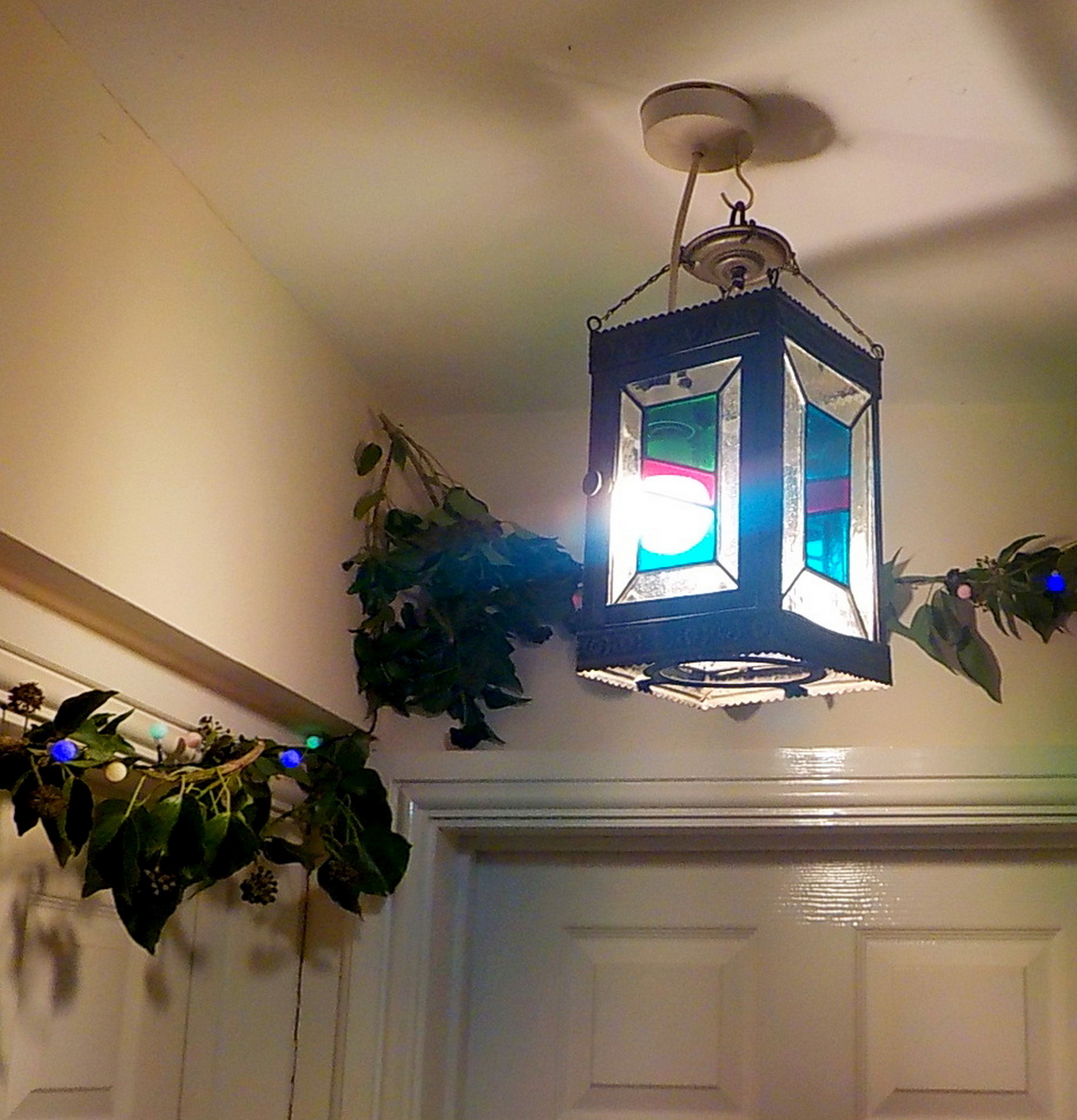
Ah well, it's twelfth night tomorrow, so the decorations will have to come down. Don't want bad luck for the rest of the year. The Victorian lantern, by the way, is one of many items on sale at my little on-line shop, SVCwithEtsy. If you enjoy my nature blogs, you may also like my history blogs. Mainly shop news at the moment, but I'm going to expand it into fascinating insights behind the products. This week I'll be covering the silver trade and tobacconalia.


One other bit of news to tell you about; my first full length novel, The MONOM (The Magic of Nature of Magic) will be published later this month. It's an intriguing tale of the natural and supernatural worlds, in which you, the reader, are one of the four main characters. I am one of the other main characters, and of course, we have a nemesis. It is one of your jobs to uncover their identity. We are all linked together by a nineteenth century naturalist named Singent Hellington-White, and the journey we undertake spans from 1858 to the present day from Crete, to London, to Haiti. 400 pages of adventure to lose yourself in.

You can keep up with all my blogs and books, and a load more besides, by subscribing to my website Steve's Nature Plus

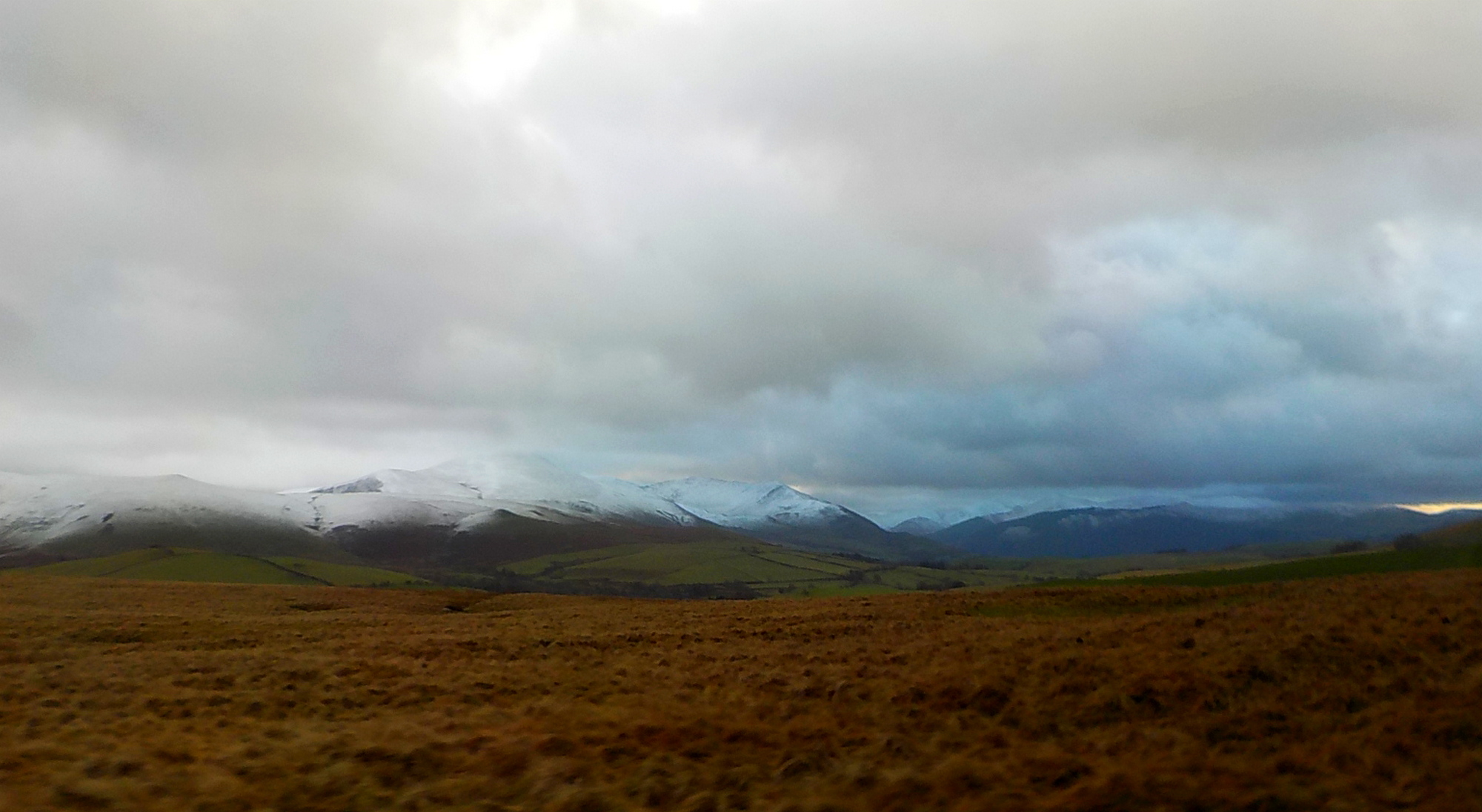
All that remains is for me to wish you all A Happy New Year, and I'll leave you with this panorama of the snow covered Cumbrian fells.

All the best,

Steve


Wednesday, 16 November 2022

Much-Birding-in-the-Marsh


When the wind is howling, fit to blow you off your feet, going out for a walk can be a bit daunting, even for the most enthusiastic of naturalists. Much better to pack a thermos of hot soup and head for one of your local bird hides.


[Tip: search 'bird hides near me' in Google Maps]


Which is where I'm taking you today. Campbell Marsh RSPB reserve, to be precise. Up on the Solway Firth. The first hide is open, facing the wind, and you can hardly prise the door open. Nothing much going on at the second, but third time lucky. We're out of the wind, and there are birds to be seen. A large flock of Widgeon, albeit a distant flock. However, we do have a Little Egret pottering about down here, and he's just been joined by a Grey Heron. Little Egrets are on the rebound in Britain. They used to be plentiful (in 1465, a banquet for the new Archbishop of York reputedly included a thousand of them). They were then slaughtered in their millions in Victorrian times, to provide feathers for women's hats, which is one of the main reasons that the RSPB came into being, and finally, they got fed up and moved south to mainland Europe. They were virtually extinct in the UK by the 1950s.


Apart from the heron and the egret, there doesn't seem to be much happening outside at the moment. Meanwhile, I suggest we take a tip from that Orb Weaver spider up there, happily devouring some species of fly, and break open the soup.


Lights, camera, action. A flock of Barnacle Geese are just honking in. Back in the 12th century, it was thought that these birds hatched from the Goose Barnacle, hence their common English name. In Ireland, the myth persisted until fairly recently, and they could be eaten during Lent, as they were considered to be fish, and not poultry. I have a sneaking feeling that this was just a work-around!


It's all happening now. A trio of Whooper Swans have just arrived. These are larger than the similar looking Bewick Swan, and have more yellow on their beaks. They overwinter here, having bred in subarctic Eurosiberia. When they prepare to migrate, they have a sort of head bobbing competition. The bobbiest bird gets to lead the migration. Swan democracy!


And another Little Egret has just arrived, much to the chagrin of the initial Egret, who was first upon the scene. At least, this looks to be more of an aerial argument, rather than a courtship display. But who knows? This November has been the warmest on record, so maybe they think it's Spring. A wonderful display, though, whatever the motivation.


Oh, this is really the icing on the cake. A pair of Marsh Harriers. The lighter colured male is highly distinctive, whereas the darker female is a little harder to recognise. To add to the confusion, the dark one could be a juvenile. The young of both sexes look very similar to the adult female. These are wetland specialists, feeding on small mammals, small birds, insects, reptiles, and frogs. They are ground nesting, typically in reed beds. Nearly extinct in the UK by the early 20th century, due to persecution, habitat destruction, and pesticide poisoning, they have come back strongly, and are rated as 'of least concern' by the IUCN.


So, from a slow start, it has turned into quite an exciting morning. Oh, and if the title of this post rings a bell, then you must be even older than me. Much-Binding-in-the-Marsh was a BBC radio comedy show from the 1940s and 50s. And, talking of things from the past, following on from Steve's History of Things, I have just launched a new magazine which you can find on Steve's Nature Plus.


All the best,


Steve


Beetles and Butterflies; spiders and scorpions; woodlice and worms. How do you tell them all apart? To say nothing of crane flies, dragonflies, bee flies and yet more butterflies. Are they all flies? If not, why call them so? If you're fascinated but confused by the beautiful world of the very small, then this is the book for you.

82 pages of information on all aspects of the world of minibeasts, with over 100 photographs and illustrations, this book will help you track down and identify any arthropod, in its adult or juvenile state, anywhere in the world.

See all of my books at author.to/SteveDaniels


Follow me on Steve's Nature Plus

and also on Twitter Steve's Nature, Facebook Steve Daniels Naturalists, and Instagram

Steve Daniels Cumbria


Recent Posts