Showing posts with label Mistletoe. Show all posts

Wednesday, 21 December 2022

Happy Yuletide


At 9.47 GMT this evening it will have been dark, here in Cockermouth, for about six hours. All across the northern hemisphere, it is the longest night of the year, as the sun reaches its lowest point, directly over The tropic of Capricorn. It also marks the beginning of Yuletide, twelve days of convivial merriment and good natured mischief, to acknowledge the onset of winter and look forward to the coming of longer days and shorter nights.


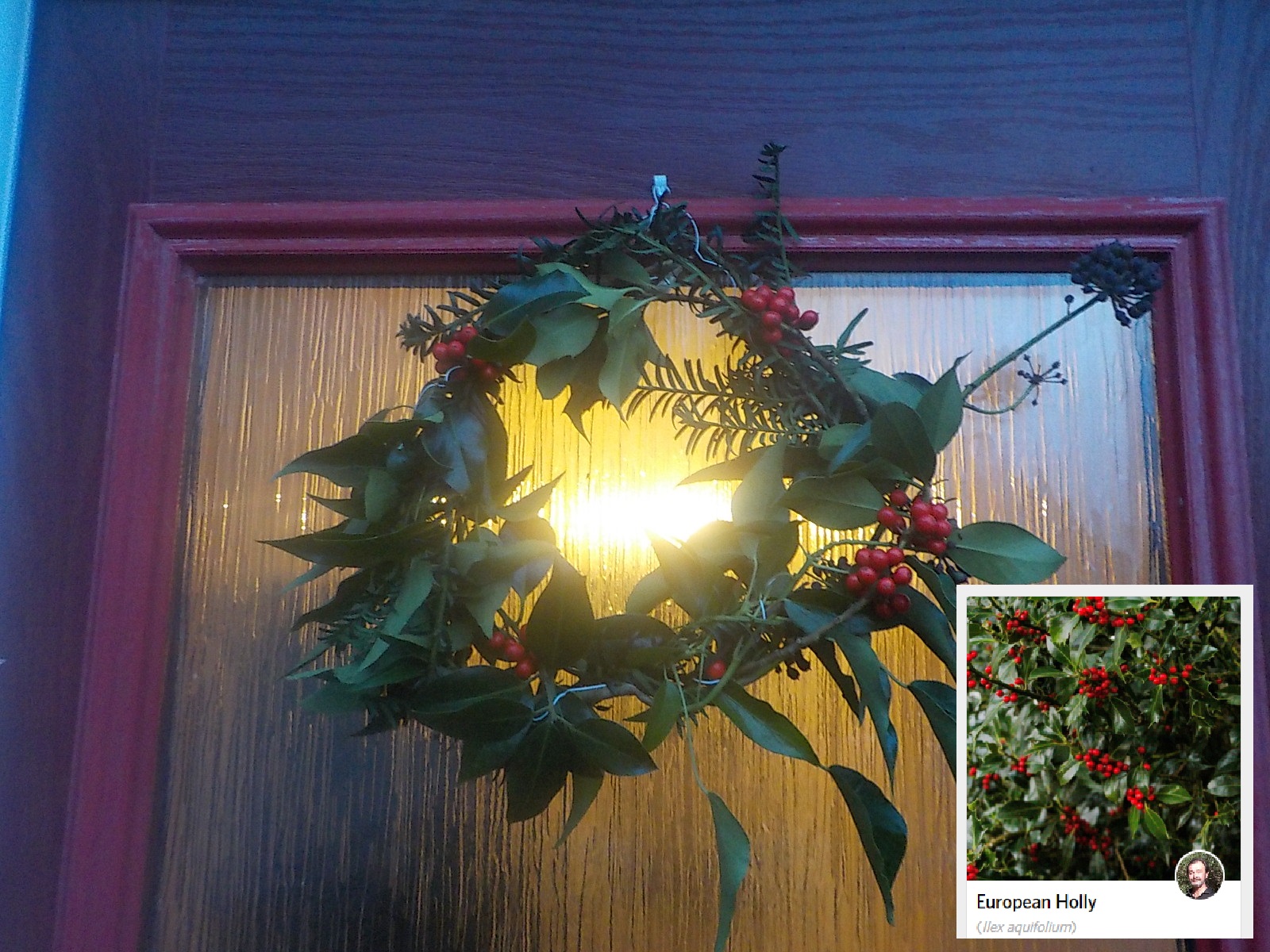
It is also the day when I traditionally decorate my abode with lights and herbage from the hedgerows. The holly and the ivy have been used since pagan times to ward off evil spirits, which is why we put a wreath containing these plants upon the front door.


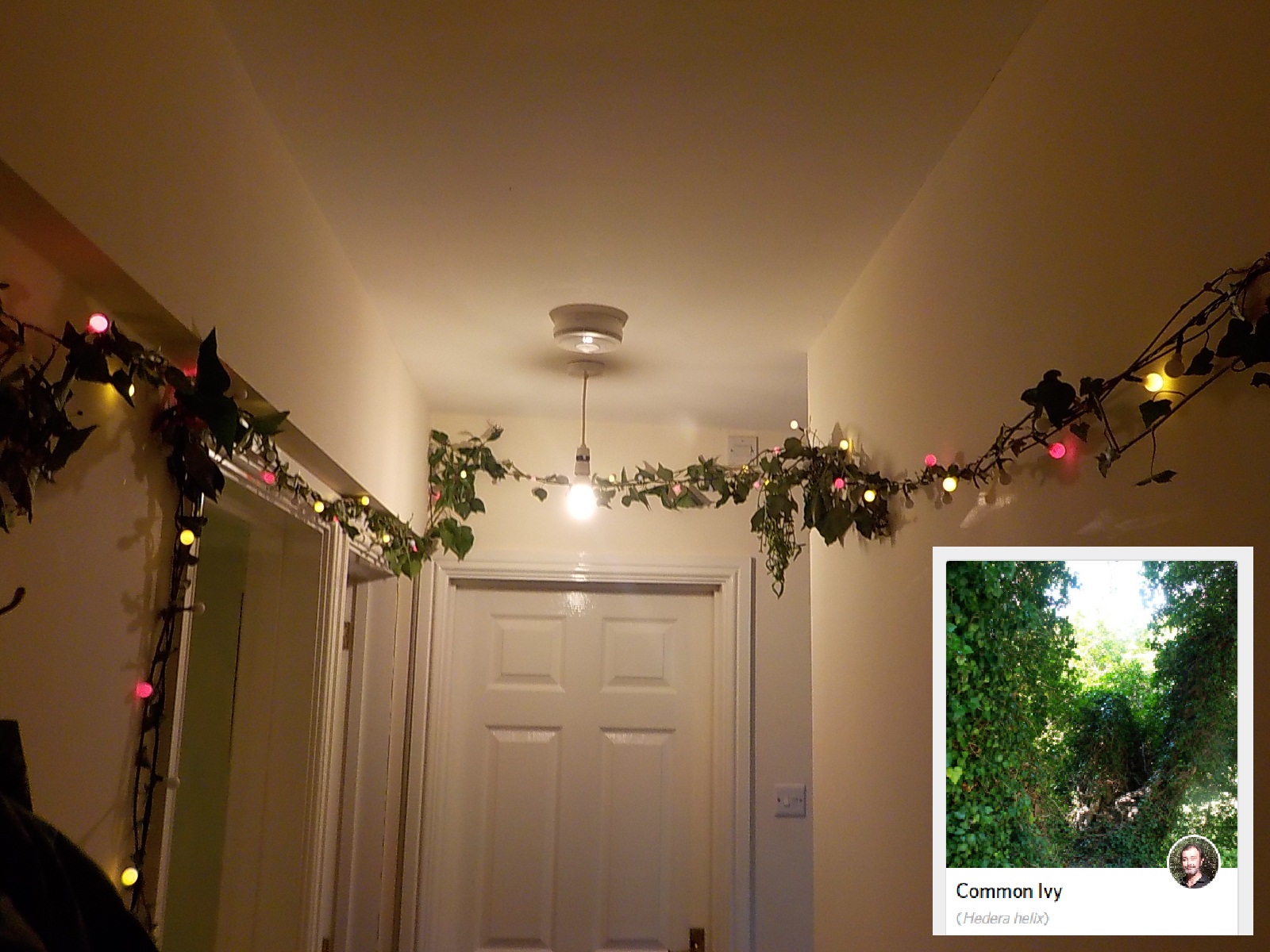
Ivy, in long strands, when wrapped around a string of lights, makes a highly effective decoration. It is also cheaper, and more environmentally friendly, than shop bought chains imported from the far east.


Similarly, small conifer sprigs and cones can be used for simple, yet effective, centrepieces.


And finally, where would we be without the mistletoe? Mistletoe features in many winter mythologies, but the practice of kissing under it probably only dates from the 18th century. Below stairs, servants were permitted one kiss for each berry plucked from the plant.


Happy Yuletide,


Steve

Wednesday, 20 January 2021

A Fjord By Any Other Name - Solway Firth


Wrap up warm. It's bitter out there and we're off to the coast. In particular, to the eastern end of the Solway Firth, an Area of Outstanding Natural Beauty. England lies on one side of the firth (which is cognate to the Scandinavian word fjord) and Scotland lies on the other. There's an RSPB Nature Reserve which we'll pop into, but first, let's just take a little walk along the shore and see who's about. I think we'll leave the splashing about in the rock pools until it's a bit warmer, but in the meantime, we've a flock of Sea Pies probing the mud flats. That's an old name; for the past few hundred years we've known them as Oystercatchers (Haematopus ostralegus). Individual birds have different bill shapes, depending on their preferred diet. Those who like worms have pointed bills, those who incline towards molluscs, including oysters, have flatter bills for prising them open. Evolution in action?


This is Campfield Marsh Nature Reserve. Probably be quite nice when it's finished. For the moment though, it mainly consists of one long track, bordered by thick hedgerow, which effectively blocks all views of the scrapes where the birds are. There are a few view points, but betwixt them and the scrapes, there is a long electric fence which the camera has no problem in focusing upon. All we can see from here are distant blobs on the water, which I'm pretty sure are birds. However, there are some magnificent viewing hides... which are closed due to Covid restrictions. This one at the end of the track appears to be unlocked... so I suggest we don't sit in it for half an hour and warm ourselves up, out of the biting wind. Oh, another couple have turned up with a picnic.

No, we don't mind if you don't sit in the hide with us, just keep to the far end. There's a grey heron out there, and a Little Egret just flying in to join him.”

Back to the car, I think. I can't feel my fingers on the camera controls. Our intrepid local guide has just gone to photograph the first snowdrops of the season, so I'll just snap these house sparows on the feeders in the car park. Even Jack the Navigator Hound is shivering and seems disinclined to photobomb this week.


News From The Old Cornmill

Earlier this week, I decided to take a stroll over to the nearby cricket ground: The pitch is frozen, but I look forward to the occasional summer Sunday afternoon, relaxing back to the sound of leather on willow. A group of Black-headed Gulls in winter plumage (hence no black heads) are posing at various angles to give 360o identification. What I'd really like to do, is get into those woods back there and view the river from the opposite direction.


Hmm, not sure that it's actually a public right of way, but we're here. Some beautiful colours in the harsh winter sunlight. The gorse has a golden glow, the Red Osier Dogwood is particularly striking against the deep green Holly and even the Mistletoe (sadly, uncollected this year, for obvious reasons) is a vivid pale green. Look at the way the sap has run down to the base of that icicle. Here we are, at the river. The building opposite is The Old Pump House. The Old Cornmill is just to the right, obscured by those bushes. The river is at mid level at the moment but Storm Christoph is due to arrive. At present we are only under a general Yellow alert but I'm glad that the flood defences have now been fitted. I'll keep you posted.

Steve'sWild Kitchen


The kitchen at The Old Cornmill is now fully functioning to my satisfaction, so It's high time for some more recipes from Steve'sWild Kitchen starting with Crispy Wild Duck and Spicy Jewelled Rice. You cannot go out and shoot ducks in the UK any more as all wild birds and their nests are protected by the Wildlife and Countryside Act 1981 but you can still legally hunt them down in supermarkets which is where I tracked mine down (near the chicken section). The ducks are farm bred Mallards, just like these on the river. Recipe here.


Until next week,


Stay happy and stay safe


Steve 


Steve's Books


The Quick Guide to Creepy-Crawlies

All you need to know to identify any type of insect, spider, worm or snail very simply and find out more about it.

Yvonne: This was a gift for a family so that the children can understand what they see on days out. The second was for me. Logical and easy to use. If you know anyone who likes nature you can be confident that gifting this book will give years of pleasure.

The Eggs of Saramova

A science fiction novella for those who don't like science fiction. A fast-paced thriller that is, literally, out of this world (and it starts right here in Crete).

Too new for reviews yet!

Not Just For Twisted Women by Steve Daniels 

A light-hearted look at life through the eyes of the fairer sex.

Janet: If you are short on time but enjoy reading and are maybe not into long extended novels then Not Just For... Twisted Women provides readers with concise stories that stand alone and most certainly entertain with their ultimate twists. Loved it.

Helen: A very good read! Well written and entertaining!

Margaret: Each quick tale gives a glimpse into a character's life and has an often humorous twist at the end. I would love to read more.

Yvonne: These days many people find it hard to find the time to read a novel, so this book of short stories is ideal to dip into. It is also makes a good gift.


Wednesday, 10 October 2018

Kroustas Forest


Last week we were looking for Griffon Vultures on the heights above Lasithi Plateau. We found some but they were flying very high. This week as we gathered on the forest road we were treated to the inspiring spectacle of nine of these magnificent birds not fifty feet above our heads. Standing half as tall as a man and with a nine foot wingspan they truly are awesome birds. Like all vultures they feed on carrion and will often circle around elderly animals that seem to have difficulty moving. As this accurately describes quite a number of our Sunday Strollers we considered it wise to move into the cover of the trees without further delay.


Kroustas is primarily a pine forest but it was the Juniper that caught the group's interest. Possibly because I informed them that a handful of juniper berries, when added to a bottle of the local moonshine and left to steep, gave a result that was (to paraphrase Douglas Adams) something that was almost, but not quite, entirely unlike gin. With Christmas not so far away they fell upon the bush like a swarm of locusts. Still on the Christmas theme, high above our heads Mistletoe was growing in large enticing balls. Although parasitic it does very little harm to the trees and is a net benefactor to the forest. Its berries attract birds, small mammals and insects which increases the biodiversity of the area. An American study showed that twice as many juniper bushes sprouted where mistletoe was present compared with areas where no mistletoe existed. The seeds of both plants being distributed via the digestive systems of birds and small mammals and mistletoe is better at marketing its presence than juniper.


We emerged from the forest onto a rocky outcrop with tremendous views over the lower forest and the Gulf of Mirabello. I placed three of our gentlemen on said outcrop in the hope of enticing the vultures back and went off to study butterflies. Last week we saw the Painted Lady (Vanessa cardui) and this week it was her sister, the Red Admiral (Vanessa atalanta), who was following us about. So, if your name is Vanessa, you are named after a beautiful butterfly. After that, of course, you have a choice of being a burly Russian seaman or a Portsmouth lady of the night, so it's probably best to stop at butterfly.


We then moved off to a different part of the forest, the location of which I will not reveal. The reason being that Steve Lenton, our semi-resident botanist came across a small plant which looked as if it had been dreamed up by the makers of Dr. Who. This was the Cretan Biarum (Biarum davisii) a flower (honestly) that is on the IUCN list as 'near threatened'. The reason it is near threatened is because the major threat is from avaricious rare bulb collectors and hence the reason for not publishing its exact location as it has never been recorded in this area of Crete before. Rare bulb and rare animal collectors are the scourge of biodiversity and should be put up against the wall and shot in my opinion.


Dragonflies were also darting around us, which may seem odd in a habitat that had no rivers, streams or ponds, as dragonfly larvae are aquatic. But all dragonflies have different requirements. Some like to lay their eggs in running water and some in standing water. This particular dragonfly, the Red-veined Darter, lays its eggs in shallow puddles as do all in the genus Sympetrum and when it rains in a forest, shallow puddles become particularly abundant.


The Taverna Bit

Having completed two strolls in one morning we repaired to lunch at the Matraia taverna in Kroustas village to replace any calories which we may have inadvertently burnt off in the preceding couple of hours. A lovely liver in red wine sauce was the special of the day so quite few of us opted to top up our iron and antioxidant levels.


Diary Dates


Stroll #4
Sunday 14th October
11 am
Almyros Wetlands, south of Agios Nikolaos


A chance to see amphibians, dragonflies and migratory birds.


Stroll #5
Sunday 21st October
11 am
Bramiana Reservoir
(Details next week)

Not Just For Twisted Women by Steve Daniels 

A light-hearted look at life through the eyes of the fairer sex. 

Kindle Edition 1.99 pounds sterling (or equivalent).


Paperback edition will be available in time for Christmas.
Read snippets, samples and stuff at Steve's Books


*********************************************************************
LINKS:
Share your nature thoughts, photos and comments on Naturalists (the facebook page that accompanies this blog)

Explore the region with the #CreteNature interactive Hiking and Nature Map


Wednesday, 11 June 2014

Gorgeous Gorge

Above Ha Gorge with Holly Oak inset


The temperatures are just touching the thirty centigrade mark down here on the south east coast so I thought I’d take you somewhere cooler today – up into the Thriptis mountains. This is one of four mountain ranges on the island and dominates the eastern end and we are currently looking down upon Ha Gorge where I‘m hoping we’ll find a very particular bird. But more of that later: for now just breathe in that mountain air, redolent with pine, sage and thyme and we’ll walk along the road a bit and then cautiously make our way down. Notice the wind twisted, stunted trees with tiny leaves like holly? They’re oak trees – honestly, despite their leaves they produce acorns not berries, almost as if they couldn’t quite decide  what type of tree to be.  We couldn’t decide either which is why we call them Holly Oaks or, scientifically, Quercus (oak) ilex (holly).

 
Yellow Star-thistle 
If, like me, you always thought of thistles as annoyingly prickly plants with rather dull mauve flowers take a closer look at these little guys by the roadside currently attacking our ankles. These are Yellow Star-thistles and those spines look positively lethal, like some mediaeval weapon or instrument of torture. These spines only appear during summer to stop it being eaten during its flowering (and thus reproductive) cycle.  It deters virtually everything bar the ubiquitous goats who’s bells I can hear clonking away somewhere below us. 


Cretan Small Heath
As we descend the hillside we lose the thistles as the sage and thyme out compete them and relegate them to the roadsides. In other places where they have been introduced, such as California in the USA, Australia and South America these natural competitors aren’t around to keep them in check and they have become an invasive nuisance. As we tread our way down the herb strewn hillside releasing all these wonderful aromas we are disturbing a number of very small butterflies with every step. They are Cretan Small Heath butterflies that are endemic to the island and particularly abundant in June when many of the herbs come into flower. Although they are inordinately fond of herbs as a source of nectar when they are adults as caterpillars they are grass eaters which is where the females lay their eggs.


Foliose Lichen


If you cast your mind back to early February when we visited A Kingdom in the Pine Woods you may recall that we found some crustose lichens. Well this is another type of lichen: a foliose lichen. The word foliose means leaf-like and unlike the crustose lichens that form a crust upon the rocks these are more three dimensional and their branches do look vaguely leaf-like. Personally they remind me more of a branching coral but maybe that’s just me.


Mistletoe growing on Pine
Taking our noses from the rocks for a moment and looking upwards, check out the branches of that pine tree over there. The plant with the white berries festooning its branches is Mistletoe, a parasitic plant that draws nutrients from the host plant’s tissues. Now, if you’re English like me you’ll be saying “hang on a minute, I thought mistletoe grew on apple trees?” True, in England it does grow on apple and certain other broad leaved trees but here in Crete we have our own subspecies Viscum album subsp. Creticum  which grows only on this particular species of pine: Pinus brutia. It was only scientifically described  very recently (in 2003 to be precise) so it was worth trekking down here just for that.


View from the top of Ha Gorge
And the view of course. This is about as far down as we can go without ropes and other specialist equipment. At this point the Thriptis mountains end in a sheer wall of rock, hundreds of feet high and cleft in two from the top to the bottom by one of the wildest canyons in Crete, the Ha Gorge. Beyond is a flat isthmus of land that runs across the island from Pachia Ammos to Ierapetra and on the other side of the isthmus are the foothills of the Dhikti mountains. At the top you can see the Gulf of Mirabello and a mere 88 miles to the north east (or 142km if you’re that way inclined) lies the volcanic island of Thira (aka Thera or Santorini). This is the volcano that blew apart the Minoan civilisation in Crete some 3,600 years ago. Hopefully it won’t do it again (although it erupted three times last century so it may be warming up for something) because that isthmus down there could be drowned in the resulting tidal wave and Ierapetra would become the new Atlantis.


Alpine Chough (c) Nikos Samaritakis
But listen! What a cacophony of sound bouncing off the walls of the canyon below. There they go, those are the particular birds I was hoping to show you. A whole flock of about two dozen choughs streaming up the gorge. What a shame they’re just that bit too far down for us to see them properly. I really wanted to see the colour of their bills as I’ve read that both Red-billed Choughs and the rarer yellow billed Alpine Choughs are to be found here. I’ll tell you what, next week we’ll go and explore the foot of the gorge and maybe we’ll catch a glimpse of them from there.

Until next week – happy hunting.


***********************************************************************************
With thanks this week to Steve Lenton at Flowers of Crete; for the species identification of the Yellow Star-thistle Centaurea idaea and a big thank you to Nikos Samaritakis at Crete Birding for lending me his excellent picture of the Alpine Chough.

LINKS:
Naturalists (the facebook page that accompanies this blog)


Recent Posts