Showing posts with label oak. Show all posts

Wednesday, 4 January 2023

Remotest Cumbria


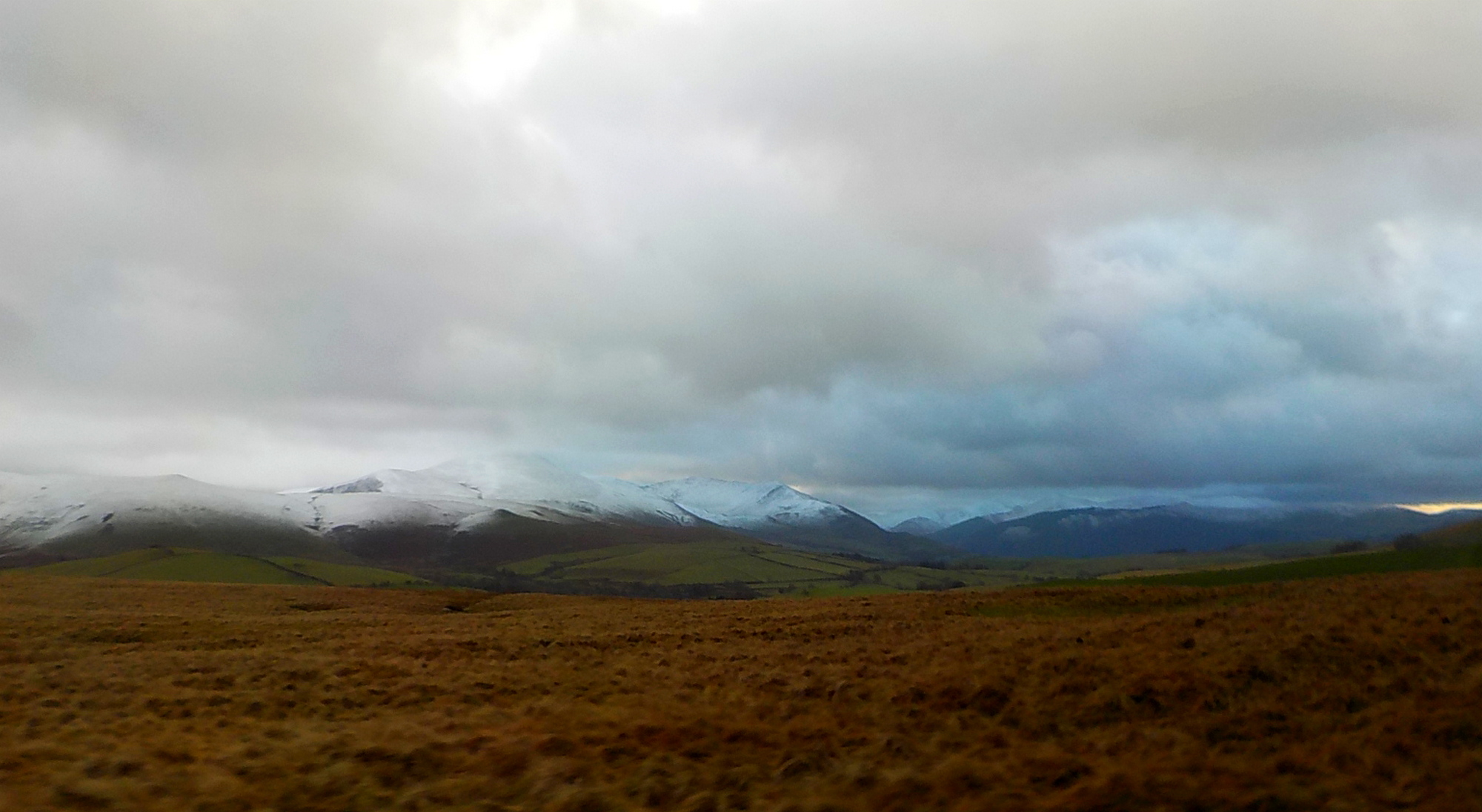
With all the razzmatazz of Yuletide in full swing, it's nice to take some time out and look out over the fells, in a remote spot, miles from anywhere.


The only civilisation for miles, nestled alongside a powerful beck called the Cald, is the appropriately named village of Caldbeck. Here, you can walk alongside the beck for miles in perfect peace and tranquility.


The beck is so powerful that it provided the motive force for The Howk bobbin mill, which turned coppiced wood into bobbins for the textile industry from 1857 to 1924. The beck also powered fulling, corn, flax, wool, wood, paper and smelting mills. There was also a barytes crushing works and a brewery in the village. Quite a hive of industry back in the day.


You can see and hear the force of the water in a series of falls above the bobbin mill. Not much wildlife about today, apart from a phalanx of ducks on the village green and a buzzard in the sky above. Hart's-tongue ferns and Dog's Mercury line the path, and various mosses and orange Jelly Spot fungus add a little colour to the fence posts.


In fact, most of the invertebrate life that I've seen over winter so far, has taken up residence with me in the Old Corn Mill. This moth of the Tortricidae family seems perfectly content in the bathroom.


Talking of the Old Corn Mill. Do you remember that sprouting acorn we found, back in November? (see Fine Weather For Ducks) I promised to let you know how it was getting on, and it's doing just fine on the kitchen windowsill. maybe I'll take up bonzai this year!


Meanwhile, back in Caldbeck, it's beginning to rain, so it's time to retreat to The Oddfellows Arms. This year, I thought I'd introduce you to some of the Cumbrian hostelries, for those of you who are thinking of visiting the area. We didn't eat here (too much food in the fridge at home) but the menu looks good and they also do accommodation. 
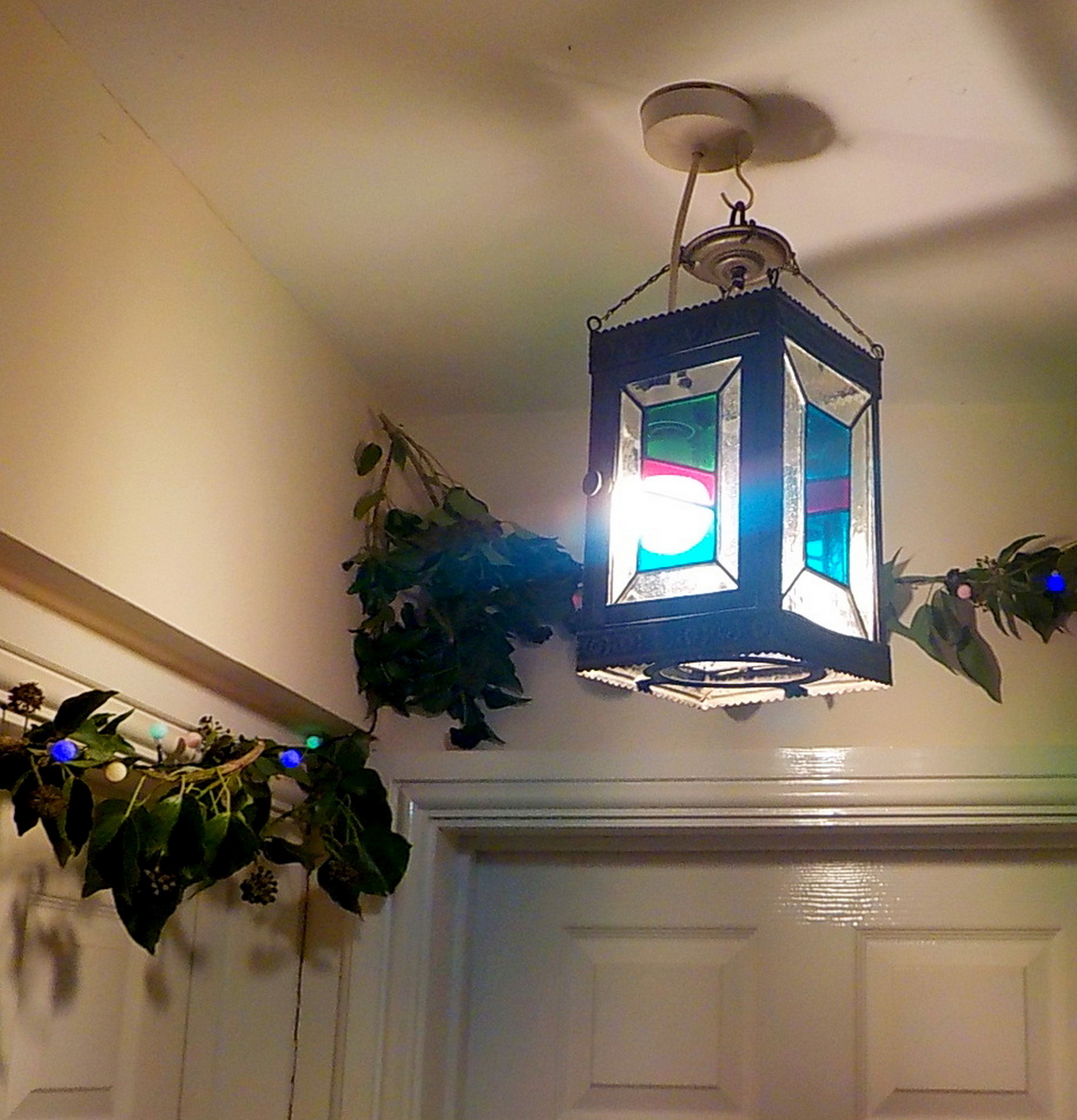


Ah well, it's twelfth night tomorrow, so the decorations will have to come down. Don't want bad luck for the rest of the year. The Victorian lantern, by the way, is one of many items on sale at my little on-line shop, SVCwithEtsy. If you enjoy my nature blogs, you may also like my history blogs. Mainly shop news at the moment, but I'm going to expand it into fascinating insights behind the products. This week I'll be covering the silver trade and tobacconalia.


One other bit of news to tell you about; my first full length novel, The MONOM (The Magic of Nature of Magic) will be published later this month. It's an intriguing tale of the natural and supernatural worlds, in which you, the reader, are one of the four main characters. I am one of the other main characters, and of course, we have a nemesis. It is one of your jobs to uncover their identity. We are all linked together by a nineteenth century naturalist named Singent Hellington-White, and the journey we undertake spans from 1858 to the present day from Crete, to London, to Haiti. 400 pages of adventure to lose yourself in.

You can keep up with all my blogs and books, and a load more besides, by subscribing to my website Steve's Nature Plus

All that remains is for me to wish you all A Happy New Year, and I'll leave you with this panorama of the snow covered Cumbrian fells.

All the best,

Steve


Monday, 23 May 2022

Minibeast Monday - Oak Gall Wasps: Spangles and Currants


Heart of Oak are our ships,
Jolly Tars are our men,
We always are ready: Steady, boys, Steady!
We'll fight and we'll conquer again and again.


From Heart of Oak, the official march of the Royal Navy. But who is this stowaway aboard the mighty British oak?


'Tis a lowly Common Spangle Gall Wasp, Cap'n (which just goes to prove that all the nice galls love a sailor).”

And what, pray, is a gall wasp?”

'Tis an Hymenopteran, Cap'n, of the family Cynipidae. The Common Spangle Gall Wasp going under the scientific name of Neuroterus quercusbaccarum.

I'm none the wiser.”

Common Spangle Gall Wasps are very small wasps that use oaks as part of their reproduction cycle. They use chemicals to induce the tree to form distortions on their leaves and catkins which surround and feed the developing wasp larvae. They form two types of galls: the spangles, which are flat, yellowish discs, on the underside of leaves, which turn red as they age; and the currants (pictured), which start green and then turn pink and finally red. 


If we cut the gall in half, it's just possible to see the larva in the right hemisphere. This would have emerged in the summer and laid eggs on the underside of an oak leaf to produce spangles. The spangles fall to the ground in autumn, develop through the winter (if they are not eaten) and emerge as adults in the spring. They then lay their eggs, which produce more currants and so on. Then it gets complicated: There are sexual and asexual generations plus two different types of male and female in the sexual generation. And you thought us humans invented LGBTQI?


And finally, if we extract the larva and put it under the microscope we can see... quite a mess of tangled bits and pieces. Top right is an antenna, attached to the head. The basic body shape is there, like a filled in letter 'e', and presumably the structures top left would have become wings. And if you want to know more about galls and wasps, guess what? I've found a few books on the subject. Just click on the pics for a free preview.

Paperback £12.65

Hardback and Paperback £12.00


Hardback £19.67      Paperback £16.25


Build Your Own Nature Library


All the best,


Steve


Follow me on Steve's Nature Plus

and also on


 Steve's Nature


 Steve Daniels Naturalists


Steve Daniels Cumbria


Recent Posts