Showing posts with label roe deer. Show all posts

Wednesday, 17 May 2023

Buttermere and Crummock Water


Between Buttermere and Crummock Water, a small stream runs, by the name of Buttermere Dubs, which is where we are taking you this week. Dubs is a Scottish and northern English dialect word for pools of water, or puddles. There is a pleasant walk alongside where the ewes and the lambs lazily graze. With a cuckoo calling in the distance, we are being treated to a black and white birdie show, with Magpie, Pied Wagtail, a Grey Heron and even a White-throated Dipper exploring the banks of the stream. All very idyllic.


Passing through shady glades, more Spring flowers are beginning to appear. Sorrels, who's name means sour, and worts who's name comes from the Old English Wyrt, which simply means plant. Wort was often applied as a suffix to medicinal plants, with the prefix denoting the ailment it was supposed to cure. Thus Stitchworts would cure a stitch in your side and Dropworts may have been used to alleviate dropsy (or oedema, as it is now known). Pimpernel means peppery, but I wouldn't advise eating them as they are somewhat toxic.
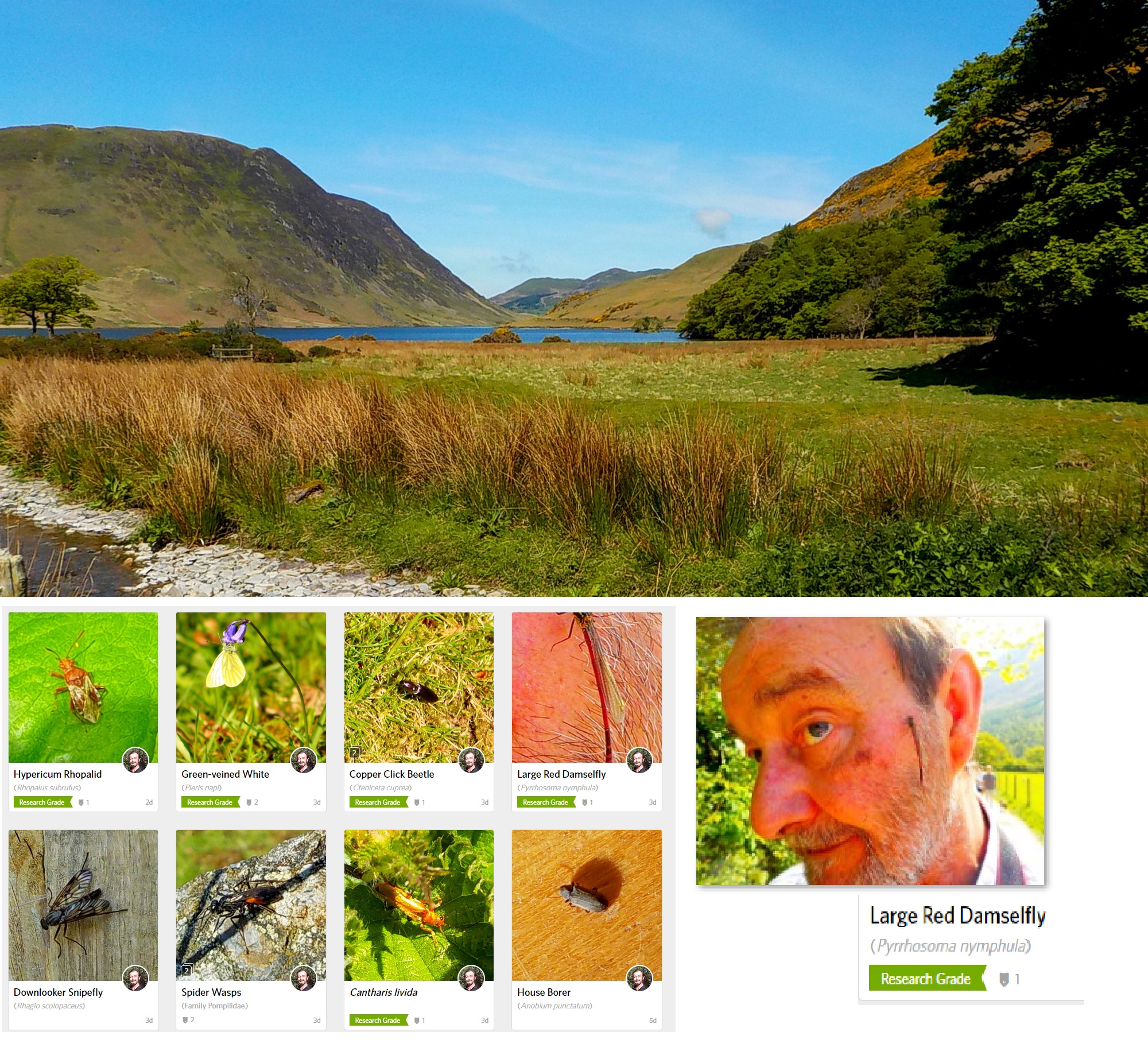


Insects are beginning to appear in greater numbers now. Usually, insects are relatively easy to photograph, but when they decide to sunbathe on your face, it can be a bit problematic! We also have our first True Bug of the year. True Bugs are a distinct order of insects, the Heteroptera (as opposed to the generic term bug that can apply to any creepy-crawly). This one is an Hypericum Rhopalid, so called because it is a member of the Rhopalidae family of scentless plant bugs, and it feeds primarily on Hypericums, or St. John's Wort. Here, the wort still identifies it as a medicinal plant, but it doesn't cure you of overbearing saintliness, it is merely that the flowers are traditionally collected around St. John's day on the 24th June. It is, in fact, a natural antidepressant, backed up by medical research.


We've now reached the edge of Crummock Water, so we'll turn back and make our way through the woods, back to Buttermere. Oh look, a Roe Deer. Given the general decline in British wildlife over the last century or so, it's nice to talk about a success story. In the early part of the twentieth century, Roe Deer were pretty much constrained to Scotland and up here in the Lake District. This population has spread south and east, and met up with reintroduced animals in the south of the country which have pushed northwards. They are still uncommon in Wales, but they're getting there.


And here we are, back at Buttermere, where the shallows are positively teeming with minnows. This shoaling behaviour is a defence mechanism against predation. They are only small fish so it pays them to forage in a group. If a predator approaches, some of the braver minnows will go to assess the danger and, providing they come back, will release a chemical which stimulates the shoal to bunch up. Basically it is a fear chemical, and individuals react by trying to get to the centre of the group. Safety in numbers. And now, it's time a spot of lunch. We have sandwiches, crisps, grapes and fizzy pop, but as my beloved has just pointed out, I seem to be a gateau short of a picnic.


Steve's Vintage Collectables. (click to visit)

I was originally going to specialise in old scientific instruments, but that proved to be a bit restrictive (and there was so much more interesting stuff out there). However, I chanced upon a few items at auction last week, and they make ideal Father's Day presents. Better for the planet than buying newly manufactured items. With over 100 items now in stock, at sensible prices, it's worth a look.


Steve's Books (click to visit)


Follow me on Steve's Nature Plus and also on Twitter (@Steve's Nature), Facebook (Steve Daniels),and Instagram (Steve Daniels Cumbria)

Or why not join the 2.5k members of our Naturalists group?


All the best,


Steve


Thursday, 13 October 2022

The Seventeen Assassins - Poisonous Fungi Special


On the north west corner of Bassenthwaite Lake lies the little known Castle How Hill Fort. This is an Iron Age hill fort and the start of our weekend peregrinations which involved a lot of fungi photography. Mycology, the study of fungi, is a fascinating hobby (Beatrix Potter was a noted mycologist) but, if 'shrooms for the pot are all that interests you, then the first thing you need to know, is how to identify The Seventeen Assassins. OK, so they won't all necessarily kill you, but they will give you an unpleasant time. One such, is this iconic toadstool, Fly Agaric (Amanita muscaria). The muscaria part of its scientific name indicates that it contains muscarine, a poison which causes nausea and sweating and a fair few other unpleasant symptoms. It also contains another nauseating substance called ibotenic acid. This is the one that causes you to lose control of your mind and limbs. It's psychotropic.


Moving around to the other side of the lake, there is a lovely walk from Ravenscroft, down to St. Briga's church, up by Mirehouse, and then back through Dodd Wood. Here, you will encounter more fungi than you can shake a stick at. Some, such as the Sulphur Tuft (Hypholoma fasciculare), which grows in large clumps on dead wood, is another of The Seventeen Assassins. Again, not deadly, but decidedly unpleasant. The Hairy Curtain Crust, or False Turkey Tail (Stereum hirsutum) is one of the, roughly, 90% of fungi that are neither poisonous nor edible. The trick with mushroom collecting for the pot, is to positively identify the edible and poisonous mushrooms that grow close to your home (many mushrooms do not travel well). You'll do well if you can find half a dozen of each. At the bottom of this post I'll give you links to The Seventeen Assassins to get you started.


Taking our eyes from the ground for a moment, there's a roe deer in the trees, at the edge of that field. This one is a male. You can tell, because the white patch on his rump is vaguely kidney shaped. Females have a heart shaped white patch. Roe deer are the major source of venison. On a foraging note, you don't need a licence to shoot deer in the UK, other than at night, or in the close season. Open season dates for deer can be found here, for those who are into huntin' shootin' and fishin'. Some of you may think that last sentence inappropriate for a nature blog. However, I am of the opinion that humans are a part of nature. We are naturally designed to be omnivorous, and taking meat, as well as plants, from the countryside, is an environmentally friendly option.


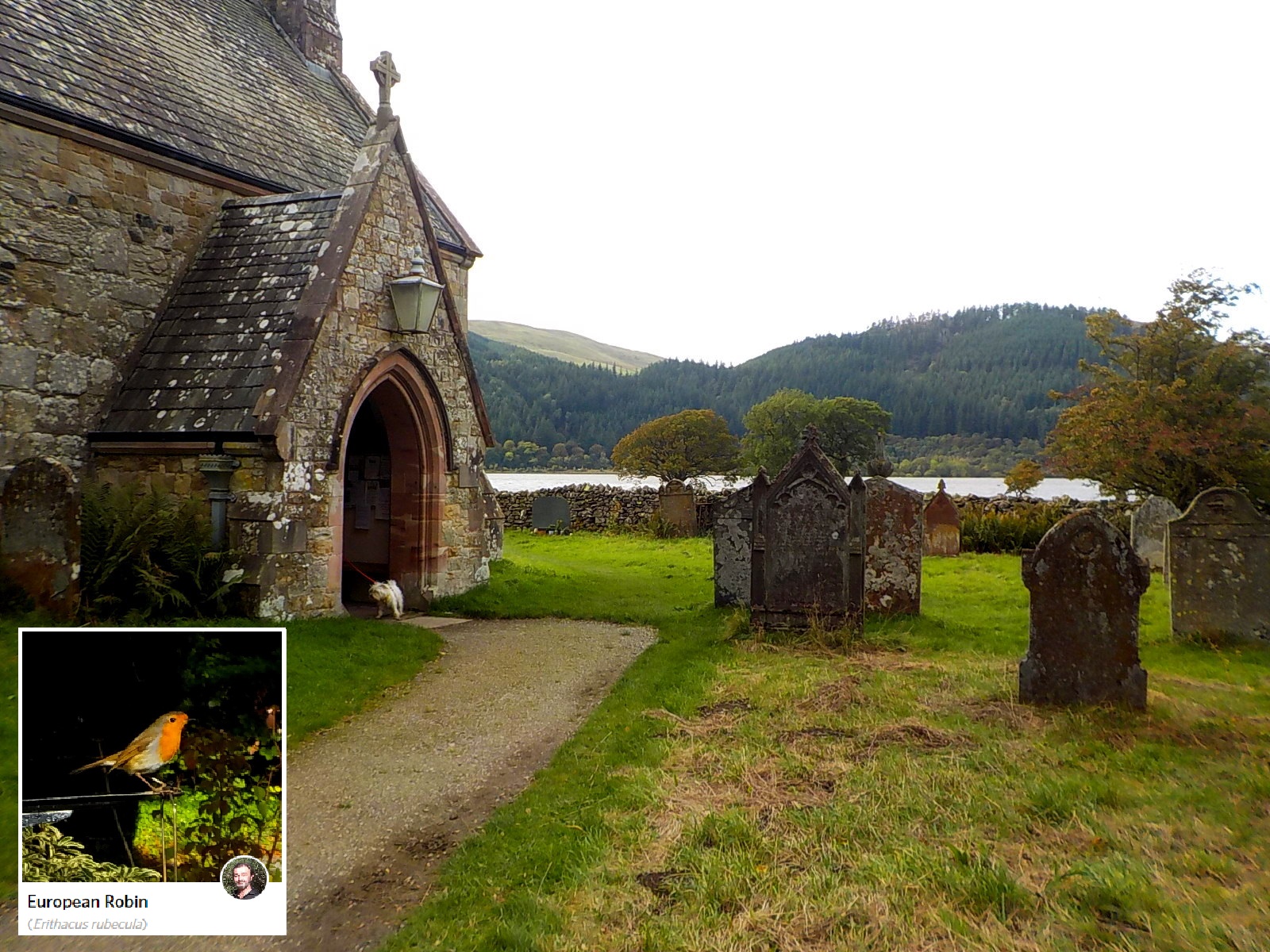
I've been bemoaning the lack of insects recently (flying insects have declined by 60% in the UK over the past 20 years). I am now beginning to notice the decline in birds (they have declined by about 20% in Europe and the UK over the past 40 years). As many birds feed their young on insects, the two facts are not unrelated. Today we've seen a few crows, a couple of wood pigeons, and a robin. Thankfully, these iconic little birds are one of the few songbirds to have shown an increase in recent years.


Robins are associated with Christmas, of course, and the more organised of you will already be thinking about Christmas presents. Not just for other people, but for yourselves. Most of us, when asked 'What do you want for Christmas', start with 'um' and finish with 'I'll have to let you know'. Books always make good presents (they are easy to wrap for a start) and I can heartily recommend John Wright's The Forager's Calendar. (A lot of the initial fungi information in this post was culled from the poisonous fungi section of the book, and all stood up to verification). But if foraging is not your thing, and you are merely interested in enjoying nature for its own sake, The Quick Guide to Creepy-Crawlies is a lovely introduction to the smaller, but vitally important, animals with which we share the planet.


All the best,


Steve


Beetles and Butterflies; spiders and scorpions; woodlice and worms. How do you tell them all apart? To say nothing of crane flies, dragonflies, bee flies and yet more butterflies. Are they all flies? If not, why call them so? If you're fascinated but confused by the beautiful world of the very small, then this is the book for you.


82 pages of information on all aspects of the world of minibeasts, with over 100 photographs and illustrations, this book will help you track down and identify any arthropod, in its adult or juvenile state, anywhere in the world.


See all of my books at author.to/SteveDaniels


The Seventeen Assassins


  1. Death Cap (Amanita phalloides)

  2. Panther Cap (Amanita panthrina)

  3. Fly Agaric (Amanita muscaria)

  4. Deadly Webcap (Cortinarius rubellus)

  5. Deadly Fibrecap (Inosperma erubescens)

  6. Dapperlings (Lepiota spp.)

  7. Brown Roll-rim (Paxillus involutus)

  8. Livid Pinkgill (Entoloma sinuatum)

  9. Fool's Funnel (Clitocybe rivulosa)

  10. False Morel (Gyromitra esculenta)

  11. Angel Wings (Pleurocybella porrigens)

  12. Yellow Stainer (Agaricus xanthodermus)

  13. The Sickener (Russula emetica)

  14. Beechwood Sickener (Russula nobilis)

  15. Sulphur Tuft (Hypholoma fasciculare)

  16. Earthballs (Scleroderma spp.)

  17. Bitter Bolete (Tylopilus felleus)


Follow me on Steve's Nature Plus

and also on


Steve's Nature


Steve Daniels Naturalists


Steve Daniels Cumbria


Recent Posts