Showing posts with label Lake District. Show all posts

Wednesday, 17 May 2023

Buttermere and Crummock Water


Between Buttermere and Crummock Water, a small stream runs, by the name of Buttermere Dubs, which is where we are taking you this week. Dubs is a Scottish and northern English dialect word for pools of water, or puddles. There is a pleasant walk alongside where the ewes and the lambs lazily graze. With a cuckoo calling in the distance, we are being treated to a black and white birdie show, with Magpie, Pied Wagtail, a Grey Heron and even a White-throated Dipper exploring the banks of the stream. All very idyllic.


Passing through shady glades, more Spring flowers are beginning to appear. Sorrels, who's name means sour, and worts who's name comes from the Old English Wyrt, which simply means plant. Wort was often applied as a suffix to medicinal plants, with the prefix denoting the ailment it was supposed to cure. Thus Stitchworts would cure a stitch in your side and Dropworts may have been used to alleviate dropsy (or oedema, as it is now known). Pimpernel means peppery, but I wouldn't advise eating them as they are somewhat toxic.
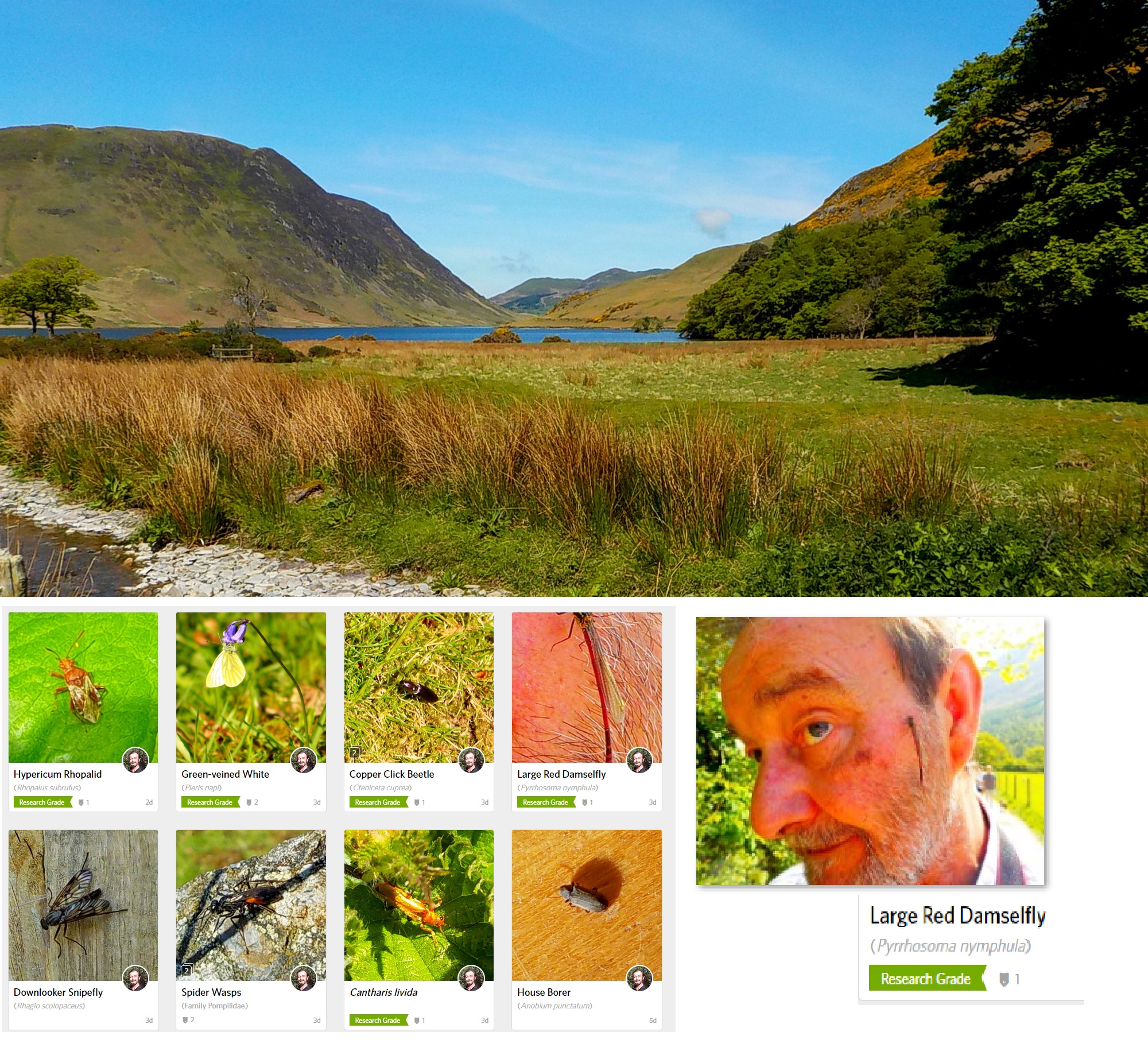


Insects are beginning to appear in greater numbers now. Usually, insects are relatively easy to photograph, but when they decide to sunbathe on your face, it can be a bit problematic! We also have our first True Bug of the year. True Bugs are a distinct order of insects, the Heteroptera (as opposed to the generic term bug that can apply to any creepy-crawly). This one is an Hypericum Rhopalid, so called because it is a member of the Rhopalidae family of scentless plant bugs, and it feeds primarily on Hypericums, or St. John's Wort. Here, the wort still identifies it as a medicinal plant, but it doesn't cure you of overbearing saintliness, it is merely that the flowers are traditionally collected around St. John's day on the 24th June. It is, in fact, a natural antidepressant, backed up by medical research.


We've now reached the edge of Crummock Water, so we'll turn back and make our way through the woods, back to Buttermere. Oh look, a Roe Deer. Given the general decline in British wildlife over the last century or so, it's nice to talk about a success story. In the early part of the twentieth century, Roe Deer were pretty much constrained to Scotland and up here in the Lake District. This population has spread south and east, and met up with reintroduced animals in the south of the country which have pushed northwards. They are still uncommon in Wales, but they're getting there.


And here we are, back at Buttermere, where the shallows are positively teeming with minnows. This shoaling behaviour is a defence mechanism against predation. They are only small fish so it pays them to forage in a group. If a predator approaches, some of the braver minnows will go to assess the danger and, providing they come back, will release a chemical which stimulates the shoal to bunch up. Basically it is a fear chemical, and individuals react by trying to get to the centre of the group. Safety in numbers. And now, it's time a spot of lunch. We have sandwiches, crisps, grapes and fizzy pop, but as my beloved has just pointed out, I seem to be a gateau short of a picnic.


Steve's Vintage Collectables. (click to visit)

I was originally going to specialise in old scientific instruments, but that proved to be a bit restrictive (and there was so much more interesting stuff out there). However, I chanced upon a few items at auction last week, and they make ideal Father's Day presents. Better for the planet than buying newly manufactured items. With over 100 items now in stock, at sensible prices, it's worth a look.


Steve's Books (click to visit)


Follow me on Steve's Nature Plus and also on Twitter (@Steve's Nature), Facebook (Steve Daniels),and Instagram (Steve Daniels Cumbria)

Or why not join the 2.5k members of our Naturalists group?


All the best,

Steve


Thursday, 9 March 2023

Elvis Road Tour 2023


Spanner!” said Ishbel, looking me in the eye.

A bit rude, I thought, wondering what I'd done to deserve this verbal abuse.

For the gas bottle,” she explained.

We were loading the last items onto the campervan, now named Elvis for its propensity to shake, rattle and occasionally roll. March 1st, the beginning of meteorological Spring and we were heading down into the fells for a two night stay at Skelwith Fold.

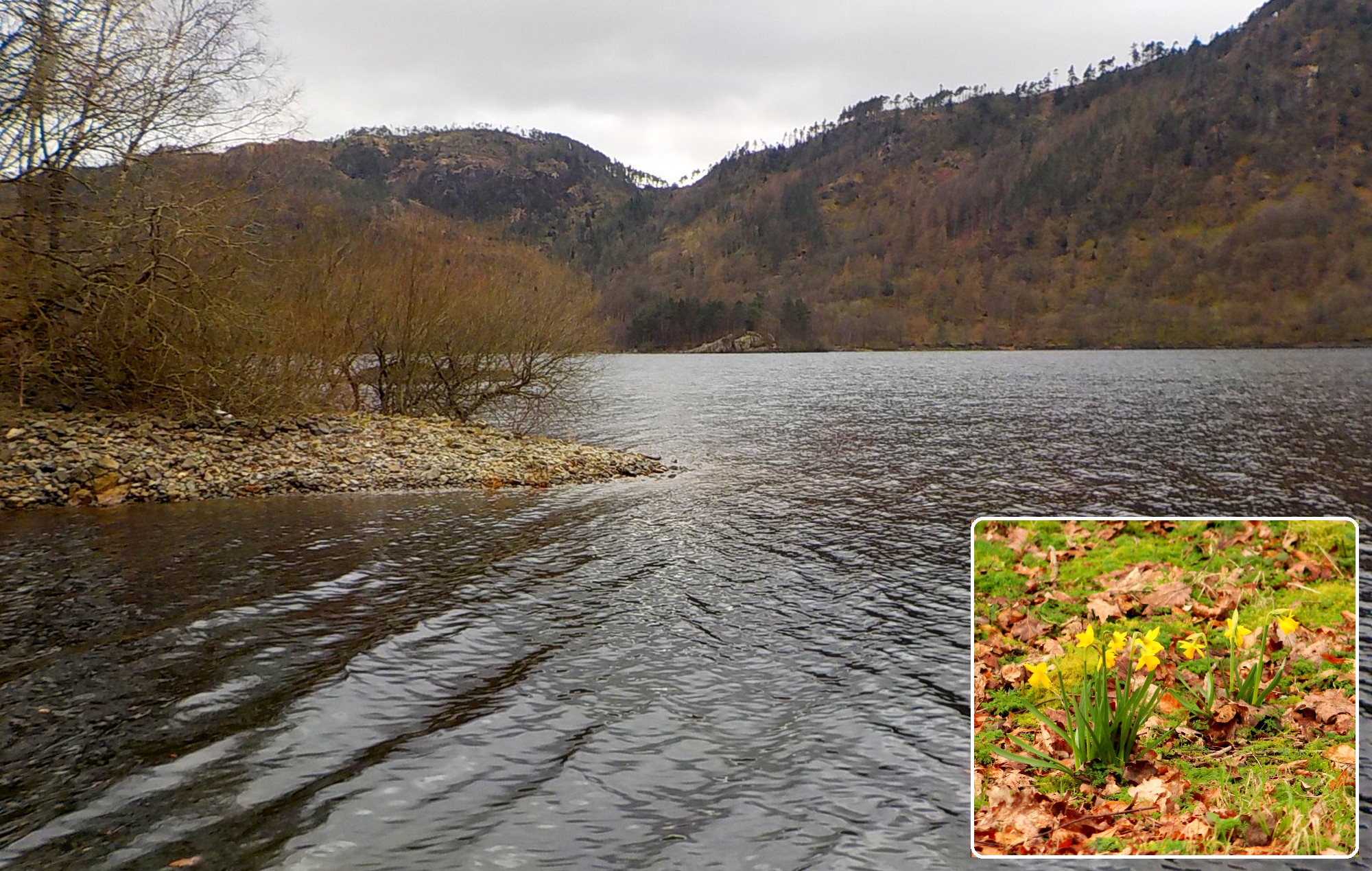
We stopped off at Thirlmere to take Mattie for a walk. It was bitterly cold, but the daffodils were out, so it must be Spring – and we must be mad.


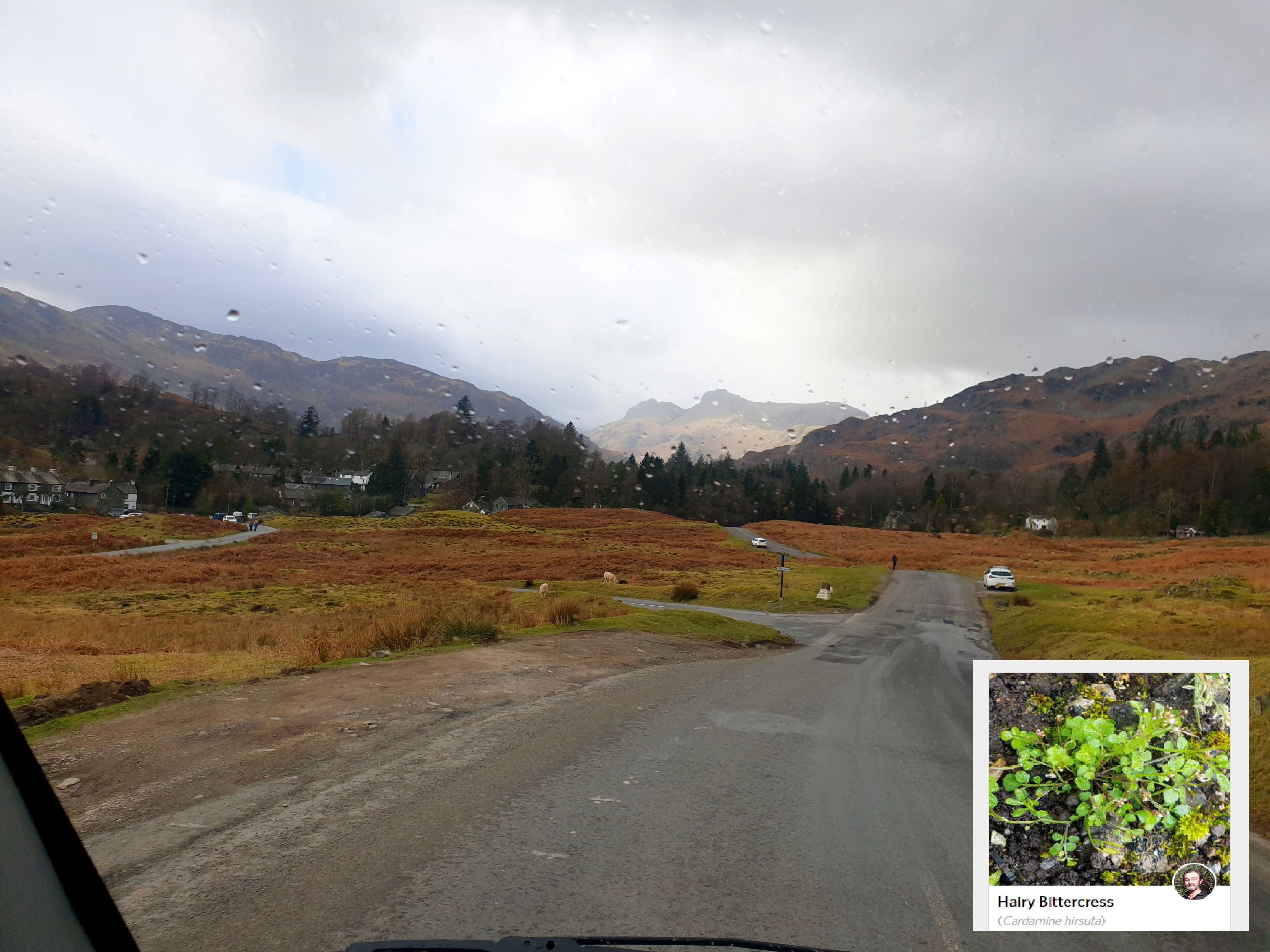
Lowering clouds and a light rain accompanied us as we headed south past Grasmere and Rydal Water, until we finally lumbered through Ambleside, and turned up towards Langdale. I'd picked up some Hairy Bittercress, which is a common wayside herb of late winter/early spring and is very similar in flavour to rocket (they are in the same family, Brassicaceae). Ideal for egg and cress sandwiches.


The 130 acre site seemed bigger than some housing estates than I've lived on, but, as it was the first day of the season it was mercifully quiet. Excellent facilities, which we had more or less to ourselves, but I don't think I'd like to be there in the height of the season.

After a good night's sleep, in which we didn't die of hypothermia, we ambled the two and a half miles into Ambleside the following morning. Beautiful views over Loughrigg, and a pleasant lunch in the Royal Oak rounded off the morning. On the way in we noticed some curious plants by the roadside. These turned out to be Giant Butterbur, a south east Asian plant that turned up in Britain in 1897 and has been spreading ever since. It's edible but has to be pre-treated to remove it's bitterness.


A grey squirrel also graced us with his presence. I don't often see greys in Cumbria, as the red seems to be more common (from personal observations). In most of the country the non-native grey outcompetes the native red, but up here, the reds seem to be holding their own.


Going back to the Hairy Bittercress. Having made your egg and cress sandwich, how do you cut it? Square or diagonal? Up north, the square cut is more generally used (the diagonal cut being something that only us poncey southerners do). However, there is a reason for the diagonal cut – they fit better on a sandwich plate. Sandwich plates, like this 1930s example from Copeland Spode, have a vertical and horizontal ridge, to keep the quarters of the sandwich separate. As I've said before, they knew how to do things in style back then.


And finally... back in 2011, I started wrting a novel. Twelve years later and all 633 pages of it is now on the shelves. Amazon have it priced at £2.99 for the Kindle edition and £14.99 for the paperback, and you can read the first few pages here. However, I have 50, signed and numered, author copies (45 now, as I've sold the first 5) which you can buy for just £10 plus postage. If you'd like a copy, drop me an email (stevedanielscumbria@gmail.com ), let me know to whom you would like the book dedicated, and where you would like me to post it to. I'll work out the postage and arrange the payment details.


All the best,


Steve


Sandwich plates from Steve's Vintage Collectables.

Campsite: Skelwith Fold

Pub lunch: Royal Oak


Beetles and Butterflies; spiders and scorpions; woodlice and worms. How do you tell them all apart? To say nothing of crane flies, dragonflies, bee flies and yet more butterflies. Are they all flies? If not, why call them so? If you're fascinated but confused by the beautiful world of the very small, then this is the book for you.

82 pages of information on all aspects of the world of minibeasts, with over 100 photographs and illustrations, this book will help you track down and identify any arthropod, in its adult or juvenile state, anywhere in the world.

See all of my books at author.to/SteveDaniels


Follow me on Steve's Nature Plus

and also on Twitter Steve's Nature,

Facebook Steve Daniels Naturalists

and Instagram Steve Daniels Cumbria


Wednesday, 10 August 2022

The Tranquility of the Southern Lakes


Duddon Iron Furnace

Having enjoyed our trip to the south lakes last month, we decided to return to Moss Side Farm in order to explore the area a little more. A few miles from the farm stands this magnificent 18th century charcoal blast furnace from the days when iron ore was mined in the area. The motive power was a huge water wheel, sadly no longer in existence, the mill stream now almost dry and hosting a variety of wild plants including Lesser Burdock which I hadn't come across before. The carder bees were absolutely loving it. It's edible for us too, in its first year. The roots can be boiled, but you have to change the water after the first boil. Young stems can be eaten too, raw or cooked. Foraging is a useful hobby with the cost of living as it is at the moment. See Steve's Wild Kitchen for ideas and recipes.


Duddon Estuary

Last time out we went kayaking on the river Duddon. This time we decided to visit the Duddon estuary on foot, starting at Foxfield and working our way down to Askam-in-Furness (both of which are accessible by rail). A Little Egret flew overhead as the train crossed the bridge. I was used to seeing these birds in Crete, but as the climate warms, they have now migrated northwards and are resident in the UK. The banks of the estuary make perfect nest sites for Sand Martins, so let's stand and watch them for a bit as they bring food back to the nests. This must be their second brood as they generally have their first brood in May. I would think that this is quite far north for them to have two broods a year. Possibly the warming climate again.


Elter Water

After all that trekking about, a rest on the banks of Elter Water seems in order. This is one of the smaller bodies of water in the Lake District, lying between Coniston and Grasmere, and as navigation is prohibited, we can't get the kayak out onto it. However, it's a lovely day for just lazing about, admiring the scenery and watching the insects going about their business. More Carder Bees, this time pollinating the Knapweed; some Carpet Moths resting up in the long grass; and Blue Damselflies busy making more Blue Damselflies. Summer has arrived in Cumbria at last. Elter Water, incidentally, means Swan Lake, and Whooper swans regularly overwinter here.


Moss Side Farm

Meanwhile, back at the ranch (to use a phrase that originated as a stock subtitle in the days of the silent movies), we have an evening visitor in the form of a Goldcrest. Along with the Firecrest, this is Britain's smallest bird. Their thin beaks allow them to pluck insects from between pine needles and cones as this one is doing here. Down in the meadow below, the Barn Swallows are taking insects from the air. Something small, lithe and black has just scooted across the field and up over the dry stone wall. I think it was a Mink, but whether a native European or an American Mink, I wouldn't like to say. The American Mink was brought over in 1929 for the fur industry, but due to the misguided release of thousands of them by animal rights activists they have now run riot, much to the detriment of their European cousins and also water voles.


Hawkshead

Time to wend our way home again, but how about a stop for Sunday lunch in the pretty little village of Hawkshead? But first, Mattie needs a walk, and there's a pleasant circular route that will take us up into the fields and woods. It also passes through the churchyard of St Michael & All Angels, where William Wordsworth used to like to sit when he went to scool here. Unusually for a churchyard, there are information boards placed about with information regarding the windflowers to be found here. The delightfully named Fox and Cubs are showing well at present. Alternative names are Devil's Paintbrush (a tad inappropriate) and Grim-the-collier. The plant has a pelt of black hairs, reminiscent of the swarthy stubble of Grim the Collier of Croyden, a folklore villain and the title character of a 17th century play.


Thus ends another trip to the southern shores of Cumbria, but I doubt that it will be our last. Enjoy the summer weather, it's almost like being back in Crete again!


Steve's History of Things

In Association With

Steve's Vintage Collectables


Steve's History of Things 1


Introduction

Steve's History of Things 2


5 Good Reasons to Buy EPNS


Steve's History of Things 3


Fielding's Musical Tankards

Steves Hstory of Things 4


Jasperware

Steve's History of Things 5


Blood Pressure Monitors


All the best,

Steve


Click on the book to see inside

Beetles and Butterflies; spiders and scorpions; woodlice and worms. How do you tell them all apart? To say nothing of crane flies, dragonflies, bee flies and yet more butterflies. Are they all flies? If not, why call them so? If you're fascinated but confused by the beautiful world of the very small, then this is the book for you.


82 pages of information on all aspects of the world of minibeasts, with over 100 photographs and illustrations, this book will help you track down and identify any arthropod, in its adult or juvenile state, anywhere in the world.


UK Price only £14.99


See all of my books at author.to/SteveDaniels


Follow me on Steve's Nature Plus

and also on


Steve's Nature


Steve Daniels Naturalists


Steve Daniels Cumbria


Wednesday, 2 June 2021

How to get away from it all in The Lake District on a Bank Holiday weekend


And not just any old Bank Holiday – the weather is beautiful, English lockdown domestic travel restrictions have been lifted, pubs and restaurants are open, and nobody can fly abroad. The whole world and his wife have come to the Lake District for the weekend. The Intrepid Local Guide, Jack the Navigator Hound, and I are off for a picnic. join us for a lovely, quiet afternoon, with hardly a soul in sight. How? Draw a line between any two lakes and find a place on that line where nothing is marked.


We'll park up (parking tip: if you want to drive home in the same vehicle you arrived in, park off the road. Emergency vehicles must be able to pass you at speed, and if it's a choice between saving a life and not scratching your paintwork, guess where the priority lies), and take a short stroll to where a trickling beck is rippling through this majestic valley. The first area to investigate is a bog, where Cuckoo flowers are growing up through the Sphagnum moss and Stoneflies are lurking among the grasses. Don't worry, they don't bite. These are another of those flies that aren't flies. They form the insect order PLECOPTERA (pp 44-45 in The Quick Guide to Creepy-Crawlies) and they are a good indicator of water quality. The nymphs are aquatic and the female will only lay her eggs in clean water. Look for segmented antennae, chewing mouthparts and two tails (cerci).


Having found a dry spot to relax with our pork pies and scotch eggs etc. we'll spend an hour or two crawling around in the sheep short grass looking at the world of the very small. No big, showy flowers here but miniature Milkworts, Lousewort and Tormentil, all under 2cm tall.


The beetles are about too. The iridescent chap on the left, which is either purple or green, depending on how the light hits him, is a Click Beetle of the ELATERIDAE family. These beetles have an ejector mechanism to avoid predation, and they bounce into the air with an audible click. Oops! There he goes. The other magnificent fellow is a Ground Beetle of the CARABIDAE family.


Retreat!! The problem with nosing around in the undergrowth for beetles is that you may finish up where you're not welcome, such as next to a skilfully hidden nest. Time to go back to our picnic site and watch from a respectful distance. Oh good, the mother has come back. She's a Meadow Pipit. I noticed that all three eggs were the same shape and colour which is good news, for their nests are one of the favoutite targets for the Cuckoo to lay their eggs in. Fortunately, Meadow Pipits are still fairly common up here in The Lakes but they have declined overall and are listed as Near Threatened by the IUCN.

Now, where did I put that bottle which I left cooling in the beck?


Steve


Steve's Nature Plus

Minibeast Monday * Podcast Tuesday * #CumbriaNature Wednesday * Foraging Friday * and other odd bits as they happen throughout the week.


Steve's Gallery


If you'd like to see some of the pictures in more detail, you'll find them in the gallery. These are also available for prints or digital downloads for commercial or scientific use.


Steve's Books


The Quick Guide to Creepy-Crawlies

All you need to know to identify any type of insect, spider, worm or snail very simply and find out more about it.

Yvonne: This was a gift for a family so that the children can understand what they see on days out. The second was for me. Logical and easy to use. If you know anyone who likes nature you can be confident that gifting this book will give years of pleasure.

The Eggs of Saramova

You can listen to this book for FREE as it is being serialized on the podcast The Author Reads


£7.50 Paperback edition

Not Just For Twisted Women by Steve Daniels 

A light-hearted look at life through the eyes of the fairer sex.

Janet: If you are short on time but enjoy reading and are maybe not into long extended novels then Not Just For... Twisted Women provides readers with concise stories that stand alone and most certainly entertain with their ultimate twists. Loved it.

Helen: A very good read! Well written and entertaining!

Margaret: Each quick tale gives a glimpse into a character's life and has an often humorous twist at the end. I would love to read more.

Yvonne: These days many people find it hard to find the time to read a novel, so this book of short stories is ideal to dip into. It is also makes a good gift.


£4.99 Paperback
edition


Crete Nature Catch-up

Series 1 - Welcome to Lasithi

Series 2 - The Rhythm Of Life

Series 3 - A Journey Begins

Series 4 - The Milonas Valley

Series 5 - This Is Ferma

Series 6 - Upland Villages

Series 7 - The Forty saints

Series 8 - Sunday Strolls

Series 9 -Stormy Weather

*********************************************************************

LINKS:

Share your nature thoughts, photos and comments on Naturalists (the facebook page that accompanies this blog)


Wednesday, 5 May 2021

Thirlmere - The 'Waisted' Lake


Once upon a time, there was a little lake called Thirlmere, so shallow that you could walk across the middle at times. 'Thirl' probably derives from Old English denoting a narrowing. Then, in the 19th century, the growing city of Manchester acquired it for a reservoir and built the dam on which we are now standing. The water flows downhill, all the way to the metropolis 96 miles away, without the need for pumps of any kind, flowing over aqueducts and through tunnels in an incredible feat of engineering. If you fancy a ten mile hike, you can walk all the way around the lake but today, we're going to concentrate on the north west section.


There are buzzards and a kestrel high in the sky, wheeling and hovering around Raven Crag to our right, while down here by the lake dunnocks and chaffinches flit from branch to branch and we also have a Chiffchaff. The chiffchaff is a rather nondescript little warbler who rather helpfully calls its name with a repetitive chiff chaff, chiff chaff. Distinguishing between warblers and female finches such as the chaffinch is relatively simple; just look at their bills. Warblers eat spiders and insects and have thin bills adapted to that purpose. Finches, being seed eaters, have thick, powerful bills.


Later in the year, this bank will be covered in dense, green bracken but now is just the right time to see it unfurling against a backdrop of pale moss. At this stage in their development, they always remind me of seahorses, gently floating amid the undulating seaweed.


The bluebells are just starting to come into flower and here we have a lovely Orange-tip butterfly. This is one of the 'White' butterflies in the family Pieridae, as are the common Small and Large Whites. If you look at the underside of the wing, you can see that it is a mottled green, similar to the Bath White.


Here we are at what was once the waist, or thirl, of Thirlmere and we have a lovely view of sunlight on the fells. Apart from the emerging Bluebells and the last of the Daffodils, we've not seen much that is new in the way of flowering plants this morning. The Dog Violets and Golden Saxifrage were both blooming last month, but we do have some Wild Strawberries in flower, much to the delight of this little ant. 

A very pleasant walk, particularly if you are not fond of going up hill and down dale, and we shall return to Thirlmere again to see it in different seasons. Meanwile, do join me throughout the week for Minibeast Monday, Podcast Tuesday, #CumbriaNature on Wednesday, Pic of the Week on Thursday (to introduce the new feature below) and Foraging Friday. All this for free on Steve's Nature Plus


All the best, Steve


Steve's Gallery


I have put selected pictures up for sale as digital downloads or prints, for both private and commercial use. I shall be concentrating on the pictures which show relationships between organisms and their environment and interspecies behaviour. Gallery.


Steve's Books


The Quick Guide to Creepy-Crawlies

All you need to know to identify any type of insect, spider, worm or snail very simply and find out more about it.

Yvonne: This was a gift for a family so that the children can understand what they see on days out. The second was for me. Logical and easy to use. If you know anyone who likes nature you can be confident that gifting this book will give years of pleasure.

The Eggs of Saramova

A science fiction novella for those who don't like science fiction. A fast-paced thriller that is, literally, out of this world.

Shanaya: At last! A book with a ballsy female lead with no superpowers whatsoever who battles against the odds and wins (or does she?). I really related to her! And I laughed out loud at the last story.


£7.50 Paperback edition

Not Just For Twisted Women by Steve Daniels 

A light-hearted look at life through the eyes of the fairer sex.

Janet: If you are short on time but enjoy reading and are maybe not into long extended novels then Not Just For... Twisted Women provides readers with concise stories that stand alone and most certainly entertain with their ultimate twists. Loved it.

Helen: A very good read! Well written and entertaining!

Margaret: Each quick tale gives a glimpse into a character's life and has an often humorous twist at the end. I would love to read more.

Yvonne: These days many people find it hard to find the time to read a novel, so this book of short stories is ideal to dip into. It is also makes a good gift.


£4.99 Paperback
edition


Recent Posts