Showing posts with label nature books. Show all posts

Wednesday, 1 November 2023

The Badgers of Rydal


Last time we chatted, I mentioned that I was starting work on a new book, looking at the state of British mammals in times gone by and how they are fairing now. On rainy days, I've been poring over old texts, but every now and then, I manage to get out and about with Ishbel and Mattie, and take a few photographs. Such was the case last weekend, when we visited Rydal Water.


And this is the reason. For many decades, the staff at the Glen RothayHotel have been leaving kitchen scraps out for the badgers that live in the hotel grounds. On Friday night, I was rewarded with a brief glimpse. The badger approached, cautious as a kitten and as silent as an owl, but was spooked by people leaving the bar rather noisily, and left with great alacrity. On Saturday night, we watched and waited in the comfort of our room (thanks to a webcam provided by Cumbria Wildlife Trust) and when they appeared, we took it in turns to slip out and meet them. I'm 65 now, and this is the first time I've seen a badger in the wild.


Rather than go straight home on Sunday, we popped next door to Rydal Mount, where Wordsworth spent his final years. He was born in Cockermouth, just upstream from where I am now living, so it seemed rude not to pop in while we were in the area. I fell in love with his garden. Totally unstructured, with paths, lawns and little hideaways all over the place. Plenty of birds... but no mammals.


Until we got back to the car park. And there, in the middle of the day, hopping about without a care in the world, was a wood mouse. Leastways, I'm pretty sure it's a wood mouse. The back legs look too big for a house mouse, but I've yet to have it confirmed.


Illustration from Cassell's Natural History, Martin P Duncan Vol.1 (1896)

The other little fellow that I've been studying is the mole. Fascinating, solitary little creatures. Did you know that a mole's home is called a fortress and that they all follow the same design? No, neither did I. Anyone have any moles on their land, up here in Cumbria, that I can come and photograph?


Steve's Vintage Collectables. (click to visit)


Whilst wandering around Wordsworth's house, I noticed a number of antiques similar to those that I have on sale. Nice to see them in their original settings. Retro, vintage and antiques are tipped to be big sellers on the Christmas present market this year, as people shun modern manufactured goods. Just a thought.


Steve's Books (click to visit)


And books make great Christmas presents. Easy to wrap. Easy to post.


Until next time, all the best,

Steve

Follow me on Steve's Nature Plus and also on Twitter (@Steve's Nature), Facebook (Steve Daniels),and Instagram (Steve Daniels Cumbria)

Or why not join the 3.3k members of our Naturalists group?


All the best,


Steve


Wednesday, 2 August 2023

Thyme for a Cumbrian Cassoulet


The botanists are trying to confuse me again! The plant on the left used to be known as Mediterranean Thyme, Thymus capitata. It looked like thyme, it tasted like thyme and, as far as I was concerned, it was thyme. Now it has been reclassified as Thymbra capitata. It is still known as Mediterranean Thyme, but also as Spanish Oregano, despite the fact that it looks and tastes nothing like oregano. OK, there are biological differences between the genera, but in culinary terms there's not much difference between Mediterranean Thyme, which was a mainstay of my Cretan diet when I was out there, and good old British Wild Thyme, Thymus praecox britannicus. Both go well with fish, and if you're in France – sausages.


Ishbel and I were wandering around the auction house last week when I spotted a box of pots and pans which looked strangely familiar. “I think those are French,” I said to her, enthusiastically. “Hmm?”, said a man standing close by. Ishbel had wandered off somewhere. I turned a pot over, and sure enough, stamped on the bottom, were the words L'incomparable – Vallauris Co – Made in France. I'd last seen a pot like this in 1969, when visiting the rest of the family, who were living in a village near Toulouse. It was in our concierge's kitchen, and she was making the local variation of the French dish, cassoulet.


Cassoulet has many regional variations, but is basically a meat and bean stew, flavoured with garlic and herbs. Mme. Caner was making hers with local sausage and duck, and the herb she was using was thyme. Anyhow, I bought the pots and pans at auction, and determined to make a Cumberland Cassoulet, using our local Cumberland sausage and a few sprigs of British Wild Thyme. If I say so myself, the result was excellent, and I've posted the recipe in Steve's Wild Kitchen. I'd recommend a good Côtes du Rhône Villages to go with it.


A couple of weeks ago, when we were in Sunderland, I spotted a chrysalis, partially wrapped in a bramble leaf. It wasn't one I immediately recognised, so I put it in my pocket and brought it home. Yesterday morning, I came into my study-cum-lab to find a Red Admiral sitting at the computer. Even at my age, I still get excited by the hatching of a butterfly.


Steve's Vintage Collectables. (click to visit)


The cassoulet pot can be found here.


Steve's Books (click to visit)


Follow me on Steve's Nature Plus and also on Twitter (@Steve's Nature), Facebook (Steve Daniels),and Instagram (Steve Daniels Cumbria)

Or why not join the 2.7k members of our Naturalists group?


All the best,


Steve


Wednesday, 14 June 2023

Shedding Bricks


During the years that I spent on Crete, I realise now, that I unintentionally built a wall. On one side of this wall, was myself, nature and a select few members of the human race. The rest of the world, and the 21st century come to that, was firmly on the other. Since returning to the UK, Ishbel has gradually been dismantling this wall by repeatedly dragging me, kicking and screaming, out of my comfort zone. She achieved a triple at the weekend: a mega-city, a mega-concert, and a mega-store.


The city in question was Manchester, a teeming metropolis of nearly 3 million people. We parked up a couple of miles east of the city centre and I prised my fingers from the edge of the seat. The walk into 'town' along the network of canals was most pleasant, with Geese, Swans, the occasional Moorhen, and even a Grey Wagtail to distract my attention. A little crowded through the gay village, but with a very pleasant vibe.


Our first destination was Clouds, on the 23rd floor of the Hilton Hotel, for afternoon tea and cocktails (this was part of my Birthday treat). From there, I could see, just what a sprawling mass of humanity I was surrounded by. I looked down to street level – it was less frightening.


And now to the high point of the day. Even I, enochlophobe that I am, was prepared to venture into the 21,000 capacity, AO Arena, for the opportunity of seeing Roger Waters live. For those of you too young to remember, Roger was the co-founder of Pink Floyd, along with the late Roger 'Syd' Barrett. Lost in the music, complete with flying pigs and sheep, I was in seventh heaven. Even the walk back through crowds of revelling Manchester City supporters at midnight wasn't so bad, and Ishbel has nearly recovered the use of her right hand, which I may have been gripping rather too tightly.


And finally.. the mega-store. There was a particular item that Ishbel wished to purchase from IKEA, it was Sunday morning, and I was in need of breakfast, so we ventured into this humungous monstrosity. Ishbel came out empty handed. I for, some reason, emerged with a ladle and a yucca plant. Ah well, another three bricks in the wall come tumbling down.


Steve's Vintage Collectables. (click to visit)

Look out for our tobacconalia special over the next week. And if you haven't got your Dad a prezzie yet for Father's Day on Sunday, you'd best order today to get delivery by Saturday.


Steve's Books (click to visit)


Follow me on Steve's Nature Plus and also on Twitter (@Steve's Nature), Facebook (Steve Daniels),and Instagram (Steve Daniels Cumbria)

Or why not join the 2,594 members of our Naturalists group?


All the best,


Steve


Wednesday, 17 May 2023

Buttermere and Crummock Water


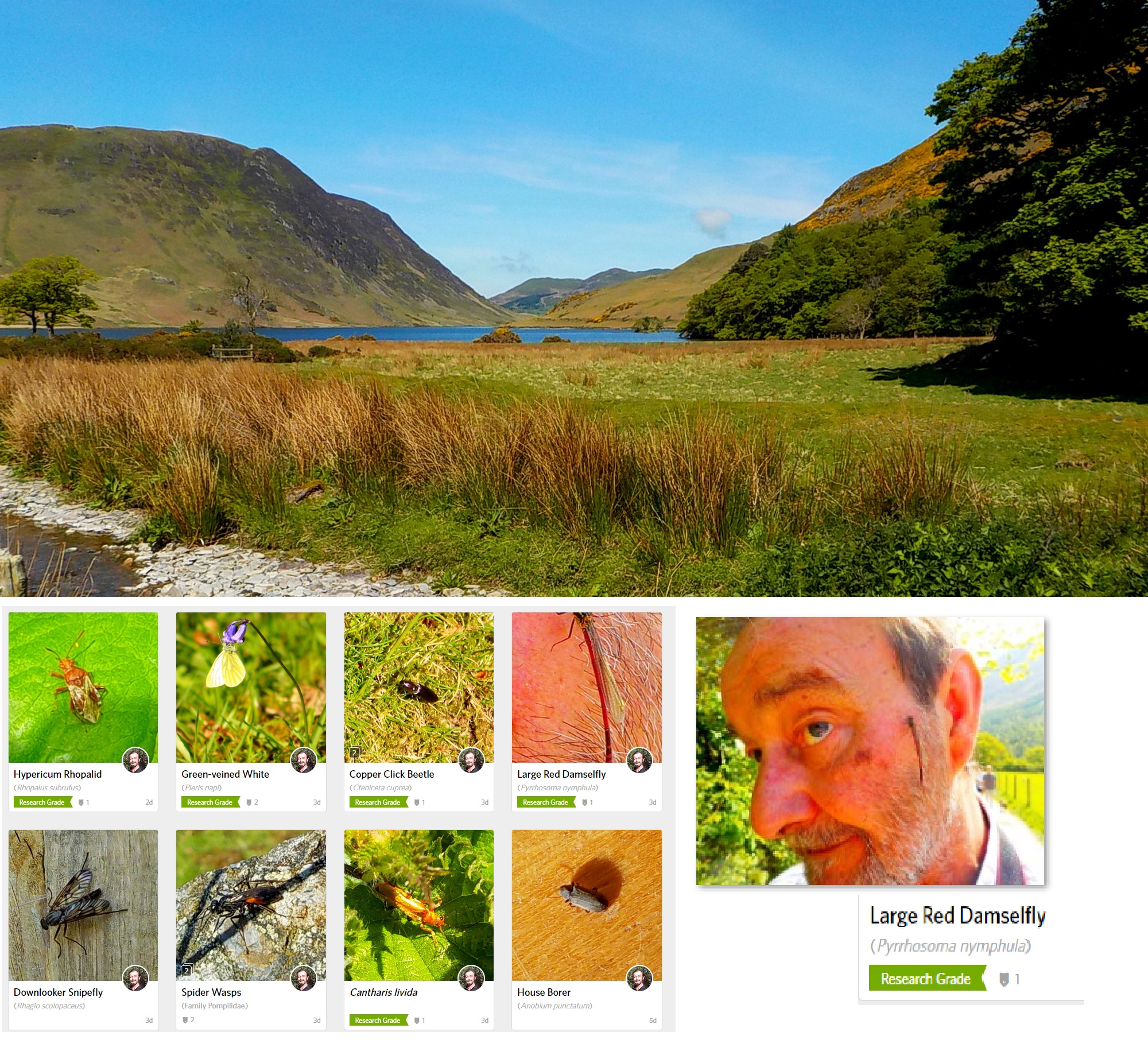
Between Buttermere and Crummock Water, a small stream runs, by the name of Buttermere Dubs, which is where we are taking you this week. Dubs is a Scottish and northern English dialect word for pools of water, or puddles. There is a pleasant walk alongside where the ewes and the lambs lazily graze. With a cuckoo calling in the distance, we are being treated to a black and white birdie show, with Magpie, Pied Wagtail, a Grey Heron and even a White-throated Dipper exploring the banks of the stream. All very idyllic.


Passing through shady glades, more Spring flowers are beginning to appear. Sorrels, who's name means sour, and worts who's name comes from the Old English Wyrt, which simply means plant. Wort was often applied as a suffix to medicinal plants, with the prefix denoting the ailment it was supposed to cure. Thus Stitchworts would cure a stitch in your side and Dropworts may have been used to alleviate dropsy (or oedema, as it is now known). Pimpernel means peppery, but I wouldn't advise eating them as they are somewhat toxic.


Insects are beginning to appear in greater numbers now. Usually, insects are relatively easy to photograph, but when they decide to sunbathe on your face, it can be a bit problematic! We also have our first True Bug of the year. True Bugs are a distinct order of insects, the Heteroptera (as opposed to the generic term bug that can apply to any creepy-crawly). This one is an Hypericum Rhopalid, so called because it is a member of the Rhopalidae family of scentless plant bugs, and it feeds primarily on Hypericums, or St. John's Wort. Here, the wort still identifies it as a medicinal plant, but it doesn't cure you of overbearing saintliness, it is merely that the flowers are traditionally collected around St. John's day on the 24th June. It is, in fact, a natural antidepressant, backed up by medical research.


We've now reached the edge of Crummock Water, so we'll turn back and make our way through the woods, back to Buttermere. Oh look, a Roe Deer. Given the general decline in British wildlife over the last century or so, it's nice to talk about a success story. In the early part of the twentieth century, Roe Deer were pretty much constrained to Scotland and up here in the Lake District. This population has spread south and east, and met up with reintroduced animals in the south of the country which have pushed northwards. They are still uncommon in Wales, but they're getting there.


And here we are, back at Buttermere, where the shallows are positively teeming with minnows. This shoaling behaviour is a defence mechanism against predation. They are only small fish so it pays them to forage in a group. If a predator approaches, some of the braver minnows will go to assess the danger and, providing they come back, will release a chemical which stimulates the shoal to bunch up. Basically it is a fear chemical, and individuals react by trying to get to the centre of the group. Safety in numbers. And now, it's time a spot of lunch. We have sandwiches, crisps, grapes and fizzy pop, but as my beloved has just pointed out, I seem to be a gateau short of a picnic.


Steve's Vintage Collectables. (click to visit)

I was originally going to specialise in old scientific instruments, but that proved to be a bit restrictive (and there was so much more interesting stuff out there). However, I chanced upon a few items at auction last week, and they make ideal Father's Day presents. Better for the planet than buying newly manufactured items. With over 100 items now in stock, at sensible prices, it's worth a look.


Steve's Books (click to visit)


Follow me on Steve's Nature Plus and also on Twitter (@Steve's Nature), Facebook (Steve Daniels),and Instagram (Steve Daniels Cumbria)

Or why not join the 2.5k members of our Naturalists group?


All the best,


Steve


Wednesday, 5 April 2023

Shark!


“What do you want to do on your birthday?” asked Ishbel.

“Go hunting for mermaid's purses,” I replied.

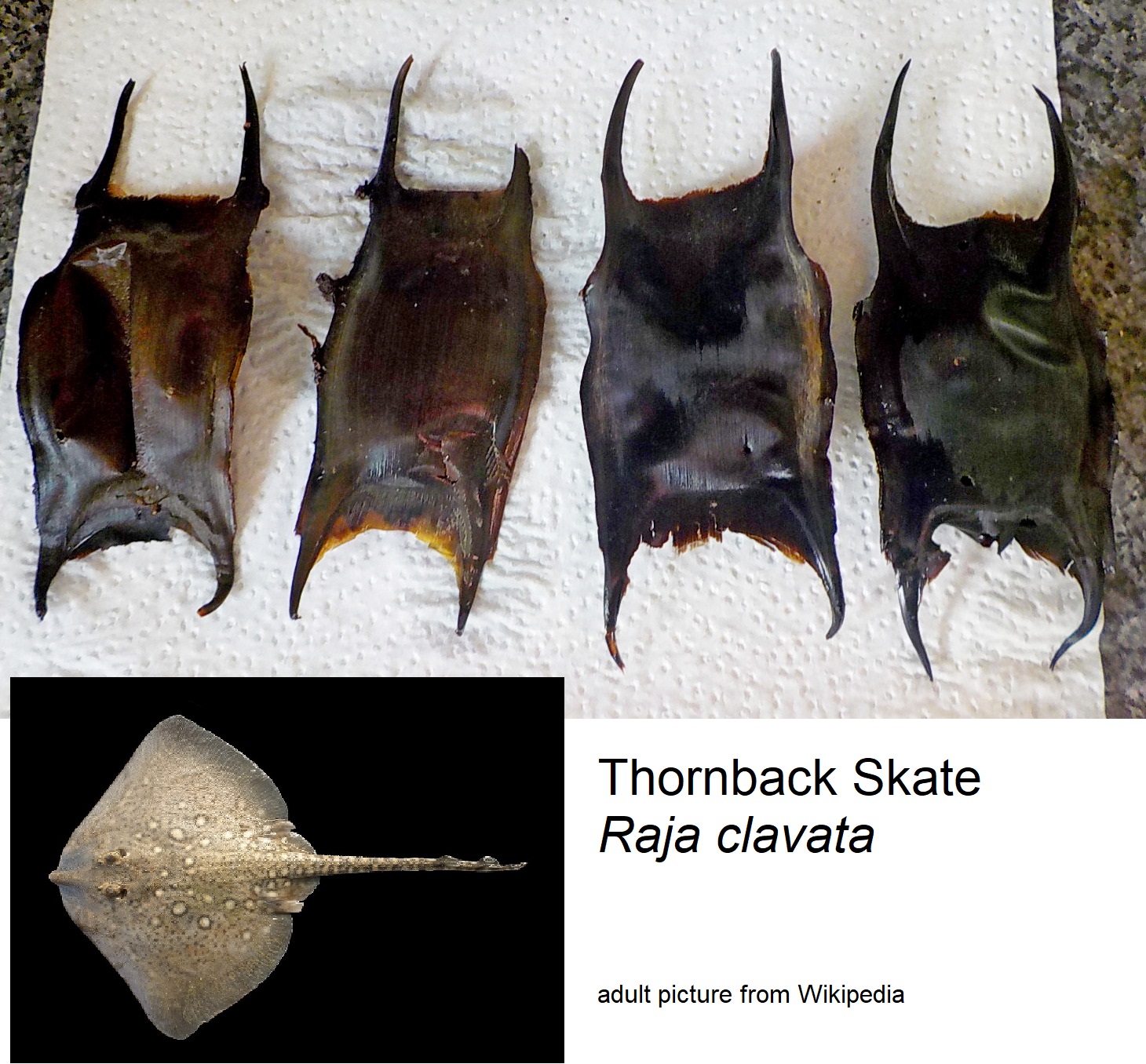
Ishbel wasn't phazed. After all, she's getting to know my eccentricities now, and she's savvy enough, natural hitory wise, to know that mermaid's purses are the egg sacs of sharks and rays. And so, on the bright sunny morning of April 3rd, we went off to Allonby on the Solway Firth to begin our hunt. This is part of a citizen science project, details of which can be found at https://www.sharktrust.org/greateggcasehunt if you want to take part.


The first egg cases we found were those of the Thornback Skate. The name is confusing as the terms skate and ray are interchangeable and if you look up Thornback Skate on Wikipedia you will find it endemic to Australia. The much more widespread fish is referred to as the Thornback Ray. This is one of the reasons we use scientific names. The egg cases we found were those of Raja clavata.


A little further on, we spotted these odd structures, which I had to check out on iNaturalist, as I hadn't come across them before. Turns out, they are called egg clouds, and they belong to the Common Whelk, Buccinum undatum. Learning all the time.


After an hour or so, we came upon a cluster of shark egg cases. You can tell that they are shark egg cases as they come with noodles attached. They are actually tendrils that anchor the egg cases to structures on the sea bed. These particular ones belong to the Small Spotted Cat Shark, Scyliorhinus canicula. This used to be a staple of fish and chip shops, sold under the name of rock salmon, but it seems to have gone out of fashion these days.


Having got a crick in the neck from peering myopically at the wrack line (the line of seaweed left on shore at high tide), we wandered back along the dunes. As we sat with a coffee, looking at Scotland across the firth, the first butterfly of the year landed nearby; a Small Tortoiseshell.


We rounded off the morning with a nice bit of home made chicken and leek pie at The Lowther Arms at Mawbray. This pub nearly died, but was brought back from the brink of extinction by the villagers who, along with other shareholders, bought it, and now run it as a community pub. Cheers!


News From The Old Cornmill


Last year, a mouse used to feed at my bird feeder, where he was quite welcome. This year, however, he found a way into my cupboard under the sink where he was not so desirable. He has now been deported to the old Cockermouth railway line where I hope he'll be very happy.

Meanwhile, the antiques shop continues to ship orders worldwide. A vintage copy of John Bunyan's Pilgrims Progress flew out to Australia yesterday, and, to mark my birthday, I'm offering a 10% discount on all glassware this week, so pop in and have a browse for some preloved gifts (much more environmentally friendly than buying new, and better value too).

What with nature blogging and running a shop, I haven't had time to promote my novel, The Magic of Nature of Nature, but you can read the beginning for free on Amazon by clicking on Steve's Books below.


All the best,


Steve


Steve's Vintage Collectables.


Steve's Books


Follow me on Steve's Nature Plus

and also on Twitter Steve's Nature, Facebook Steve Daniels Naturalistsand Instagram

Steve Daniels Cumbria


Wednesday, 3 August 2022

The River That Came Back From The Dead


This idyllic scene shows a small beck running into the River Keekle, a few miles to the east of Whitehaven. It has not always been so. It has been the site of two coal mines, one in the 1880s and one in the 1980s. In 2010 a plan was proposed to dump low-level nuclear waste here (which was rejected by Cumbria County Council in 2012). From 2019-2020 the West Cumbria Rivers Trust spent one and a half million pounds removing 150 tonnes of plastic from the river bed. The bed had been lined in the 1990s to protect it from mine water contamination. In the intervening thirty years the liner had degraded with bits of it floating downstream causing blockages and localised flooding. The plastic has now been recycled and some of it used to make the bench by the car park.


After yesterday's constant drizzle, today's occasional outbreaks of sun has brought out the butterflies and moths. Two which can be easily confused are the Meadow Brown and the Gatekeeper. Their colouration and markings are very similar but the Gatekeeper is about half the size of the Meadow Brown. These are both members of the Nymphalidae family (which we used to call the browns) but the third one is a Small Copper which is a member of the Lycaenidae family (which we used to call the blues). When dealing with nature, it's a lot less confusing if you use the scientific names. It's not just naturalists trying to sound clever! There are also a couple of moths about. The small one on the Ragwort is one of the Wave Moths, a Lesser Cream, I think, and the last beauty, with the silver Y-shaped markings on it's wings is called, unsurprisingly a Silver Y.


The river meadows are now re-establishing themselves and the summer wild flowers are abundant. There are a couple of wetland specialists in the Marsh Thistle and Marsh Woundwort (so called because it was used to promote the healing of wounds). There is a good distribution of Yellow Rattle which is hemiparasitic on grasses and helps to keep them in check, allowing other meadow flowers to grow. The Odonites, I'm pretty suris a type of Red Bartsia which is also parasitic on grass roots. 


And finally, we have some meadowsweet which the Flea Beetles seem to adore. They have nothing to do with fleas, by the way, but they have highly developed femora which enables them to jump like fleas. We'll pick some of the meadowsweet on the way back, to make a sweet white wine following the generic wine recipe.


Apart from the butterflies and moths, we have some other pollinators about. We have three of the 25 different species of bumble bee to be found in the UK: The Carder Bee, the Red-tailed Bumble Bee and the Garden Bumble Bee. We also have a couple of hoppers. These are both True Bugs (HEMIPTERA) They're called hoppers because they can leap tremendous distances. They have to release the energy in their hind leg muscles exactly simultaneously, otherwise they'd shoot off at odd angles. In order to do this they have one of nature's evolutionary oddities; they have synchromesh gears. I kid you not. You can see photographs of them here.


It will come as no surprise to learn that I am very fond of creepy-crawlies and find them fascinating. They, in turn, are very fond of me and find me fascinating as well, which is fine, but not when they use me as a mobile restaurant. While I was photographing the hoppers, a Deer Tick decided to take a chunk out of my arm. In entomology, insect bites are an occupational hazard and antihistamines usually do the trick. If you don't have any to hand, look out for plantains, one of the original 'nine wayside herbs' mentioned in The Lacnunga, a 10th century herbal. They remove the itching almost immediately. Luckily, the tick doesn't seem to have been infected with Lyme disease, which is present in Cumbria, as it is in many other counties.


That's it on the nature front for this week but the latest episode in The History of Things looks at the fascinating history of the blood pressure monitor.


Steve's History of Things 1


Introduction


Steve's History of Things 2


5 Good Reasons to Buy EPNS


Steve's History of Things 3


Fielding's Musical Tankards

Steves Hstory of Things 4


Jasperware

Steve's History of Things 5


Blood Pressure Monitors


All the best,


Steve


Beetles and Butterflies; spiders and scorpions; woodlice and worms. How do you tell them all apart? To say nothing of crane flies, dragonflies, bee flies and yet more butterflies. Are they all flies? If not, why call them so? If you're fascinated but confused by the beautiful world of the very small, then this is the book for you.

82 pages of information on all aspects of the world of minibeasts, with over 100 photographs and illustrations, this book will help you track down and identify any arthropod, in its adult or juvenile state, anywhere in the world.

See all of my books at author.to/SteveDaniels


Follow me on Steve's Nature Plus

and also on


Steve's Nature


Steve Daniels Naturalists


Steve Daniels Cumbria


Recent Posts