Showing posts with label Fish. Show all posts

Wednesday, 7 June 2023

England Coast Path - Flimby to Workington


Last week we walked the King Charles III England Coast Path from Maryport to Flimby. This week, I thought we'd continue along the path from Flimby to Workington. It's a beautiful sunny day for strolling by the Solway and everything is bursting into bloom. Eight new flowers this week including a few of my old favourites from my time in Crete, the Yellow-horned Poppy, Kidney Vetch and European Searocket.


The butterflies and moths are taking full advantage of nature's largesse. Look for the little yellow/green packets attached to grass stalks. These are the chrysalises of the Burnet Moth, a black day flying moth with red spots (not to be confused with the Cinnabar Moth which is a black day flying moth with red spots and stripes, like this one here). There's a Small Tortoiseshell over there. Their caterpillars feed on nettles but I haven't seen any this year, have you? We saw some Common Blues last week and today there are quite a few Small Blues about. They're unmistakably smaller and grey/black with white borders. Finally some Large Skippers. Skippers have a family all to themselves, the Hesperiidae.


The Lepidoptera are not the only ones taking advantage of the flowers, so are the bees. However the bee over there on the Bloody Cranesbill is an imposter. It's actually a hover fly doing a very good impression of a bumble bee. Flies only have one pair of wings, whereas all other winged insects have two pairs. This is not always easy to see, neither is the fact that flies have compound eyes and bees don't. I find that the easiest way to tell a bee from a fly mimic is to look at the antennae. All flies have very short antennae, whereas a bee's antennae are much more robust.


The path dips down onto the shore here, so let's see who's about in the bird world. A nice flight of Sanderlings for a start, and further out, a flight of Black-headed Gulls. Last week I introduced you to the Passerines, perching birds, including the Stonechats, Linnets and Starlings that we've just left behind us. This week, I'll introduce you to the Charadriiformes, or shorebirds. This group includes nearly all of the small to medium/large birds that you see around our coasts, including the Sanderlings and Gulls as well as the Ringed Plover and Dunlin that are pootling about in the shallows here.


One of the great bonuses of the Cumbrian section of the England Coast Path, is that the west coast railway line follows the same course. This means that we don't have to walk all the way back. We can hop on the train at Workington and admire the scenery from a different vantage point on our way back to Flimby. Meanwhile, there's a nice pile of rocks ahead where we can sit and rest awhile. We'll be sharing them with a number of mobile red dots, which, on closer inspection, are a group of mites (I think these are Whirligig mites). Although mites have eight legs, they are not spiders. On the whole, these are harmless little arachnids, although the Varroa Mite is the curse of beekeepers, and the Itch Mite (Sarcoptes scabiei var. hominis) is the little devil that transmits scabies. Rest assured, these are neither of them.


And so we reach Workington, where the River Derwent flows serenely down to the port. I must confess, being a southern softie, that the name 'Workington' always conjured up images of a gritty, industrial, northern town. Nothing could be further from the truth. The 'working' in Workington has nothing to do with labour. The name is mediaeval and means simply the town or settlement of Weorc or Wirc's people. As you can see, it's actually quite a beautiful place and there are even fish in the river. Some quite good sized Mullet down there, if you fancy a spot of fishing.

Steve's Vintage Collectables. (click to visit)

We've been busy on a buying spree this last week so look out for an eclectic collection of quirky items from vintage electric bed warmers, to novelty tea pots and a WW2 Aldis lamp. SVCwithEtsy is rapidly becoming one of Britain's best loved, on line, pre-loved gift shops, with over 100 items always in stock for every occasion. (And don't forget, it's Father's day a week on Sunday, so now is a good time to start looking).


Steve's Books (click to visit)


Or if you're looking for a book for Father's Day..


Follow me on Steve's Nature Plus and also on Twitter (@Steve's Nature), Facebook (Steve Daniels),and Instagram (Steve Daniels Cumbria)

Or why not join the 2.5k members of our Naturalists group?


All the best,


Steve


Wednesday, 17 May 2023

Buttermere and Crummock Water


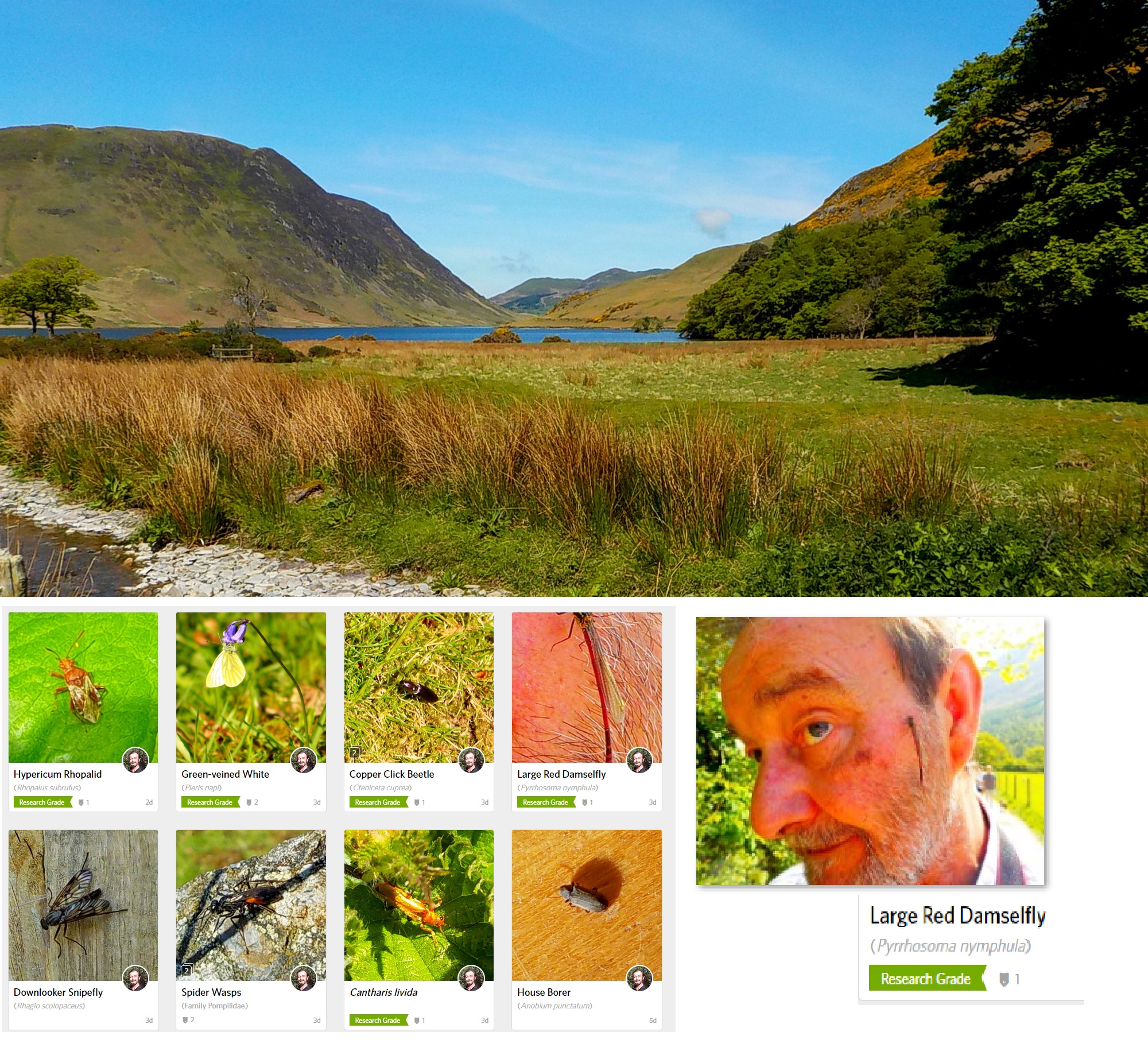
Between Buttermere and Crummock Water, a small stream runs, by the name of Buttermere Dubs, which is where we are taking you this week. Dubs is a Scottish and northern English dialect word for pools of water, or puddles. There is a pleasant walk alongside where the ewes and the lambs lazily graze. With a cuckoo calling in the distance, we are being treated to a black and white birdie show, with Magpie, Pied Wagtail, a Grey Heron and even a White-throated Dipper exploring the banks of the stream. All very idyllic.


Passing through shady glades, more Spring flowers are beginning to appear. Sorrels, who's name means sour, and worts who's name comes from the Old English Wyrt, which simply means plant. Wort was often applied as a suffix to medicinal plants, with the prefix denoting the ailment it was supposed to cure. Thus Stitchworts would cure a stitch in your side and Dropworts may have been used to alleviate dropsy (or oedema, as it is now known). Pimpernel means peppery, but I wouldn't advise eating them as they are somewhat toxic.


Insects are beginning to appear in greater numbers now. Usually, insects are relatively easy to photograph, but when they decide to sunbathe on your face, it can be a bit problematic! We also have our first True Bug of the year. True Bugs are a distinct order of insects, the Heteroptera (as opposed to the generic term bug that can apply to any creepy-crawly). This one is an Hypericum Rhopalid, so called because it is a member of the Rhopalidae family of scentless plant bugs, and it feeds primarily on Hypericums, or St. John's Wort. Here, the wort still identifies it as a medicinal plant, but it doesn't cure you of overbearing saintliness, it is merely that the flowers are traditionally collected around St. John's day on the 24th June. It is, in fact, a natural antidepressant, backed up by medical research.


We've now reached the edge of Crummock Water, so we'll turn back and make our way through the woods, back to Buttermere. Oh look, a Roe Deer. Given the general decline in British wildlife over the last century or so, it's nice to talk about a success story. In the early part of the twentieth century, Roe Deer were pretty much constrained to Scotland and up here in the Lake District. This population has spread south and east, and met up with reintroduced animals in the south of the country which have pushed northwards. They are still uncommon in Wales, but they're getting there.


And here we are, back at Buttermere, where the shallows are positively teeming with minnows. This shoaling behaviour is a defence mechanism against predation. They are only small fish so it pays them to forage in a group. If a predator approaches, some of the braver minnows will go to assess the danger and, providing they come back, will release a chemical which stimulates the shoal to bunch up. Basically it is a fear chemical, and individuals react by trying to get to the centre of the group. Safety in numbers. And now, it's time a spot of lunch. We have sandwiches, crisps, grapes and fizzy pop, but as my beloved has just pointed out, I seem to be a gateau short of a picnic.


Steve's Vintage Collectables. (click to visit)

I was originally going to specialise in old scientific instruments, but that proved to be a bit restrictive (and there was so much more interesting stuff out there). However, I chanced upon a few items at auction last week, and they make ideal Father's Day presents. Better for the planet than buying newly manufactured items. With over 100 items now in stock, at sensible prices, it's worth a look.


Steve's Books (click to visit)


Follow me on Steve's Nature Plus and also on Twitter (@Steve's Nature), Facebook (Steve Daniels),and Instagram (Steve Daniels Cumbria)

Or why not join the 2.5k members of our Naturalists group?


All the best,


Steve


Monday, 14 February 2022

A Transport of Delights (or What to do on Windermere on a Wet Weekend)


It was one of those weekends when the gods had flipped the lakes over and amused themselves by watching the water fall back into them from on high. We'd planned a romantic valentines weekend away and, by 'eck, we were jolly well going to have one.


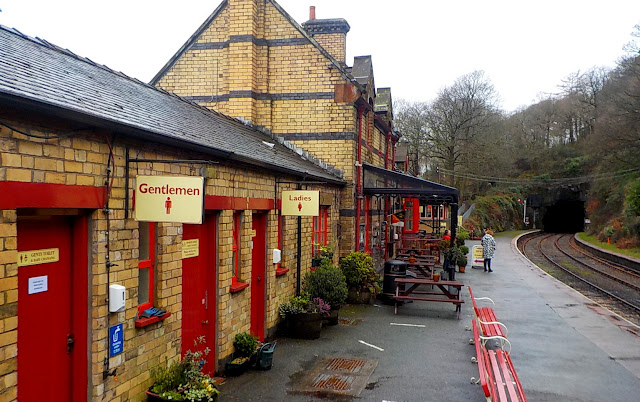
We started with a stupendous brunch at Haverthwaite Station, just south of Lake Windermere, before boarding the steam train to Lakeside. The wooden interiors of the carriages and the steam drifting past the windows recalled days of my childhood. I had conveniently forgotten how cold those blasted carriages were!


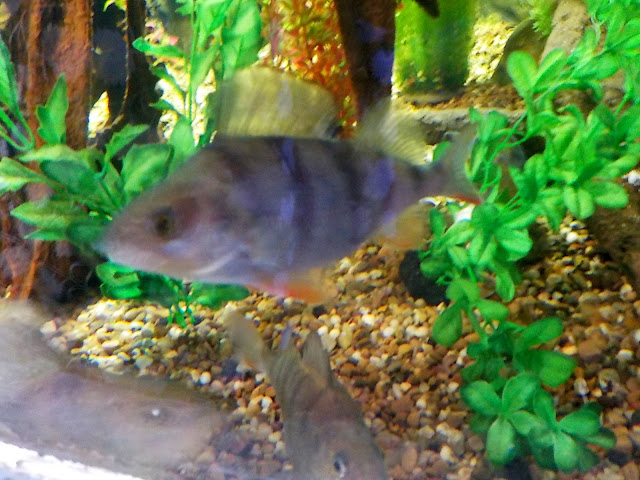
We'd planned to take the steamer to Bowness but the lake was almost invisible and the wind, bitter. We opted instead for the award winning Lakeside Aquarium where we got to see Windermere's fish up close. It was nice to see our indigenous fish (such as this perch) rather than a host of exotic species. There were some exotic fish on display, as well as a host of other marine life and a few insects and arachnids.


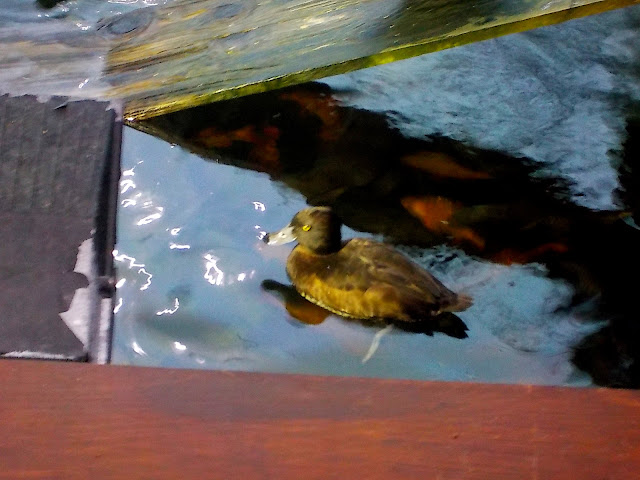
There was also an ingeniously designed indoor/outdoor duck pond currently hosting a small group of Goldeneye. #BirdsonWater is one of the themes in this month's EuropeanNatureAlmanack, so this is my first contribution. All in all, it was well worth the modest entrance fee, and passed a delightful few hours until it was time to take the return train. 


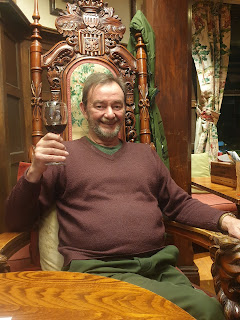
After a couple of hours R&R at the Landing Cottage Guest House, where we were staying overnight, we drove down to the Newby Bridge Hotel and had an excellent duck supper, sat upon thrones, no less,  before returning for a good night's sleep. I can highly recommend both the Landing Cottage Guest House and the Newby Bridge Hotel. I will put links at the bottom of this post.

Cheers! (and yes, a bit of a diet does seem to be in order. Maybe tomorrow).


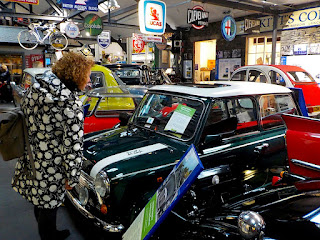
The following morning, after a breakfast fit for a king, we travelled a couple of miles down the road to the Lakeland Motor Museum. To me, a car is merely a radio on wheels that gets me from A to B in the dry. Ishbel, on the other hand, is a closet petrol head, particularly when it comes to Minis (she drives a Paceman). As it happens, there is far more to see here than just old cars, so even non-enthusiasts will find the experience interesting. I found myself saying "I remember those" more often than I would care to admit and dared not stand too long in one place in case people took me for an exhibit. Oh, the joys of approaching ones seniority!


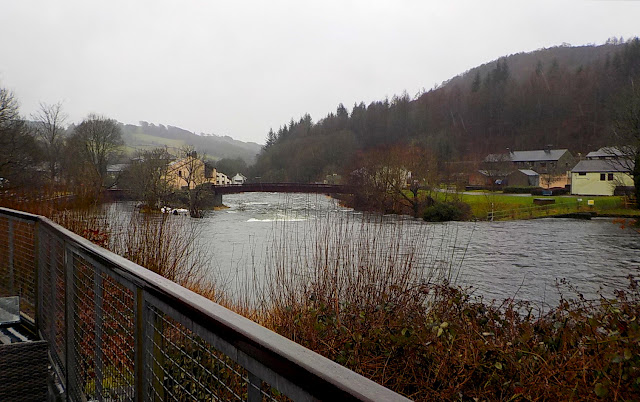
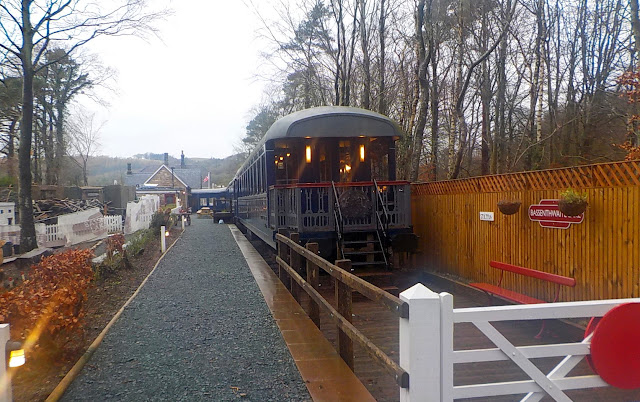
After an exceedingly wet drive back through the lakes (almost literally in some places) we concluded our nostalgic weekend, still following the transport theme, at the recently opened Bassenthwaite Lake Station restaurant, located in three French railway carriages and the old sation itself, where we shared an extremely satisfying seafood platter. A most enjoyable weekend, despite the appalling weather.

LINKS

Lakeside and Haverthwiate Railway 

Lakes Aquarium

Landing Cottage Guest House

Newby Bridge Hotel

Lakeland Motor Museum

Bassenthwaite Lake Station


Tuesday, 16 November 2021

Crete Revisited


It is now sixteen months since I left Crete to move to the north west of England. An exciting chapter in my life has begun which includes a new home in a converted corn mill, new hobbies such as kayaking and a new partner in Ishbel. Despite being well travelled, Ishbel had never been to Crete before and so, last month, the pair of us flew into Heraklion for a week of discovery and rediscovery.


Staying in out-of-season Malia, we were welcomed with a furniture rattling earthquake in the early hours. It was good to be back! A quick historical introduction at the Minoan Palace turned into a natural history lesson when a few millennia were put aside by a profusion of colourful butterflies and the sudden appearance of a Dwarf Mantis.


It was also an occasion to catch up with old friends such as Steve Lenton, with whom we spent a beautiful morning on Katharo plateau searching out the unique Cretan Flora including the rare and endangered Crocus oreocreticus which can only be found in the mountains of east Crete. Above us, buzzards and a Eurasian Griffon wheeled in the cool mountain air.


Mixing business with pleasure, we went down to the old homestead in Ferma, which I am pleased to say, seems to have suffered little from a year of neglect. Nothing that a good spring clean couldn't fix. It was a happy home for Christina and I, and I hope that it will be an equally happy home for the next owners, whoever they may be. It is now on the market through Real Professionals at 89,000 euros. A bargain for someone.


All too soon it was time to say a fond farewell to the island that was my home for sixteen years and to say goodbye to the Crete Nature Blog. I shall continue the Cumbria Nature Blog until the end of the year, but next year I'll have something new for you: a monthly European Nature Almanack which will compare the things to look out for whether you're in the north or south of the continent.


All the best


Steve


Steve's Books


Chubby's Crematorium & Burger Bar

A book of humorous poems to cheer, amuse and entertain your friends with.

The Quick Guide to Creepy-Crawlies

All you need to know to identify any type of insect, spider, worm or snail very simply and find out more about it.

Yvonne: This was a gift for a family so that the children can understand what they see on days out. The second was for me. Logical and easy to use. If you know anyone who likes nature you can be confident that gifting this book will give years of pleasure.

The Eggs of Saramova

A science fiction novella for those who don't like science fiction. A fast-paced thriller that is, literally, out of this world (and it starts right here in Crete).

Not Just For Twisted Women by Steve Daniels 

A light-hearted look at life through the eyes of the fairer sex.

Janet: If you are short on time but enjoy reading and are maybe not into long extended novels then Not Just For... Twisted Women provides readers with concise stories that stand alone and most certainly entertain with their ultimate twists. Loved it.

Helen: A very good read! Well written and entertaining!

Margaret: Each quick tale gives a glimpse into a character's life and has an often humorous twist at the end. I would love to read more.

Yvonne: These days many people find it hard to find the time to read a novel, so this book of short stories is ideal to dip into. It is also makes a good gift.


See sample pages of all my books and latest blogs, and keep abreast of latest publications here:

http://author.to/SteveDaniels


Crete Nature Catch-up

Series 1 - Welcome to Lasithi

Series 2 - The Rhythm Of Life

Series 3 - A Journey Begins

Series 4 - The Milonas Valley

Series 5 - This Is Ferma

Series 6 - Upland Villages

Series 7 - The Forty saints

Series 8 - Sunday Strolls

Series 9 -Stormy Weather

*********************************************************************

LINKS:

Share your nature thoughts, photos and comments on Naturalists (the facebook page that accompanies this blog)


Explore the region with the #CreteNature interactive Hiking and Nature Map


Cretan Flora Flowers of Crete BIRDS OF CRETE Crete Birding

Greek Butterflies and Moths Aquaworld Aquarium

Visit Greece (National Government Tourist Office)


Wednesday, 9 June 2021

Canoeing Derwent Water


With so much water about in the Lake District, I thought that it was about time that we got out on to it. So, join me out on Derwent Water and we'll look at it through the eyes of a duck, starting out at the northern end where a heron is just coming in to land. As you can see from the inset photo, I am perfectly balanced – it's just the rest of the world that's out of kilter (something I've always suspected).


As we paddle our way south we find a pair of Canada Geese with four goslings. From laying to hatching takes about four weeks and the clutch size can be anywhere between two and nine eggs, with four or five being the norm.


The River Derwent , which passes by my front door, issues forth from Derwent Water and it seems to be well stocked with fish. I think that this one is a Rudd, but it could be a Roach. Rudd are a somewhat darker fish with an upward pointing mouth, as opposed to the silvery Roach with a downward pointing mouth.


We'll leave the canoe now and see if we can find a nice spot on the riverbank for a picnic lunch. It appears to be snowing, but it's just the seeds of the Goat Willows floating in the air. Those lovely, upright pink flowers are Bistort (Bistorta officinalis). The leaves of this, along with oatmeal, onion and nettles, are used to make the traditional northern lenten Dock Pudding. I must have a go at that sometime, although I can't say that it appears very appetising. Still, you never know.


This looks like a good spot, and we have plenty of Common Blue Damselflies (Enallagma cyathigerum), which shows that the water is not polluted with pesticide run-off. This other little insect with the apple green markings is a Sawfly. Yet another fly which isn't a fly. They are HYMENOPTERANS, related to Bees, Ants and Wasps, but unlike the rest of the order, they have no sting. (These are covered on page 42 of The Quick Guide to Creepy-Crawlies which you can view and order by clicking on the link).

And now, time for a sandwich, after all that exercise. For those of you following Minibeast Monday on Steve's Nature Plus, there won't be one next week as we're off to Scotland at the week-end, and won't be back until Monday night, but keep popping in as Harry the Heron appears to have found a girlfriend.

All the best,


Steve 


Steve's Nature Plus


Minibeast Monday * Podcast Tuesday * #CumbriaNature Wednesday * Foraging Friday * and other odd bits as they happen throughout the week.


Steve's Gallery


If you'd like to see some of the pictures in more detail, you'll find them in the gallery. These are also available for prints or digital downloads for commercial or scientific use.


Steve's Books


The Quick Guide to Creepy-Crawlies

All you need to know to identify any type of insect, spider, worm or snail very simply and find out more about it.

Yvonne: This was a gift for a family so that the children can understand what they see on days out. The second was for me. Logical and easy to use. If you know anyone who likes nature you can be confident that gifting this book will give years of pleasure.

The Eggs of Saramova

You can listen to this book for FREE as it is being serialized on the podcast The Author Reads


£7.50 Paperback edition

Not Just For Twisted Women by Steve Daniels 

A light-hearted look at life through the eyes of the fairer sex.

Janet: If you are short on time but enjoy reading and are maybe not into long extended novels then Not Just For... Twisted Women provides readers with concise stories that stand alone and most certainly entertain with their ultimate twists. Loved it.

Helen: A very good read! Well written and entertaining!

Margaret: Each quick tale gives a glimpse into a character's life and has an often humorous twist at the end. I would love to read more.

Yvonne: These days many people find it hard to find the time to read a novel, so this book of short stories is ideal to dip into. It is also makes a good gift.


£4.99 Paperback
edition


Crete Nature Catch-up

Series 1 - Welcome to Lasithi

Series 2 - The Rhythm Of Life

Series 3 - A Journey Begins

Series 4 - The Milonas Valley

Series 5 - This Is Ferma

Series 6 - Upland Villages

Series 7 - The Forty saints

Series 8 - Sunday Strolls

Series 9 -Stormy Weather

*********************************************************************

LINKS:

Share your nature thoughts, photos and comments on Naturalists (the facebook page that accompanies this blog)


Wednesday, 20 May 2020

A Little Drop of Paradise


The temperatures have soared over the past few days, from a somewhat pedestrian 18ºC up into the mid thirties. There’s only one thing to do at a time like this: head for the sea. So let’s take ourselves down to Ferma Lagoon and see what we can find.


Before we plunge in, we’ll just take a look at what’s beneath our feet, to whit, a large expanse of Peacock’s Tail, Padina pavonica. You could make your own anti-wrinkle cream with this; the ‘with PPE’ which you see on some products stands for Padina pavonica extract. Just whisk it up in a jar of snail slime (a popular base with the cosmetics industry), put a pretty label on it, and slop it on your chops – if you can bear to, now that you know what’s in it!


In amongst the Peacock’s Tails (which are brown algae, but don’t particularly look like it), are these brown fronds (which look like brown algae but possibly aren’t). These, I think, are Hydrozoans, animals related to jellyfish, corals and sea anemones. It is a colony with hundreds of individuals (the silvery-white bits) growing from the main, branching structure. A bit like houses on a housing estate. It’s either that, or some sort of red algae trying to confuse me. This sun is getting rather hot now, so let’s go and meet the fish.

The sea feels a bit warmer now, compared with a couple of weeks ago, but the temperature difference between the water and the sun-sizzled shoulders is still enough to cause a sharp intake of breath.

So, who’s about? Just beneath the surface, the tiny Sand Smelts, Atherina sp., are careening about. The larger ones are powdered with flour and dropped into hot oil in Mediterranean cuisine. Down in the middle layers we have one fish that is good to eat and a shoal which is possibly wisest to avoid in a restaurant setting. Diplodus sargus is the White Sea-bream, a close cousin of the Common 2-banded Sea-bream that we met a couple of weeks ago, and makes good eating. Sarpa salpa, the Salema Porgy, on the other hand, can cause hallucinations when eaten, even (rarely) with fatal consequences. See The Mind Blowing Dreamfish. Down at the bottom we have a small shoal of Siganus, or Rabbitfish, so called because of their rabbit-like mouths. These are Indian Ocean fish that have come up into the eastern Med. via the Suez Canal.


Ah, here’s something a bit different. Ignore the shell for the moment and look at the two little animals crawling around it. These are Marine Pill Bugs, of the family Sphaeromatidae. These are Isopods, an order which includes the more familiar Pill Bugs and Woodlice that we find on land. This is the first time that I’ve encountered their marine brethren.


As we sit back and dry off, looking over the tranquil Ferma Bay, with the outcroppings of the Thriptis mountains in the background, I’ll just introduce you to a few more friends that I noticed on the swim back. On the underside of a flat slab of rock, the red algae, Rhodophyta, are establishing themselves. I’m not sure about the grey, glutinous blob; it looks like the egg sac of a lugworm, Arenicolidae, but the substrate is not particularly sandy, which they prefer, so the jury is still out on that one. The yellow one with the black holes is a sponge, Halichondria, and the little fellows, scurrying along the water’s edge here, are Sea Slaters, Ligia italica, isopods with the ability to breathe on land or under water. A sort of link between the Marine Pill Bugs and the fully terrestrial Woodlice. I think you’d better turn over. You’re turning a delicate shade of cooked prawn. Ah, this is the life! Crisis, what crisis?


See sample pages of all my books and latest blogs, and keep abreast of latest publications here:


All you need to know to identify any type of insect, spider, worm or snail very simply and find out more about it.

Yvonne: This was a gift for a family so that the children can understand what they see on days out. The second was for me. Logical and easy to use. If you know anyone who likes nature you can be confident that gifting this book will give years of pleasure.


The Eggs of Saramova

A science fiction novella for those who don't like science fiction. A fast-paced thriller that is, literally, out of this world (and it starts right here in Crete).

Too new for reviews yet!


A light-hearted look at life through the eyes of the fairer sex.

Janet: If you are short on time but enjoy reading and are maybe not into long extended novels then Not Just For... Twisted Women provides readers with concise stories that stand alone and most certainly entertain with their ultimate twists. Loved it.
Helen: A very good read! Well written and entertaining!
Margaret: Each quick tale gives a glimpse into a character's life and has an often humorous twist at the end. I would love to read more.
Yvonne: These days many people find it hard to find the time to read a novel, so this book of short stories is ideal to dip into. It is also makes a good gift.


Crete Nature Catch-up
*********************************************************************
LINKS:


Recent Posts