Showing posts with label goosander. Show all posts

Wednesday, 14 December 2022

Too Beautiful For Words


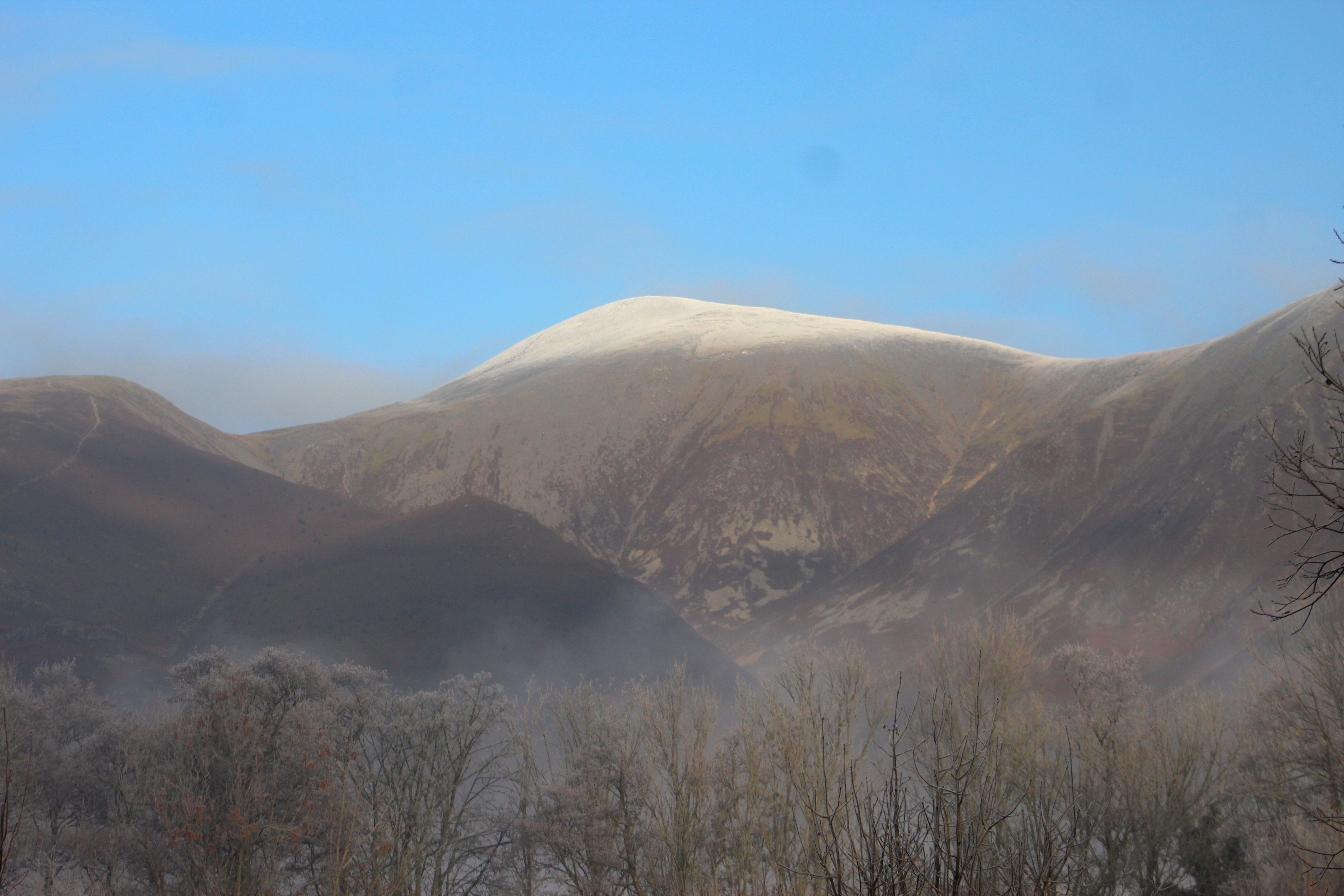
 On a frosty December morning, with temperatures struggling to get to zero, and the sun as dim as an old man's eyes, the landscape is too beautiful for words. So, I'm not going to waffle on this week, I'll let the pictures tell the story for me. Sit back and enjoy this walk, along the banks of the Derwent, from Portinscale to Keswick.


It's the Winter Solstice next week, heralding the joys of Yuletide. However you are celebrating winter, we wish you a happy one. 

Steve, Ishbel, and Mattie

And if you're still searching for Christmas present ideas:


Visit Steve's Vintage Collectables at


SVCwithEtsy


and Steve's Books on Amazon

Wednesday, 23 November 2022

China Ducks and Wooden Cats


Once again, it has been great weather for ducks. The Derwent, I am pleased to say, has been behaving itself, the goosanders are back for the winter, the mallards are doing whatever it is that mallards do, and Sally and Harry, the herons, pop by from time to time. Harry Jnr. (AKA Connick) is all grown up and moved on to pastures new.


In the meantime, Ive been spending a fair bit of time at auction houses buying stock for my on-line antiques shop, Steve's Vintage Collectables. Even there, I can't seem to get away from wildlife. Very often, I buy a box of mixed ceramics, if there's something interesting in there. One I bought recently also included this foreign made duck teapot. Not worth auctioning at Christie's, but I think he's absolutely lovely.


At other times, I spot something, tucked away at the back of the room, that just tickles my fancy. Such as this ridiculous one metre tall, hand crafted, wooden cat. He looks marvellous, peering out from behind the foliage, next to the fireplace, at The Old Corn Mill. I suupose that I'll have to sell the cat and the duck eventually, but I think I'll hang on to them for a while.


Meanwhile, as I write books, I thought I'd diversify into the antiquarian book market. I've a box of inter-war children's books to look through, which I picked up yeaterday, in Carlisle. I was also lucky enough to get a very rare, London & Melbourne 1936 edition of Mrs Beeton's Household Management, that turned out to be worth a lot more than I (or the auctioneers) realised. And on the subject of books, I have almost finished proofreading my first novel, The MONOM, (an anacronym for The Magic of Nature of Magic). I hope to get it published before Christmas, so if you get any Amazon vouchers in your Christmas stocking...


We're off to the central lakes at the weekend, to pick up a charity consignment for the homeless, so I'll take my camera, and let you know what's happening on the wet wildlife front, here in soggy Cumbria.


All the best,


Steve


P.S. In common with the rest of the world, I'm running a sale at the moment, in conjunction with Etsy's Cyber Week, so if you're interested in investing in antiques (a better bet than banks and building societies at the moment), or just looking for some Christmas gift ideas, come in and have a browse... Steve's Vintage Collectables.


Follow me on Steve's Nature Plus

and also on Twitter Steve's Nature, Facebook Steve Daniels Naturalistsand Instagram

Steve Daniels Cumbria


Wednesday, 9 March 2022

Under Sharp Edge


Back in March of last year, I took you on a walk half way along the disused railway line from Keswick to Threlkeld. Sunday was a beautiful day, and so we decided to do the other half, fortifying ourselves with a cup of coffee at a lovely coffee shop in the village beforehand, and beginning below the awe inspiring Sharp Edge of Blencartha, neatly delineated by a line of snow. As we walked down towards the line, evidence of the recent three storms was clearly visible.


The river Greta winds its way around the old line which was closed fifty years ago this month. It is now a tarmacadam path (suitable for wheelchairs). Down below, a pair of Goosander are fishing for breakfast – note how the female is holding her head, horizontally under the water. These are fish eating sea ducks who come down from Scandinavia in the winter. If you look closely at the male, you can see the hook on the end of his beak which he uses to stab the fish.


The line passes through tunnels and deep, moss covered cuttings, where the water drips down, reflecting golden red globes of sunlight. Absolutely mesmerising. A Wolf Spider stands motionless, awaiting prey, upon a bare patch of rock. They have excellent eyesight, the top two of their eight eyes being very large. They don't spin webs but are opportunistic hunters, pouncing on their prey as it passes, and injecting them with venom. This can produce an itchy welt in us humans but isn't dangerous.


In order to make this a circular walk, we'll take this footpath up over the hill where a flock of Herdwick sheep are contentedly grazing in the warm winter sun. #LadyBeetles are the subject of the insect section of this month's European Nature Almanack and here is our first one, a 7-spot, our most common species. Birch Polypore fungi adorn the Silver Birch trees, and down on the floor, among the reddening leaves of the Geraniums and Cranesbills, Trumpet Lichens rise above the Sphagnum Moss.


Looping round, we meet up with the River Greta once more, and the banks are very inviting for our first picnic of the year. Help yourself to a sandwich. I see we are being joined by a Reed Bunting. These are resident birds, but are often mistaken for sparrows, particularly the females. They are monogamous birds and should start breeding at the beginning of next month. About a fortnight later, the female will lay four or five olive grey eggs in a nest in a low bush or grass tussock. Both mother and father will feed and care for the offspring. All say ahhh!


Jack The Navigator Hound is with us, but sad to say he has deteriorated quickly over the past fortnight. He's spent the walk cradled in the crook of Ishbel's elbow, enjoying the fresh smells of the Cumbrian countryside. I wonder if he's remembering the thousands of miles that he's walked over his sixteen plus years? 

It was a heartbreaking decision, but it would have been selfish to prolong his demise, and we took him to the vet's last night where he was quietly put to sleep and departed his long and adventurous life in Ishbel's arms. Rest In Peace, Jack, my little friend.


A sad note to end on, but a change of location next week as we're off to Bulgaria. I'll try to send some pictures on Instagram and give you a full report when I get back. Meanwhile, some more books that may be of interest: 


A small book about this fascinating family of spiders £5.16 paperback or £2.24 on Kindle

An erudite book, going into detail from someone who knows her subject well. £25.25 hardcover, £14.95 paperback £2.97 on Kindle

With the Creepy-Crawlies beginning to emerge as Spring is upon us. Now is the perfect time to get acquainted with them. £14.99 paperback only


All of the books featured on my posts are now available to view, by category, on one page: Build Your Own Nature Library


All the best,


Steve


Follow me on Steve's Nature Plus


and also on


Steve's Nature


Steve Daniels Naturalists


Steve Daniels Cumbria


Wednesday, 25 November 2020

Series 13 Welcome To The Old Corn Mill


To recap: having lived in Crete for the past 16 years, I have now decided to get the best of both worlds by dividing my time between Crete and the UK. This has meant buying a property over here, to whit, a portion of a 200 year old corn mill, in Cockermouth, Cumbria. This gives me the novelty of living close to my mother and one of my sisters. I’m not sure what Cockermouth has done to warrant us all descending upon it as, for the past forty years, we’ve lived as far apart from each other as possible. As a naturalist, I am as interested in what lies outside my front door as what lies inside. In this case it is the River Derwent. It usually lies outside, but in 2015 it came in through the front door, and in the ‘Great Flood’ of 2009, which put most of Cockermouth under water, it crept over the windowsills. For that reason we’ll be keeping a close eye on the river level. At the moment it is running at 1.479 metres, which is just about within its normal level.


Enough waffling, let’s go and explore our new playground. There is a stretch of woodland on our way up to the village of Papcastle with a helpful roadside sign instructing the red squirrels to slow down. This is good news for me as I’m not as quick with the camera as I used to be. No squirrels this morning but plenty of Christmasy Snowberries. This is a north American plant which was imported into the UK in the late 19C as an ornamental and has now become widely naturalized. The native Americans used it as both soap and soup, oddly enough seeing as it is mildly poisonous, but crushing the berries between your palms gives you an instant hand lotion.


Once into the village, which in Roman times rivalled Carlisle in size, there is a farm track down to the riverside pastures which is full of interesting stuff. Plenty of Ivy coming into flower, providing a good winter harvest for birds and insects alike. Particularly these tiny white flies this morning. I’m pretty sure that these are biting midges of the Ceratopogonidae family, as opposed to the non-biting midges of the Chironomidae family. You don’t have to stand around getting bitten (or not) to tell them apart; male non-biting midges have feathery antennae, male biting midges don’t.


Aha! A log pile. Let’s see who’s about. The big fellow (1) is a Roundback Slug of the Arionidae family. Very common slugs that are difficult to tell apart as their colouration is influenced by their diet. The smaller chap, sitting on his head, (2) is also a Roundback but part of a subgroup, known as the Fasciatus, which have a false keel running down the back. Sandwiched between the two (3) looks to be a larva of some kind, while up in the top right (4) is an Elongate-bodied Springtail of the Tomoceridae family. Although they have six legs, they are not insects but hexapods. To qualify as an insect you must have had two pairs of wings at some point in your ancestry. (There is a section on hexapods – springtails, coneheads and diplurans in The Quick Guide to Creepy-Crawlies).


Here we are, down by the riverside and I spot a handy seat where we can sit and watch the river for a bit. Not much in flower at the moment, the odd bit of Yarrow but, thankfully, no Himalayan Balsam (see Urban Oasis). What we do have though, is a couple of Waxcap fungi which tell us something about the grass at our feet. This is a habitat known as Waxcap Grassland, which is declining throughout Europe due to modern agricultural practices. It is nutrient poor grazing land – sheep in the case of this one – which supports fungi biodiversity in general and waxcaps in particular. This Pink Waxcap, Porpolomopsis calyptriformis, which appears to have been well nibbled, is vulnerable to extinction on the IUCN red list, so that has to be our find of the day.


Unfortunately, the public footpath ends at somebody’s garden gate just along here which means that we can’t get into the woodlands beyond. I’ll have to get to know the neighbours! We have, on the opposite bank (where all birds live), a herd of Mallards, a herd being just one of many collective nouns for a group of ducks. Flock, team, paddling and raft being some of the others. But there is a stranger in the camp, the duck on the extreme right is not a Mallard but a Goosander, Mergus merganser, a sea duck that breeds in Scandinavia but comes down here for some Cumbrian warmth in the winter. They are piscivorous (fish eating) ducks and they will often work as a team, forming a semicircle around the fish and shepherding them into the shallows, where they are easier to catch.


So, that’s our first foray into our new hunting grounds and I’m sure we’ll find many more interesting things in these diverse habitats as the seasons turn.

Steve's Books


The Quick Guide to Creepy-Crawlies

All you need to know to identify any type of insect, spider, worm or snail very simply and find out more about it.

Yvonne: This was a gift for a family so that the children can understand what they see on days out. The second was for me. Logical and easy to use. If you know anyone who likes nature you can be confident that gifting this book will give years of pleasure.

The Eggs of Saramova

A science fiction novella for those who don't like science fiction. A fast-paced thriller that is, literally, out of this world (and it starts right here in Crete).

Too new for reviews yet!


Not Just For Twisted Women by Steve Daniels 

A light-hearted look at life through the eyes of the fairer sex.

Janet: If you are short on time but enjoy reading and are maybe not into long extended novels then Not Just For... Twisted Women provides readers with concise stories that stand alone and most certainly entertain with their ultimate twists. Loved it.

Helen: A very good read! Well written and entertaining!

Margaret: Each quick tale gives a glimpse into a character's life and has an often humorous twist at the end. I would love to read more.

Yvonne: These days many people find it hard to find the time to read a novel, so this book of short stories is ideal to dip into. It is also makes a good gift.


See sample pages of all my books and latest blogs, and keep abreast of latest publications here:

http://author.to/SteveDaniels


Crete Nature Catch-up

Series 1 - Welcome to Lasithi

Series 2 - The Rhythm Of Life

Series 3 - A Journey Begins

Series 4 - The Milonas Valley

Series 5 - This Is Ferma

Series 6 - Upland Villages

Series 7 - The Forty saints

Series 8 - Sunday Strolls

Series 9 -Stormy Weather

*********************************************************************

LINKS:

Share your nature thoughts, photos and comments on Naturalists (the facebook page that accompanies this blog)


Explore the region with the #CreteNature interactive Hiking and Nature Map


Cretan Flora Flowers of Crete BIRDS OF CRETE Crete Birding

Greek Butterflies and Moths Aquaworld Aquarium

Visit Greece (National Government Tourist Office)


Recent Posts