Showing posts with label Dragonflies. Show all posts

Monday, 20 June 2022

Minibeast Monday - Dragons & Damsels


Golden-ringed Dragonfly(Cordulegaster boltonii)


Summer is here, and it's time to start looking for Dragons and Damsels. Dragonflies and Damselflies to be precise, although neither of them are true flies. They form the ancient order of insects called the Odonata.


Common Blue Damselfly (Enallagma cyathigerum)


There are two ways of telling them apart. Firstly, dragonflies hold their wings away from their bodies at rest, whereas damselflies fold theirs along their backs. Secondly, on closer inspection, dragonfly eyes are placed together, while damselfly eyes are held apart.


Dragonlfy exuvium (Anax sp.)


Their nymphs are aquatic, and when they emerge from the water, their skins split and the adults emerge. The shed skin is called an exuvium (plural exuvia) and they make an interesting subject to collect and study.


The Odonata are covered on pages 16, 17 and 78 of The Quick Guide to Creepy-Crawlies.


Paperback £14.99

Paperback £13.99

Dragonfly Jewellery from AOBOCO £29.99


Build Your Own Nature Library

All the best,


Steve


Follow me on Steve's Nature Plus


and also on


Steve's Nature


Steve Daniels Naturalists


Steve Daniels Cumbria


Tuesday, 14 June 2022

Arran Special 2 - In Search of Seals


It's a beautiful morning, so let's head up the west coast to see what we can find. First stop is the village of Blackwaterfoot where Clauchen Water flows into Drumadoon Bay. A beautiful spot for introducing Mattie to the pursuit of rock pooling and for teaching her that not everything is best investigated by trying to eat it. Like this Blue Jelly for example. The sting of this particular species is quite mild but, if you are stung by a jellyfish do not try to treat it with vinegar, alcohol or urine. It will only make it worse. Better to wash it in sea water and take an antihistamine tablet. Next we have a European Green Crab (AKA Shore Crab) which is native to the north east Atlantic and the Baltic. However, it is listed as one of the world's 100 most invasive species and can be found on coastlines almost everywhere. In New England, they have taken to eating them and have even produced a Green Crab Cook Book. Probably go nicely with a bit of pickled Knotted Wrack which we also have here. Decorate with a few boiled Periwinkles and that's lunch sorted.


Well done Mattie! That's the first of Arran's Big 5, The Common, or Harbour, Seal. There are about eight of them on and around those rocks out there. Harbour seals pretty much stick to the same haul out spots, so these are probably resident here. Now that sealing has been banned in UK waters under the Conservation of Seals Act (1970), they can live to their full term, which is 20-25 years for males and 30-35 years for females. Aren't they beautiful? We'll carry on north, have a spot of lunch somewhere, then Ishbel has spotted an interesting looking walk for this afternoon with some intriguing caves to find.


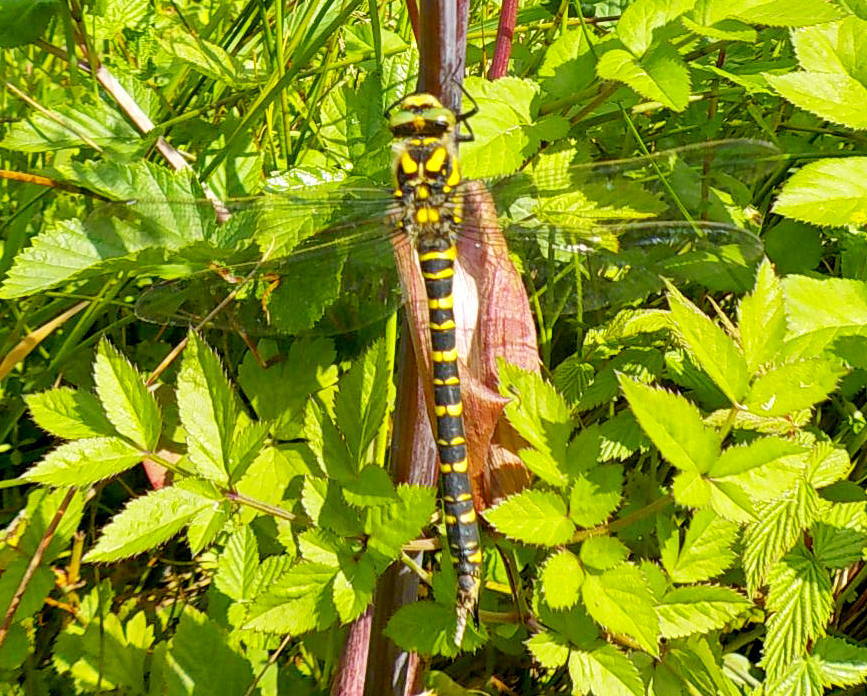
That was different. Cold jacket potato with chilled coronation chicken and salad. I wonder if it was meant to be served like that? Still, it wasn't quite as unappetising as it sounds. We're on the edge of a fir plantation with a little burn running alongside the path. Looks like a good walk for an insect safari. And that's a good start – a beautiful Golden-ringed Dragonfly. At 7-8cm long with a 10cm wingspan this is Britain's longest dragonfly. In comparison, this Large Red Damselfly, despite its name, is only about half that size. Note the wing positions: out straight = Dragonfly; folded along the back = Damselfly. Over here we have the smallest of the Satyrinids or Brown Butterflies , The Small Heath. These are grassland specialists and the caterpillars feed exclusively on grasses, whereas the adults are nectar feeders. We also have a couple of beetles. There's a Gazelle Beetle, so called because of their speed, and my favourite, the Green Tiger Beetle (another speed merchant in the beetle world – see Water, Water, Everywhere). Dragons and Damsels, Butterflies and Beetles are all covered in The Quick Guide to Creepy-Crawlies.


Ah we've reached the caves. Although the biggest one is called The King's Cave, it's doubtful that this is the one used by Robert The Bruce before the Battle of Bannockburn and I don't see any doggedly determined spiders either. I do see a determined little doggy though. What's she found now? Just time to mention a few of the flowers that I've spotted on the walk. Just outside the cave there are Marsh Orchids and Ragged-Robin as well as some English Stonecrop (seems the English are invading Scotland once again). Down by the sea there's Sea Thrift and Sea Campion, and growing in the burn, some rather tasty water mint.


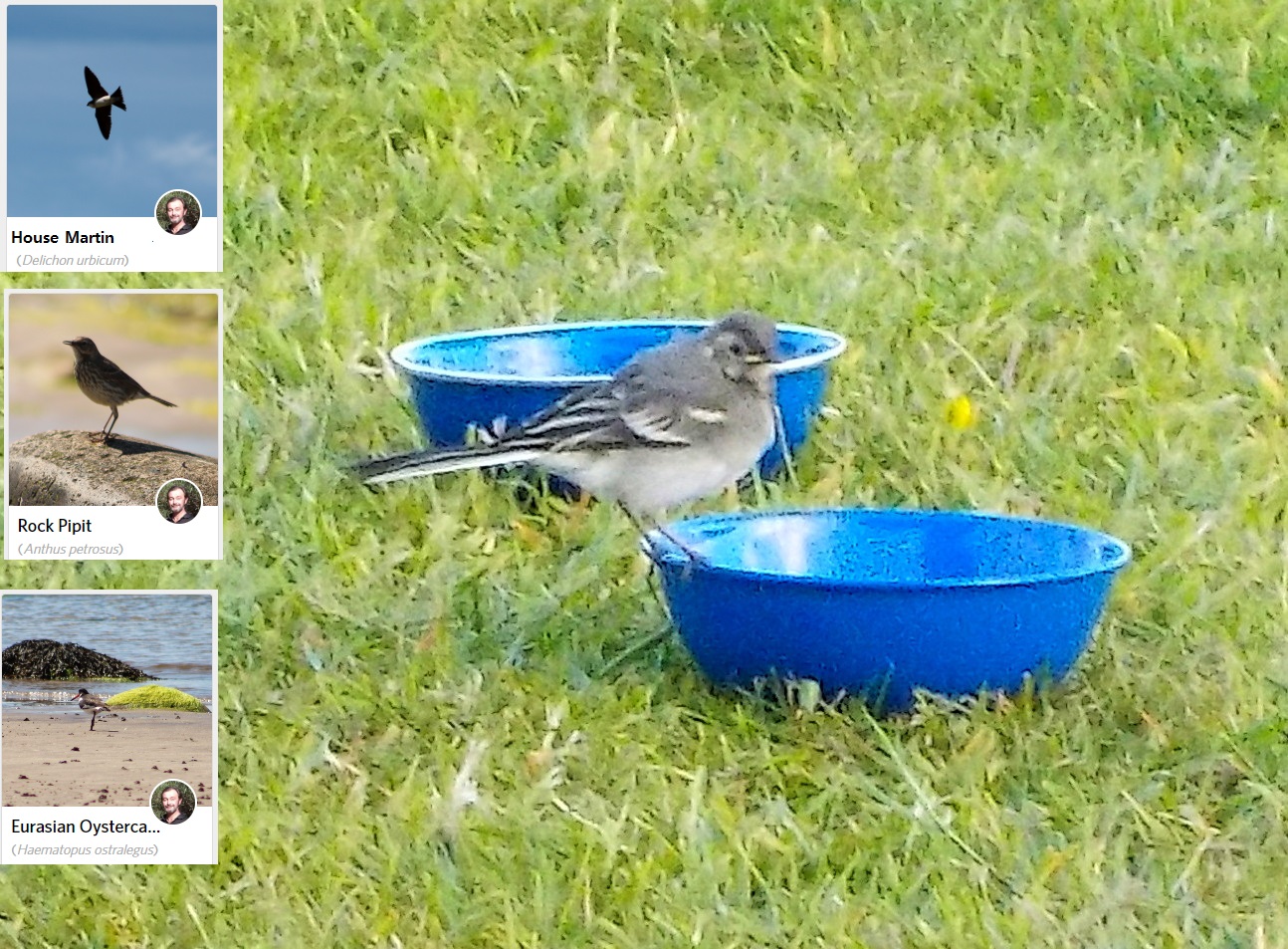
And finally, back at camp, a few more birds to add to our list from yesterday. Firstly, this young Pied Wagtail is being very brave, sipping water from Mattie's bowl, just outside the tent. There are also House Martins flying about, and down on the beach a Rock Pipit and a few Oystercatchers. Tomorrow, we're off to Broddick Castle and we'll take a look around the grounds to see what wildlife we can find there.


Hardback £24.09


Hardback £5.30 Paperback £2.56


Paperback £14.99

Build Your Own Nature Library


See you tomorrow,

Steve

Follow me on Steve's Nature Plus and also on 

Steve's Nature

 Steve Daniels Naturalists

 Steve Daniels Cumbria


Wednesday, 24 June 2020

Lucky Insects


This week is National Insect Week in the UK and there’s loads of stuff going about saying how good insects are for us humans, but we’ve done all that, haven’t we? So, this week I thought I’d take you up to a remote valley, north of Achlia and we’d look for some lucky insects, that is, insects that are believed to bring good fortune.


As we’re starting our little expedition where the track fords a small stream let’s start by looking for Dragonflies. In many cultures, dragonflies represent good luck and prosperity. If one lands on you, you will hear good news from a close friend (but if you see a dead one, it will be sad news that you hear). If you catch one, you’ll marry within the year. This, I can confirm is not true – otherwise I’d be a polygamist! Here, on the banks of the stream, we have Broad Scarlets and Southern Skimmers, so we have a bag full of lucky points and good news on the way to start with. 


Hello, here’s our little friend from last week, the Cretan Small Heath. Butterflies are associated with the soul (the Greek goddess Psyche has butterfly wings) as well as life, death, and rebirth. In Ireland, the belief that white butterflies carried the souls of dead children was so strong that it was illegal to kill one in the 17th century. Elsewhere, specific colours mean different lucky outcomes: red for love, yellow for happiness, blue for serenity, green for prosperity. Orange butterflies, like this one tucking into the thyme, mean that joy is on the way. I dare say she’ll catch up with us later.

Now, who do we have at the base of this rock? A nice, heavily armoured beetle of the Scarabaeidae family. Not a particular harbinger of good fortune himself but in the same family as the Sacred Scarab of Egypt. The belief was, that Khepri, the god of the rising sun, renewed the sun each morning and rolled it across the sky until nightfall. The Sacred Scarab, being a dung beetle, was Khepri’s earthly representation, rolling his ball of dung along the sands. They also believed that new dung beetles hatched from the dung because the male mated with the dung ball and thus renewed life as Khepri renewed the sun.


Another religious beetle is climbing this pine tree. It’s a 7-spot Lady Beetle. In English these are Ladybirds, in US English, Ladybugs. As they are neither birds nor bugs, we have now taken to referring to them as Lady Beetles, which is far more accurate. The ‘Lady’ part of the name is the religious bit. The lady in question being ‘Our Lady’ in Christianity, Mary, the mother of Jesus. It is associated with gifts; oil for Jesus, wine for Mary, and bread for the Holy Father and if you kill one you’ll anger Mary for nine days. This is highly believable, as any man will tell you who has forgotten to call in at the off-licence on the way home. Like many other Christian bits of trivia, this one was imported from an existing belief system. The Lady Beetle used to belong to the goddess Freya in Norse mythology.


So, what led me into this whimsical foray into insect folklore? I woke up the other night to discover this cricket on the hearth. The idea that a cricket on the hearth brings good luck to the household spans many cultures. The origin of the belief is thought to be Chinese, as crickets were kept in cages as pets. If the cricket sang happily, all was well, but if it went silent then danger was approaching. Charles Dickens’ story The Cricket on the Hearth boosted the popularity of the legend in 19th century England, and Walt Disney did much the same in 20th century America with the character Jiminy Cricket in Pinnochio. Incidentally, Jiminy is a corruption of Gemini, used as an euphamism for Jesus, to avoid blasphemy, By Jiminy!


As I said at the beginning, this week is National Insect Week and you can find lots of interesting things to see and do here: https://www.nationalinsectweek.co.uk/

Ahem, there is also a rather useful book listed below which features 27 different types of insect plus a dozen or so other small creatures of the common or garden variety. People who have bought it tell me that it is fascinating and informative and has helped them to connect with nature in a whole new way. Not blowing my own trumpet.. just sayin’

If you have enjoyed this post, then please share it among your social media friends. Let’s give insects a boost in National Insect Week!


See sample pages of all my books and latest blogs, and keep abreast of latest publications here:


All you need to know to identify any type of insect, spider, worm or snail very simply and find out more about it.
Yvonne: This was a gift for a family so that the children can understand what they see on days out. The second was for me. Logical and easy to use. If you know anyone who likes nature you can be confident that gifting this book will give years of pleasure.


The Eggs of Saramova
A science fiction novella for those who don't like science fiction. A fast-paced thriller that is, literally, out of this world (and it starts right here in Crete).
Too new for reviews yet!


A light-hearted look at life through the eyes of the fairer sex.
Janet: If you are short on time but enjoy reading and are maybe not into long extended novels then Not Just For... Twisted Women provides readers with concise stories that stand alone and most certainly entertain with their ultimate twists. Loved it.
Helen: A very good read! Well written and entertaining!
Margaret: Each quick tale gives a glimpse into a character's life and has an often humorous twist at the end. I would love to read more.
Yvonne: These days many people find it hard to find the time to read a novel, so this book of short stories is ideal to dip into. It is also makes a good gift.


Crete Nature Catch-up
*********************************************************************
LINKS:
Share your nature thoughts, photos and comments on Naturalists (the facebook page that accompanies this blog)
Explore the region with the #CreteNature interactive Hiking and Nature Map


Recent Posts