Showing posts with label Arran. Show all posts

Thursday, 16 June 2022

Arran Special 4 - Up North


We're off up 't north today. Arran isn't a big island, only 20 miles by 9, but it is definitely an island of two halves. The highland boundary fault which separates mainland Scotland's highlands from its lowlands cracked Arran in two as well. It was a huge tectonic event called the Arcadian Orogeny that started about 375 million years ago and lasted for about 50 million years. This is a good point to introduce you to James Hutton, an 18th century Scottish geologist who worked out that the earth could not be 6,000 years old as The Bible suggests. Brilliant geologist but a hopeless writer, only about half a dozen people understood what he was on about when he published his theory of Uniformitarianism in 1788. For those of you Creationists out there, it is important to remember that God did not write The Bible, scholars did, and whilst God may be infallible and ineffable, scholars aren't.


Hutton spent some time here, developing his ideas, particularly at this point where we're stopping off. This is Glen Sannox and it's stunningly beautiful.


Here's a little fellow that's a bit of a late spring/early summer specialist, the common garden chafer. These beetles only live for about eight weeks. Live fast and die young is their motto.


Ey oop, what have we got flying above us? (Northern dialects have begun to creep in to me, but apparently haven't settled in Cumbria yet). Is it the second of Arran's Big 5, a Golden Eagle? Nah, wrong wing outline. It's a buzzard. Morning, Mr. Buzzard.


Here's a pretty little thing, it's a little geometer moth, a Common Heath. Their caterpillars feed on heather and clover so he's in the perfect spot here. You generally see them in May and June here in the UK but further south in Europe they have a second brood and you can find them as late as September.


Sorry, but this is short and sweet this morning. I'm still battling against covid but a bit of positive mental attitude should sort it. See you tomorrow.


Steve


Arran 1 – Arrival


Arran 2 – In Search of Seals


Arran 3 – The Queen's Secret Bolt Hole

Tuesday, 14 June 2022

Arran Special 2 - In Search of Seals


It's a beautiful morning, so let's head up the west coast to see what we can find. First stop is the village of Blackwaterfoot where Clauchen Water flows into Drumadoon Bay. A beautiful spot for introducing Mattie to the pursuit of rock pooling and for teaching her that not everything is best investigated by trying to eat it. Like this Blue Jelly for example. The sting of this particular species is quite mild but, if you are stung by a jellyfish do not try to treat it with vinegar, alcohol or urine. It will only make it worse. Better to wash it in sea water and take an antihistamine tablet. Next we have a European Green Crab (AKA Shore Crab) which is native to the north east Atlantic and the Baltic. However, it is listed as one of the world's 100 most invasive species and can be found on coastlines almost everywhere. In New England, they have taken to eating them and have even produced a Green Crab Cook Book. Probably go nicely with a bit of pickled Knotted Wrack which we also have here. Decorate with a few boiled Periwinkles and that's lunch sorted.


Well done Mattie! That's the first of Arran's Big 5, The Common, or Harbour, Seal. There are about eight of them on and around those rocks out there. Harbour seals pretty much stick to the same haul out spots, so these are probably resident here. Now that sealing has been banned in UK waters under the Conservation of Seals Act (1970), they can live to their full term, which is 20-25 years for males and 30-35 years for females. Aren't they beautiful? We'll carry on north, have a spot of lunch somewhere, then Ishbel has spotted an interesting looking walk for this afternoon with some intriguing caves to find.


That was different. Cold jacket potato with chilled coronation chicken and salad. I wonder if it was meant to be served like that? Still, it wasn't quite as unappetising as it sounds. We're on the edge of a fir plantation with a little burn running alongside the path. Looks like a good walk for an insect safari. And that's a good start – a beautiful Golden-ringed Dragonfly. At 7-8cm long with a 10cm wingspan this is Britain's longest dragonfly. In comparison, this Large Red Damselfly, despite its name, is only about half that size. Note the wing positions: out straight = Dragonfly; folded along the back = Damselfly. Over here we have the smallest of the Satyrinids or Brown Butterflies , The Small Heath. These are grassland specialists and the caterpillars feed exclusively on grasses, whereas the adults are nectar feeders. We also have a couple of beetles. There's a Gazelle Beetle, so called because of their speed, and my favourite, the Green Tiger Beetle (another speed merchant in the beetle world – see Water, Water, Everywhere). Dragons and Damsels, Butterflies and Beetles are all covered in The Quick Guide to Creepy-Crawlies.


Ah we've reached the caves. Although the biggest one is called The King's Cave, it's doubtful that this is the one used by Robert The Bruce before the Battle of Bannockburn and I don't see any doggedly determined spiders either. I do see a determined little doggy though. What's she found now? Just time to mention a few of the flowers that I've spotted on the walk. Just outside the cave there are Marsh Orchids and Ragged-Robin as well as some English Stonecrop (seems the English are invading Scotland once again). Down by the sea there's Sea Thrift and Sea Campion, and growing in the burn, some rather tasty water mint.


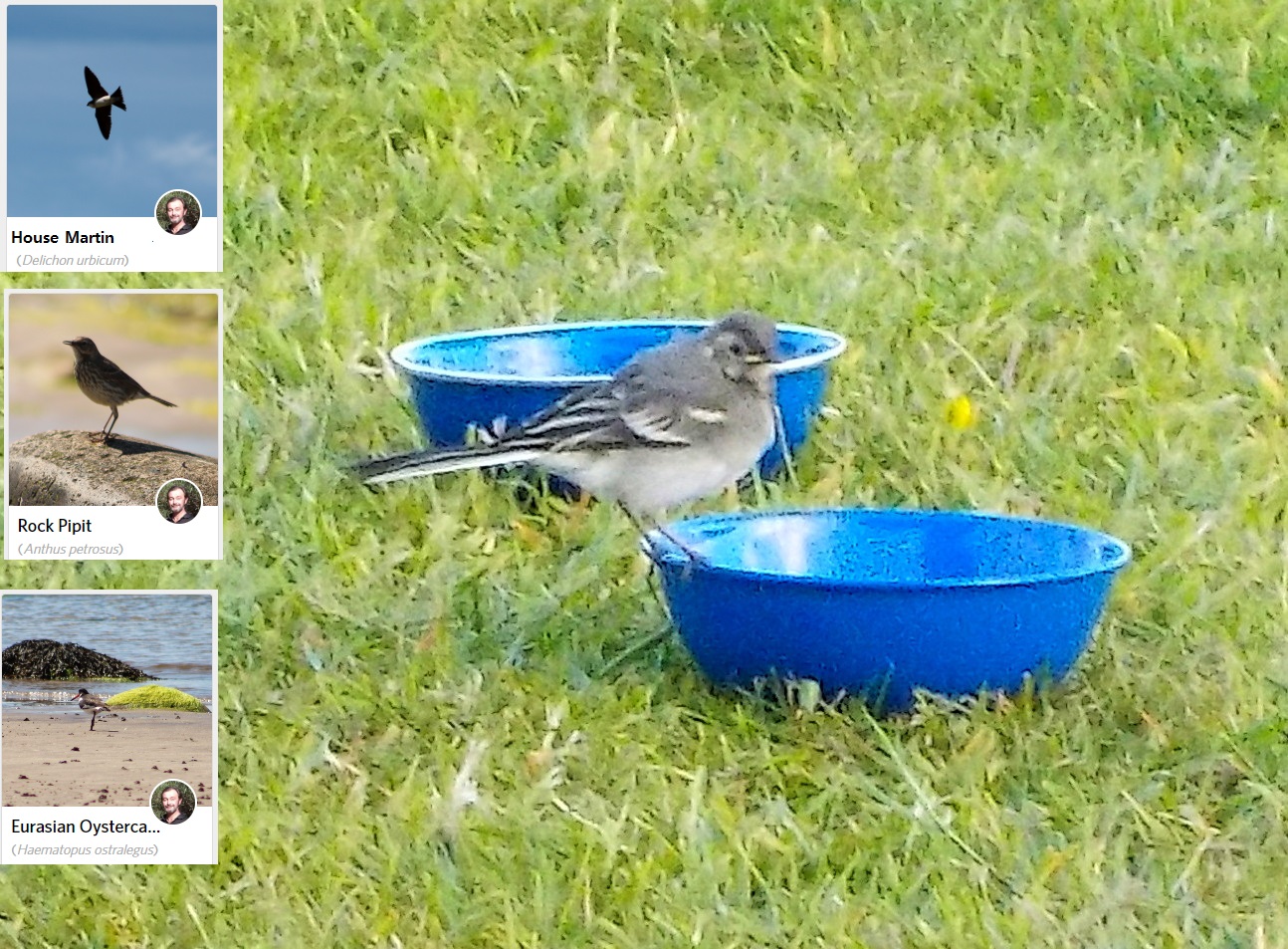
And finally, back at camp, a few more birds to add to our list from yesterday. Firstly, this young Pied Wagtail is being very brave, sipping water from Mattie's bowl, just outside the tent. There are also House Martins flying about, and down on the beach a Rock Pipit and a few Oystercatchers. Tomorrow, we're off to Broddick Castle and we'll take a look around the grounds to see what wildlife we can find there.


Hardback £24.09


Hardback £5.30 Paperback £2.56


Paperback £14.99

Build Your Own Nature Library


See you tomorrow,

Steve

Follow me on Steve's Nature Plus and also on 

Steve's Nature

 Steve Daniels Naturalists

 Steve Daniels Cumbria


Monday, 13 June 2022

Arran Special - 1. Arrival


The Isle of Arran lies off Scotland's west coast, nestling securely in the Firth of Clyde, and it's to be our home for the next six days. Described as 'Scotland in Miniature', it boasts a wealth of wildlife including Arran's big 5: Red Deer, Seals, Golden Eagles, Red Squirrels and Eurasian Otter. So, join Ishbel, Mattie and me as we pitch up on the island's south coast, at the encouragingly named Seal Shore Campsite, and we'll see how many of the big 5 we can find.


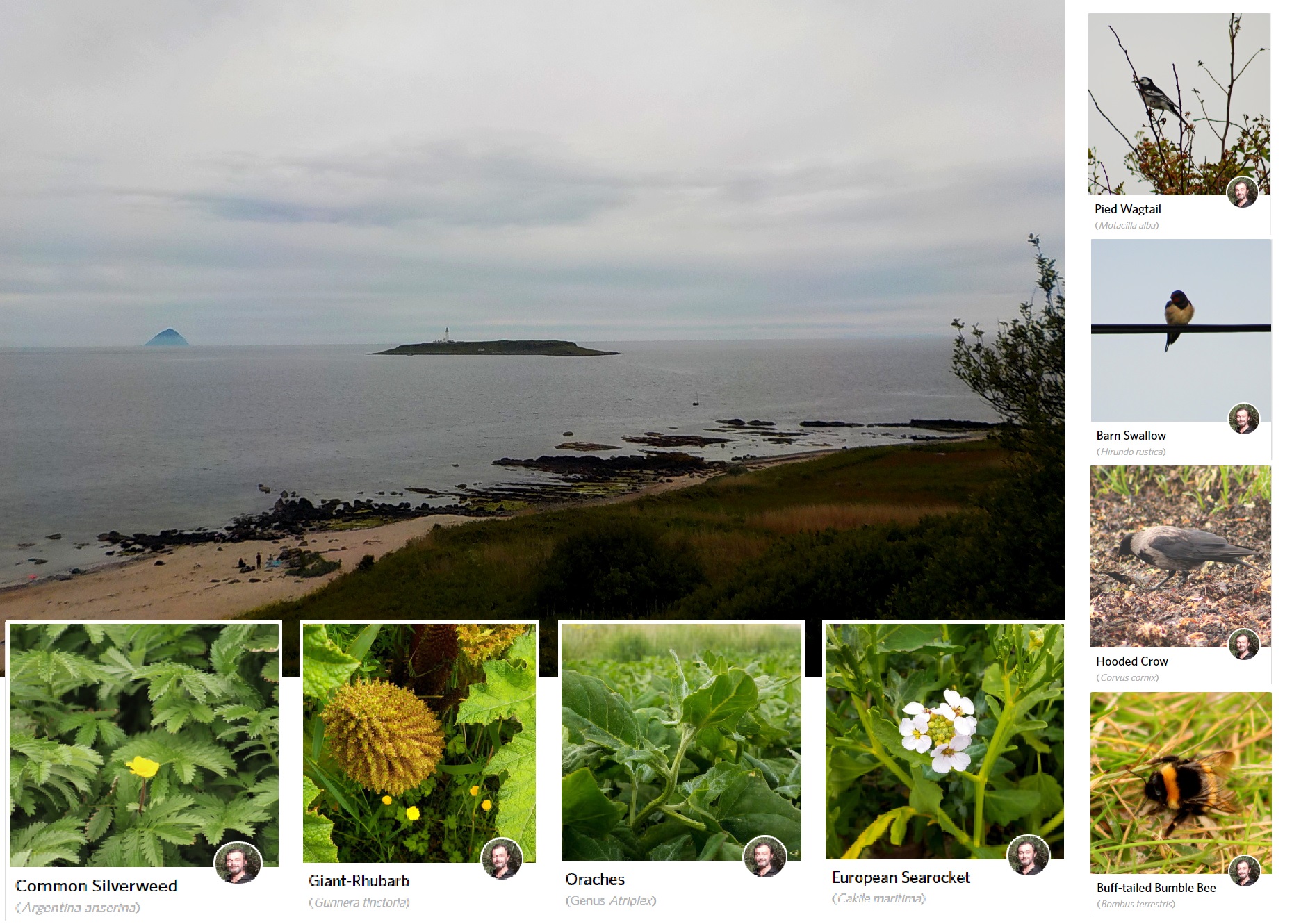
The ferry from Ardrossan on the mainland takes an hour and there are plenty of opportunities for a spot of bird watching from the top deck. As our sister ship steams past, with the islands of Padda and Ailsa Craig in the background, we have a couple of Greats: Black-backed Gull and Cormorant; Guillemots, both Common and Black as well as Common Gulls and Common Eider. And look! There's a Porpoise – he was there, honest.


Here we are at the campsite and what a glorious view. There's a story behind those black rocks out there. Once upon a time, a very long time ago, about 200 million years ago in fact, the supercontinent of Pangea began to break apart. As the continental plate was stretched ever thinner, cracks began to appear, and boiling hot magma erupted, flaming, through the surface. These black rocks are the remains of that monumental event. The continents of North America and Eurasia were born here. That's a pretty awesome way to start a holiday. Maybe someone should put up a blue plaque or something.


The other good thing about this site is that it's on the Arran Coastal Way which encircles the island in a 65 mile (105km) loop. I don't propose that we attempt the whole lot tonight, but we could all do with stretching our legs after the long journey, so let's explore a bit of it. I make no claims to be a coastal botanist, but most of the shoreline seems to be bounded by Common Silverweed and some sort of Orache, interspersed with Giant Rhubarb (with stalks and leaves above head height) and Sea Rocket. There are a fair number of Bumble Bees about, doing the pollinating. Buff-tailed, by the looks of it, and the evening birds include Pied Wagtails, some Hooded Crows prodding about in the seaweed and a few Swallows pretending that it's summer. In truth, it's getting a bit chilly, so let us repair to the local hostelry, conveniently situated next door, and see what's on the menu.


If you're into camping this summer, here are a few things on offer that you may like:

Pair of Padded Chairs


Fire Pit and Gloves

Was £21.99 Now £15.79


Solar Charger

Was £19.99 Now £18.99


Pair of Padded Chairs

Was £79.99 Now £67.99


Until tomorrow,


All the best,


Steve


Arran Special 2 – In Search of Seals https://bit.ly/snb17-1-2

#nature #wildlife #birds #flora #insects #mammals #rockpooling


Follow me on Steve's Nature Plus


and also on


Steve's Nature


Steve Daniels Naturalists


Steve Daniels Cumbria


Recent Posts