Showing posts with label Reptiles. Show all posts

Thursday, 25 May 2023

Snakes Alive!


A little over two and a half years ago, in October 2020, I took you down to look at the Dunescape of Drigg. We were, as you may recall, looking for Tiger beetles and Adders. There was plenty to look at, but unfortunately not those two creatures. Anyhow, I thought we'd go back there at the weekend, and see if we have any better luck in the warmer weather.

You may also recall that I had a new found friend with me on that trip. The fact that she is with me once again, this time in a campervan, speaks volumes. The dunes are a marvellous place for bird watching, and we are joined by Stonechats, Meadow Pipits and Goldfinches on every available perch. A pair of Linnets are also wandering about and, first thing in the morning, a Skylark comes down to take a dust bath.


Behind the dunes, where small streams run, we are accompanied by Common Blue and Wall Brown butterflies, as well as the diminutive Small Heaths, which are only about half the size of the other two. We also have four new flowers to add to our May collection: with Bloody Crane's Bill, Burnet Rose (which is a bit of a dune specialist), Yellow Iris, and Marsh Marigold. This makes 64 species for the year so far, if anyone's counting.


There are still no Tiger Beetles about, but we do have another little fellow that is associated with sand dunes. This  is a Marram Weevil. The antennae coming out of his snout like that, shows that he's a weevil of some kind. The snout is also short and broad, which means that he's one of the 14,000 or so broad nosed weevils, and we found him near Marram grass, so he's in the correct habitat for a Marram Weevil.


Adders, on the other hand, we do have. There are two things along this coast that frighten the beejabers out of people; Adders and Sellafield. Both are pretty overrated in terms of danger to the public. Adders bite about 100 people a year, but the last fatal bite was almost fifty years ago. They are not aggressive, but like most of us, they don't like being downtrodden. Sellafield hasn't bitten anybody since 1957, when it was Windscale Nuclear Power Station. A radioactive leak is believed to have been responsible for a couple of hundred fatal cancers. Nowadays, it primarily stores low to medium radioactive waste.


We'll walk back along the beach and see what the tide has washed up. A somewhat ferocious looking jellyfish for a start. Although the Dustbin-lid Jelly is one of the largest jellyfish to drift around UK shores, it's a bit of a gentle giant. Don't get me wrong, it will sting you, even when dead, but there are much smaller jellyfish with much worse stings. Also, they're big enough to see and avoid in the water, and they don't have metres of stinging tentacles trailing behind them.


Steve's Vintage Collectables. (click to visit)


Father's Day is coming up next month. We've plenty of gift ideas at SVCwithEtsy.

Tip: type fathers day into the search items bar in the left panel to see the Father's Day Ideas Collection


Steve's Books (click to visit)


Follow me on Steve's Nature Plus and also on Twitter (@Steve's Nature), Facebook (Steve Daniels),and Instagram (Steve Daniels Cumbria)

Or why not join the 2.5k members of our Naturalists group?


All the best,

Steve


Friday, 25 February 2022

The European Nature Almanack - March 2022


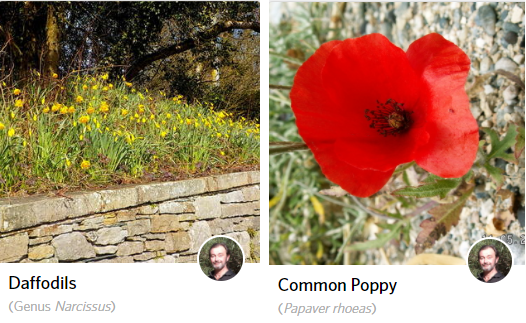
March is now upon us and one cannot live in the home town of William Wordsworth without making Daffodils the flower of the month for those of us in the north of Europe. The hosts of golden, nodding heads provide a wonderful, uplifting burst of colour after the sombre tones of winter. In the south of Europe, around the Mediterranean, Spring is in full bloom this month. I've recorded no less than 378 different plants in flower during March on Crete (as opposed to 109 here in Cumbria during the same period). The flowers I want you to look out for down south are poppies. Poppies belong to the genus Papaver and there are over 100 species. How many can you spot?


As the flowers come into bloom, so the insects start to emerge, and one that is common across Europe at this time of year is the Lady Beetle. This is the name that is being increasingly adopted throughout the English speaking world for these familiar creatures. Here in the UK we have traditionally called them ladybirds (but they're not a bird, obviously), and in the US they were called Ladybugs (but they're not true bugs either). They are part of the Beetle family, Coleoptera. There are over six thousand species worldwide, the most familiar to us in Europe being the 7-spot, Coccinalla septempunctata. The 'Lady' part of the name comes from the Christian 'Our lady' (Mary) who was depicted as wearing a red cloak in early paintings with the 7 spots representing her seven joys and seven sorrows.


Look out also for lady beetle larvae. As you can see, they are very different to the adults. You can tell it is a beetle larva from the hardness of its head (like a beetle's wing case), the six pairs of jointed legs at the front, and the lack of any additional leg-like appendages (called prolegs). A key to terrestrial insect larvae is given on page 77 of The Quick Guide to Creepy-Crawlies as well as explanations of terms like prolegs. A key to aquatic larvae is given on page 78.


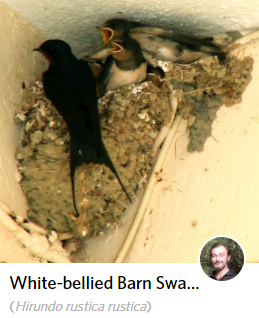
Birds are starting to nest now which gives me a chance to talk about the etiquette of bird photography, particularly with regard to nests and eggs. For many years photographing birds on the nest, or eggs, has been taboo. The reason being that you couldn't get such photos without disturbing the birds. Nowadays, with long distance lenses, and the discrete use of camera traps, it is possible to get photos without interfering with them. So, let common sense prevail. The bird mustn't be aware of your presence. Some birds, such as House Sparrows and these Swallows, nest in and around human habitation and you can take photos from a reasonably close distance. They still wouldn't appreciate you thrusting your phone into their nest though.


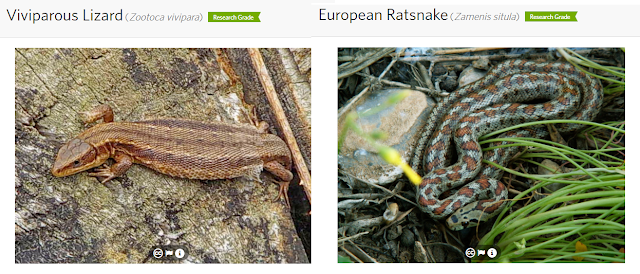
Lizards and snakes are beginning to come out of hibernation as the days get longer and warmer so keep an eye out for reptiles this month such as The Viviparous Lizard in the north and The European Ratsnake in the south. Both of them beautiful creatures.


Steve's Wild Kitchen


In Greece, March is the time to start collecting Xorta, wild spring greens. Many of these are from the Brassica or Amaranth families, but there are many others as well. Even here in the north of Europe there are over sixty different wild plants to forage. My particular favourite is Garlic Mustard (Allaria petiolata) with its subtle blend of both garlic and mustard. An essential ingredient of The Great Cumbrian Breakfast with lamb's kidneys, mushrooms and black pudding.


Wine of the month to try in March will be Meadowsweet (AKA Bridewort). This is a beautifully fragrant herb, with a honey like aroma, which should make a delicious dessert wine (it used to be used as an alternative to honey in making mead). Meanwhile, I'm still waiting for the nettles to reach a suitable height for picking for February's nettle wine. I'll keep you posted.


Steve's Books


Click on a cover for details


Chubby's Crematorium & Burger Bar

A book of humorous poems to cheer, amuse and entertain your friends with.


The Quick Guide to Creepy-Crawlies

All you need to know to identify any type of insect, spider, worm or snail very simply and find out more about it.


The Eggs of Saramova

A science fiction novella for those who don't like science fiction. A fast-paced thriller that is, literally, out of this world (and it starts right here in Crete).


Not Just For Twisted Women

A light-hearted look at life through the eyes of the fairer sex.


See sample pages of all my books and keep abreast of latest publications here:

http://author.to/SteveDaniels


Keep up with me throughout the month on Steve's Nature Plus or join the 1,300 members of our Facebook Group: Naturalists

All the best,


Steve


Wednesday, 9 September 2020

Dubwath Silver Meadows


We’re off to explore another one of Cumbria’s small Nature Reserves today, Dubwath Silver Meadows, at the northern end of Bassenthwaite Lake. This is a wetland reserve which has been thoughtfully laid out with cinder paths and duckboards made from recycled plastic and, as far as I can tell, it is wheelchair accessible.

We’ll make a start by walking alongside the hay meadow and around the snipe bog. Whether we’ll see any snipe or not is debatable as they are very well camouflaged and have nerves of steel. They’ll keep very still amongst this tall Tufted Hair Grass and let you pass within a couple of feet without moving a muscle. You practically have to step on their tail feathers before they spook, and then they take off like a rocket. Looking at the wetland flowers in amongst the grass I see that we have Great Burnet; some species of Woundwort, probably Marsh Woundwort, which can help promote the healing of wounds (any plant with wort in it’s name is a traditional healing plant); and Bird’s Foot Trefoil which is one of the host plants for the caterpillars of the Wood White butterfly.

We also have various thistles, which the Small Tortoiseshells are enjoying; Meadowsweet, which is attracting the Sun Flies (a type of Hoverfly) and, sadly once again, the 7-spot Lady Beetle is the only beetle to be seen. We do however have a bug, a true bug that is, being a member of the order Hemiptera, rather than the generic use of the word bug to describe any invertebrate. True bugs, like this beautifully marked Lygus Bug, have specialised mouthparts, like a hypodermic needle, which they use for sucking sap from plants. Females have needles at the other end as well, which they use for piercing plants and laying eggs in them. In small numbers they don’t do much harm, but some Lygus Bugs can become a serious agricultural pest, particularly where you have very large fields of a single crop and thus, no habitat for their predators.

I’ve heard a few vague tweetings, and there’s a buzzard mewing above us but I see some bird feeders up ahead so, if we stand still and try to look like tree stumps (difficult in your bright pink anorak, but do your best), we’ll wait and see who comes along. There’s a Great Tit on the feeder already and a Blue Tit up in the branches waiting to come in (the Great Tit is slightly bigger, more boldly marked and has a black cap as opposed to a pale blue one). Just over to the left is a Coal Tit, with a black cap which has a white patch at the back and a greyish chest. That’s out tits sorted out (behave), but over to the right we also have a Nuthatch. These are more closely related to Wrens than to Tits and have a similar crouching posture. But wait, did you see something move on the ground beneath the feeder?


There, just coming out of that tussock of grass, it’s a little Bank Vole. It looks very mouse-like but it’s tail is quite short and straight, whereas mouse tails are quite long and often seem to have a life of their own, quite independent to what the rest of the mouse is doing. Voles are a big favourite with birds of prey which means that they are very cautious as a rule but this one has a couple of advantages. Firstly, the Tits are wary of Birds of Prey too and set up an alarm call if there are any about, and secondly, birds are such messy feeders that there are plenty of seeds on the floor so he doesn’t have to concentrate too hard on finding his food.


That was a nice find and it was good to watch the small Passerine birds up close and personal. I think we’ll just take a seat on this beautifully carved wooden bench and watch the hay meadow for a bit.

Excuse me, but is this seat taken?”

Would you believe it, there’s a Lizard here, calmly shedding its skin, without an apparent care in the world. Lovely habitat for him here, plenty of insects and spiders in the hay meadow, good cover with old logs along the verge of the path and a nice warm bench to bask upon. I one rescued a lizard from a cat in a Cretan taverna. He spent the entire meal curled up in the cradle of my arm, much to the amusement of my fellow diners. Lovely little creatures.

Until next week, when we’ll be walking around Sale Fell, up to our left there,

Stay safe and be happy,

Steve


All you need to know to identify any type of insect, spider, worm or snail very simply and find out more about it.

Yvonne: This was a gift for a family so that the children can understand what they see on days out. The second was for me. Logical and easy to use. If you know anyone who likes nature you can be confident that gifting this book will give years of pleasure.

The Eggs of Saramova

A science fiction novella for those who don't like science fiction. A fast-paced thriller that is, literally, out of this world (and it starts right here in Crete).

Too new for reviews yet!


A light-hearted look at life through the eyes of the fairer sex.

Janet: If you are short on time but enjoy reading and are maybe not into long extended novels then Not Just For... Twisted Women provides readers with concise stories that stand alone and most certainly entertain with their ultimate twists. Loved it.
Helen: A very good read! Well written and entertaining!
Margaret: Each quick tale gives a glimpse into a character's life and has an often humorous twist at the end. I would love to read more.
Yvonne: These days many people find it hard to find the time to read a novel, so this book of short stories is ideal to dip into. It is also makes a good gift.


See sample pages of all my books and latest blogs, and keep abreast of latest publications here:


*********************************************************************
LINKS:
Share your nature thoughts, photos and comments on Naturalists (the facebook page that accompanies this blog)

Explore east Crete with the #CreteNature interactive Hiking and Nature Map

Crete
Cumbria


Recent Posts