Showing posts with label Amphibians. Show all posts

Wednesday, 19 July 2023

Where in the World?


If you follow me on facebook or instagram, then you'll know that I've been teasing you all week with clues as to where this week's blog post is set. The first picture I posted gave rise to guesses of Crete and Cyprus. Sandy beach, brilliant blue sky, fantastic rock formations. It is, in fact, Marsden Beach, on the north east coast of England, between the mouths of the rivers Tyne and Wear. Given the ridiculous temperatures around the Mediterranean at the moment, it makes sense to stay in England for the summer holiday and leave the Med for a bit of winter sun. Besides, there's a wealth of sea birds to see. Great Cormorants sunning themselves on the rock stack, Black-legged Kittiwakes nesting on the cliffs, gulls and terns a-plenty, and the occasional Guillemot or two.


Human history, as well as natural history, is also well represented, with the Beamish Living History museum. A grand day out for all the family. I thoroughly enjoyed seeing some of Steve's Vintage Collectables in their natural setting, and I learnt a thing or two. Last year, I wrote a series of blogs called Steve's History of Things. I think it's time to resurrect it. (Just follow this blog to get notifications of new posts from both blogs).


Staying with the historical theme for a moment, The National Glass Centre in Sunderland is well worth a visit. Sunderland has been the centre of the British glass making industry ever since Benedict Biscop brought French glaziers over from Gaul in the 7th century to make some stained glass windows for St. Peter's church (which is still standing and is one of the oldest churches in England). Again, I found that there was more to glass than I ever knew, so you can expect an expansion in SVCs Glorious Glass section, as I hunt around for interesting items.


But to return to natural history; my final teasing picture appeared to be a picture of The Acropolis, which I said was taken from Washington. It is Sunderland's Penshaw Monument and the picture was taken from Washington Wetlands, which is where we're off to next. Incidentally, there is not only a Washington in Tyne and Wear (George Washington's ancestral home) but also a Philadelphia and a New York. But back to the wetlands, which is a full day out and, as you would expect there are plenty of waterfowl, both native and non-native species, bird hides from which to view them and a good scattering of information boards, so you know what you're looking at and why. At the furthest point of the reserve, tucked away in a quiet corner, are the amphibian ponds. Here you will find the rarest of Britain's three newt species, The Great Crested Newt. Their numbers have declined drastically in the past fifty years, as their ponds have been filled in, built over, or just polluted.


And finally, a walk around the estate. By which, I mean housing estate. I was greatly impressed by the amount of green spaces around Sunderland. This massive hay meadow, surrounded by houses and tower blocks, provided a wealth of insects from all different orders – Lepidoptera (butterflies and moths), Hymenoptera (bees, ants, wasps and sawflies), Hemiptera (true bugs), Diptera (flies) and Odonata (dragonflies and damselflies). Sunderland may not be the first place you think of for a summer holiday, but it certainly shouldn't be the last.

Steve's Vintage Collectables. (click to visit)


Steve's Books (click to visit)


Follow me on Steve's Nature Plus and also on Twitter (@Steve's Nature), Facebook (Steve Daniels),and Instagram (Steve Daniels Cumbria)

Or why not join the 2.5k members of our Naturalists group?


All the best,


Steve


Thursday, 20 April 2023

Hardknott Pass Roman Fort


As Cumbria has just been split, administratively, back into its original counties of Cumberland and Westmorland, we decided to walk in both of them at the weekend.

We would also have walked into the northernmost part of Lancashire, but we haven't given that bit back to the Lancastrians. A triangular stone pillar marks the spot where the three counties historically met, and we dutifully walked around it. Probably should have done it widdershins, but we didn't think of it at the time. This was possibly because we were indulging in the popular local pastime of walking-with-clouds-in-our-boots. The forecast was for cloudy but dry, but neglected to mention that the cloud level would start at sea level, and we were at around the 400m mark. We also visited the Roman fort at nearby Hardknott pass (which vies for the title of steepest pass in England along with another in Yorkshire). Goodness knows what it was like for the poor Roman soldiers in winter.


Due to the weather, we did not see much in the way of wildlife up there, so yesterday, as the sun was shining, I took a walk up by Tom Rudd beck and back through the cemetary to see what flowers and insects I could find. Florally, whites and yellows are the colours of the month, with primroses taking over from the daffodils, and great sweeps of Wood Anemones competing for space with the still present Lesser Celandines from last month. 

Blues are also beginning to make an appearance with Speedwells and Common Dog Violet now appearing.


The dearth of insect life this spring is worrying, particularly in terms of biodiversity. With the exception of three butterfly species (Peacock, Red Admiral and Orange Tip), everything else was either bees or flies (and many of the flies were bee mimics). That's only 3 of the 20 or so insect orders that live in this country (See p12 of The Quick Guide to Creepy-Crawlies). Where were the beetles? Where were the true bugs?


News From The Old Cornmill


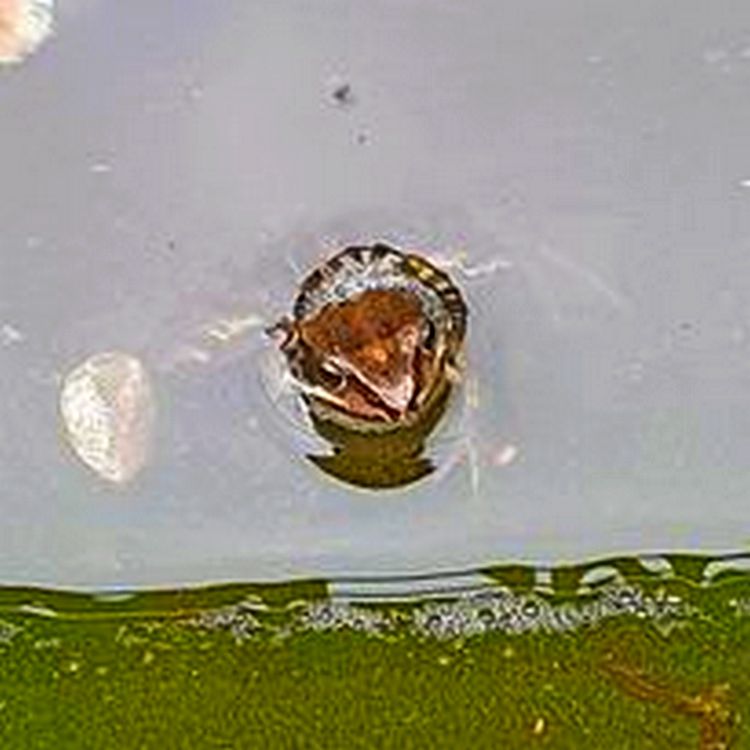
Having deported mouse number one, his mate has now come looking for him. She will be joining him on the old railway line this morning, and the entrance to the kitchen via the gas pipe will be sealed. Meanwhile, Ishbel has a new resident in the garden. A couple of years back, we put a small pond in her back garden. Meet Jeremy, who has now taken possession.


All the best,


Steve


Steve's Vintage Collectables. Now over 100 items in stock


Steve's Books


Follow me on Steve's Nature Plus

and also on Twitter Steve's Nature, Facebook Steve Daniels Naturalistsand Instagram

Steve Daniels Cumbria


Wednesday, 11 May 2022

Here Be Volcanoes! - Eycott Hill

Eycott Hill Nature Reserve, Cumbria, UK


Here be volcanoes! OK, Cumbria may not be the first place that comes to mind when considering the volcanic hotspots of the world, but some 460 million years ago this place was on fire. This was the bed of The Iapetus Sea, which was being squished as continents drifted into one another, setting off volcanoes and lava flows all over the place. Between then and now, this has been land, sea and ice at one time or another and pretty well tilted as you can see from the information board provided by the Cumbria Wildlife Trust. These rocky hummocks are the bits of volcanic lava, still visible after all these years. And how do they know all this? Those neat holes in the rocks are not made by incredibly strong boring beetles, as you may imagine, but by the lesser spotted geologists, who have been taking, and studying, samples of the ancient lava.


The flora up here is pretty special too. There are twenty species of sedge and eighteen species of Sphagnum moss up here (I think I've identified these correctly, but please feel free to put me right). There are marsh violets and mountain pansies and the beautifully lace-like Parsley Fern.


As I said in this month's European Nature Almanack, May is a good month to look out for reptiles and amphibians becoming more active after months of hibernation. This little fellow is a newt. We have three species here in the UK: the Smooth, or Common Newt, the Palmate Newt and the Great Crested Newt. This one has a shallow crest running from neck to tail, and there is no webbing on the back feet, so I think that it's a Smooth Newt. To be absolutely certain I'd have to check that he has black spots on his throat, but I don't want to disturb him.


We have owls and small mammals too. We haven't actually seen any (these are two owls I made earlier, so to speak), but we do have evidence in the form of a regurgitated owl pellet. After half an hours prodding about, I've managed to extract 22 small mammal bones including leg, shoulder, vertebrae and occasional pieces of skull.


Now, it wouldn't be me if I didn't find a couple of insects to play with, and what a pair they are. The first beauty is an Emperor Moth, a grand name for a grand insect. This is one of about 2,300 species of large Saturnid moths, but the only one you'll find in the UK. They only live for about a fortnight as adults, because their only purpose is to mate. They cannot even eat, and have to rely on the food resources they built up as a caterpillar. The other fellow is a Dor Beetle. These are earth boring dung beetles who dig tunnels (up to 2 metres long in some species) beneath a pile of dung. This particular species is coprophagous, that is, it eats dung and provisions its nest with the same, but many Dor Beetles live on a diet of mouldy leaf litter. Can't say that either appeal to me particularly.


And now, a Special Offer for all you budding bug spotters out there. I have 25 signed, limited edition copies of The Quick Guide To Creepy-Crawlies to send out on a first come – first served basis. The standard version is £14.99 on Amazon + p&p but I'm offering you these signed, limited edition copies for only £12.00 + p&p.


Amazon price £14.99 plus p&p

Signed, Limited Edition Offer:

£12 + £1.50 p&p = £13.50

$14.75 + $4.25 p&p = $19.00


14 + €4.00 p&p = €18.00


Remember, there are only 25 and it's first come, first served!

All the best,


Steve


Follow me on Steve's Nature Plus and also on


 Steve's Nature


 Steve Daniels Naturalists


 Steve Daniels Cumbria


Monday, 31 January 2022

The European Nature Almanack - February 2022


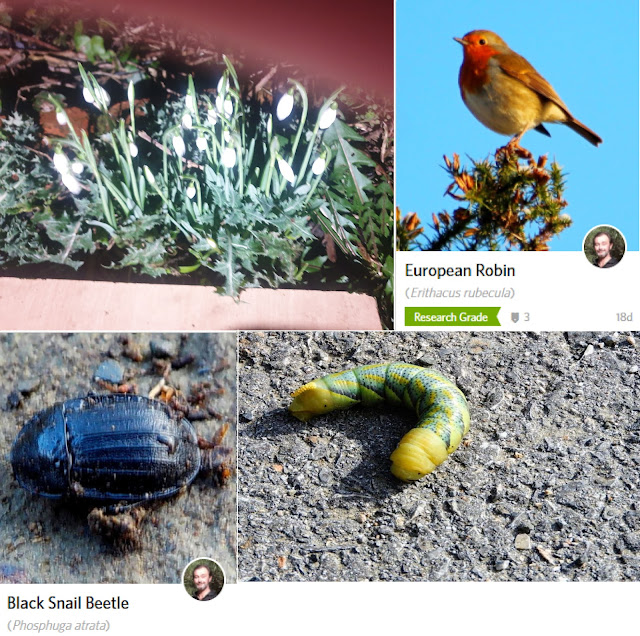
Before we get on to what delights are in store in February, let's have a quick look back at January, starting with the flowers. Can anybody claim an earlier sighting of snowdrops than the 18th when Ishbel spotted these in Cumbria? Congratulations to Yvonne Payne in Crete, who won the #overwintering_insects challenge with her find of a Death's Head Hawk Moth caterpillar. I managed to find a Black Snail Beetle under a rock, and hopefully, we all managed to spot a robin.


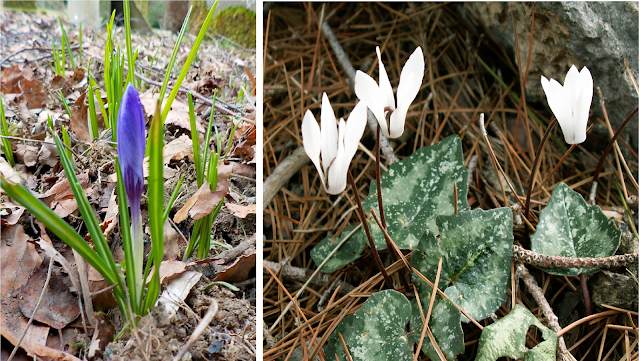
This month's flowers to spot are crocuses in Northern Europe and cyclamens in southern Europe. As usual, send your pictures to Naturalists (the facebook page that accompanies this blog). #FebruaryFlowers. Around The Mediterranean you'll start to see many more flowers now.


Insects will be hard to find in the north, but Crane flies (which are true flies with only one pair of wings) are about and are very beautiful when looked at up close. Their wings are like stained glass windows. Down around The Mediterranean, it is olive harvesting season, so keep an eye out for the olive fruit fly. Luckily they are not a serious pest, but like all fruit flies, they have an annoying habit of diving into your drink when you're dining al fresco.

If you're photographing insects with your phone, you may well be interested in this bit of kit which I have on order. It's a clip on 60x microscope lens. It should be arriving today so I'll let you know how I get on with it. Click on image for details.


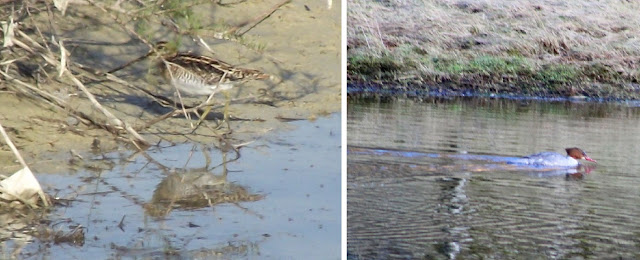
February is a good month for bird watching at lakes and reservoirs. The snipe, on the left, I photographed in Crete a few winters back, and the Goosander, I snapped here on the river Derwent last February. Send your pictures to Naturalists . #BirdsAndWater


As for reptiles and amphibians, this is a subject that I would normally leave until next month, which is when frogs and toads traditionally start to spawn. But as the climate warms we are starting to see them spawn as early as January occasionally. So, this month's Challenge is simply Spawn. Send your pictures to Naturalists . #FebruaryChallenge.


Usually, when I take a stroll around Cockermouth cemetery, I'm sure to spot a pair of red squirrels and maybe a rabbit or two. Yesterday however, there wasn't a sign of life. The cemetery was dead, so to speak. That notwithstanding, I'm after your photos of #MammalsInCemeteries (you know where to post them now).


The best photos from the #FebruaryChallenge, #BirdsAndWater and #MammalsInCemeteries will be featured in next month's Almanack. 

Best mammal photo from January came from 

Sougato Bhattacharyya in India. It is of a Sambar Deer and her calf. A vulnerable species native to the Indian subcontinent, South China and South east Asia.


Steve's Wild Kitchen


There is plenty to forage in February, even up in the northern latitudes. All sorts of things from ash seeds to yarrow, whilst down around the Mediterranean the fields are awash with the bright yellow flowers of wood sorrel, the roots of which can be used as a substitute for bean sprouts in Asian cookery (see Chicken Chow Mein with Wood Sorrel Root). My forage plant of the month, which you can find almost anywhere in Europe at this time of year is Cleavers, those sticky stemmed plants that cling to your legs as you attempt to walk through them. When cooked they are excellent in curries and similar dishes such as Cleaver Cumbry. Meanwhile, the gorse flower wine from last month is bubbling away nicely in the demijohns, which means that the fermenting bin needs replenishing. February's wine is going to be Young Nettle Wine. You can use the Generic Country Wine recipe for this but you must simmer the nettles gently for about half an hour before putting them in the fermenting bin and topping it up to 8 litres.


That's all for this month. Dont forget to share your nature thoughts, photos and comments on Naturalists (the facebook page that accompanies this blog), or leave a comment in the box below.


Steve's Books


Click on a cover to read the first few pages.
All books except The Quick Guide are yours for FREE on Kindle Unlimited!


A book of humorous poems to cheer, amuse and entertain your friends with.


All you need to know to identify any type of insect, spider, worm or snail very simply and find out more about it.


A science fiction novella for those who don't like science fiction. A fast-paced thriller that is, literally, out of this world.


A light-hearted look at life through the eyes of the fairer sex.


See sample pages of all my books and keep abreast of latest publications here:

http://author.to/SteveDaniels


All the best,


Steve


Wednesday, 14 October 2020

The Dunescape of Drigg


How do you fancy a trip to the seaside? Or, more specifically, hunting for adders and tiger beetles in the sand dunes? We’re off to Drigg this morning, where I’ve heard that adders have been spotted recently and also to look for one of the UK’s rarest beetles, the northern dune tiger beetle, Cicindela hybrida, which has only been recorded here and at the sand dunes of Sefton, North Merseyside.


If we park up in the village here, then it’s just over a mile’s walk to the dunes, but it will give us a chance to look at the hinterland behind the dunes which seems to be mainly pasture and salt marsh. There’s a pair of raptors quartering the marshes, too distant to identify, but quite a few Stonechats using the fences as vantage points. These birds, relatives of wheatears, redstarts, flycatchers and robins, like to perch on bushes, such as gorse, and utter their call, which has been likened to two pebbles being clicked together. We’ve met this ‘Devil Bird’ before, you may recall, and the Scottish folklore that surrounds it, in Skordilio, Where God and The Devil Meet over in Crete.


Here we are on the dunes with their own, specialised, flora and fauna. There’s Sea Rocket down here, where the dunes meet the beach, and this has adapted to the habitat by producing cork-like seeds which float down the coast by longshore drift (one of the two things, along with ox-bow lakes, which we all seem to remember from school geography lessons), where it will establish new colonies. Another dune specialist is this Sea Spurge, which is a type of Euphorbia. Euphorbias are named after Euphorbus, the Greek physician to the King of Nubia (Juba II who married Antony and Cleopatra’s daughter). It was Euphorbus who noted the plants’ great laxative powers (history does not record how – possibly too much information), from which we get the common English name, Spurge, which simply means to purge.


There’s also Hedge Parsley, Wild Thyme and Bloody Cranesbill up here and an inordinate number of snails crawling about amongst this Lady’s Bedstraw (so called because the dried plants act as a flea repellent and, in mediaeval times, lady’s mattresses used to be stuffed with it). These two, I’m fairly sure, are in the Cepaea genus, because of their striped shells. If you look at the lip of the first shell you can see that it is brown, making it a Brown-lipped Snail, Cepaea nemoralis, whilst the lip of the second one is white, making it a White-lipped Snail, Cepaea hortensis. I am not, however, a snail expert, so please feel free to correct me if I’m wrong.


Snails are one of the menu items of choice for the European Common Frog, along with slugs, worms and insects – particularly flies, according to Sergius L. Kuzmin of The Russian Academy of Sciences. So this little fellow, sunbathing in the grass down here, has a choice of breakfasts as, not only are there a number of snails here, but also plenty of Crane Flies. Frogs themselves are favourite prey items of snakes, which is one of the animals we’ve come looking for today, but unfortunately they are conspicuous by their absence. I’ve a feeling that, despite the warm October sunshine, it is still a mite too chilly, and even more so for the Northern Dune Tiger Beetles which are probably tucked up snug in their burrows. Not a waste of time though, with our rapidly diminishing biodiversity, sometimes what you don’t see can be as important as what you do see.


I
t’s been a lovely morning for wandering about the dunes and these days we have to make the most of the ones that are left, as we’ve lost about 80% of this type of habitat in the last 80 years. All part of the Great Habitat Loss that is driving the current Mass Extinction Event, unfortunately. All is not totally lost however as the Dynamic Dunescape Project is making heroic efforts in dune conservation. Click on the link for an excellent article by Natalie Hunt about the project in general and the Northern Dune Tiger Beetle in particular.


That’s all for now, see you next week when we’ll be off to look at another one of those big puddles – Loweswater.


Steve

Steve's Books


B
ooks make great Christmas Presents!

For the budding naturalist in the family, The Quick Guide to Creepy-Crawlies is a great introduction to invertebrates, suitable for all ages.

If you only want to spend a fiver on a friend, then Not Just For Twisted Women is available in paperback now, and The Eggs of Saramova and other stories will be available next month.

If you just want a little something for yourself to read, now that the nights are drawing in, then both story collections are available on kindle for the price of a decent cup of coffee.

Much as I hate self-promotion, people do tell me that they’re all cracking good books!


The Quick Guide to Creepy-Crawlies

All you need to know to identify any type of insect, spider, worm or snail very simply and find out more about it.

Yvonne: This was a gift for a family so that the children can understand what they see on days out. The second was for me. Logical and easy to use. If you know anyone who likes nature you can be confident that gifting this book will give years of pleasure.


The Eggs of Saramova

A science fiction novella for those who don't like science fiction. A fast-paced thriller that is, literally, out of this world (and it starts right here in Crete).

Too new for reviews yet!


Not Just For Twisted Women by Steve Daniels 

A light-hearted look at life through the eyes of the fairer sex.

Janet: If you are short on time but enjoy reading and are maybe not into long extended novels then Not Just For... Twisted Women provides readers with concise stories that stand alone and most certainly entertain with their ultimate twists. Loved it.

Helen: A very good read! Well written and entertaining!

Margaret: Each quick tale gives a glimpse into a character's life and has an often humorous twist at the end. I would love to read more.

Yvonne: These days many people find it hard to find the time to read a novel, so this book of short stories is ideal to dip into. It is also makes a good gift.


See sample pages of all my books and latest blogs, and keep abreast of latest publications here:

http://author.to/SteveDaniels


*********************************************************************

LINKS:

Share your nature thoughts, photos and comments on Naturalists (the facebook page that accompanies this blog)


Explore east Crete with the #CreteNature interactive Hiking and Nature Map


Crete

Cumbria

Cretan Flora


Crete Birding


Greek Butterflies and Moths

Cumbria Wildlife Trust

Cumbria Bodiversity Data Centre

Carlisle Natural History Society


Recent Posts