Showing posts with label Europe. Show all posts

Wednesday, 27 April 2022

The European Nature Almanack - May 2022

One of Ishbel's Honey Bees, Apis mellifera, pollinating May Blossom on Lowca cliffs


Where better to start this month's almanack than with a picture of a honey bee collecting nectar from May Blossom? May Blossom, Crataegus monogyna, is Britain's native Hawthorn and is associated with the pagan custom of 'Bringing in the May'. On April 31st evening, people would go out to the woods to celebrate through the night, returning in the morning with branches decorated with flowers and foliage. It seems reasonable to suppose that the largest of these would have been erected on the village green to provide a focal point for the May celebrations, but the actual origin of the Maypole is somewhat obscure.


Photo from Wikipedia

May Day celebrations are not peculiar to Britain. Walpurgis Night, April 31st, is celebrated throughout northern and central Europe, when bonfires are lit to ward off witches. Saint Walpurgis was an English Christian missionary born in Devon, England in 710, particularly associated with warding off witchcraft. Bonfires are also a major part of the Celtic festival of Beltane (= bright fire), again, to ward off witches, particularly in respect of protecting their cattle.

Balkan Whip Snake, Hierophis gemonensis, from Crete


Generally, May is seen as the month of rebirth. May Day marks the mid point of Spring, the cold, dark days of winter have gone, and the long, warm summer days lay before us. Crops are growing in the fields and animals, both wild and domestic, are raising their young. Insects are buzzing in the fields, unwittingly providing the majority of a growing chick's diet, and the amphibians and reptiles are becoming more active.

Steve's Wild Kitchen


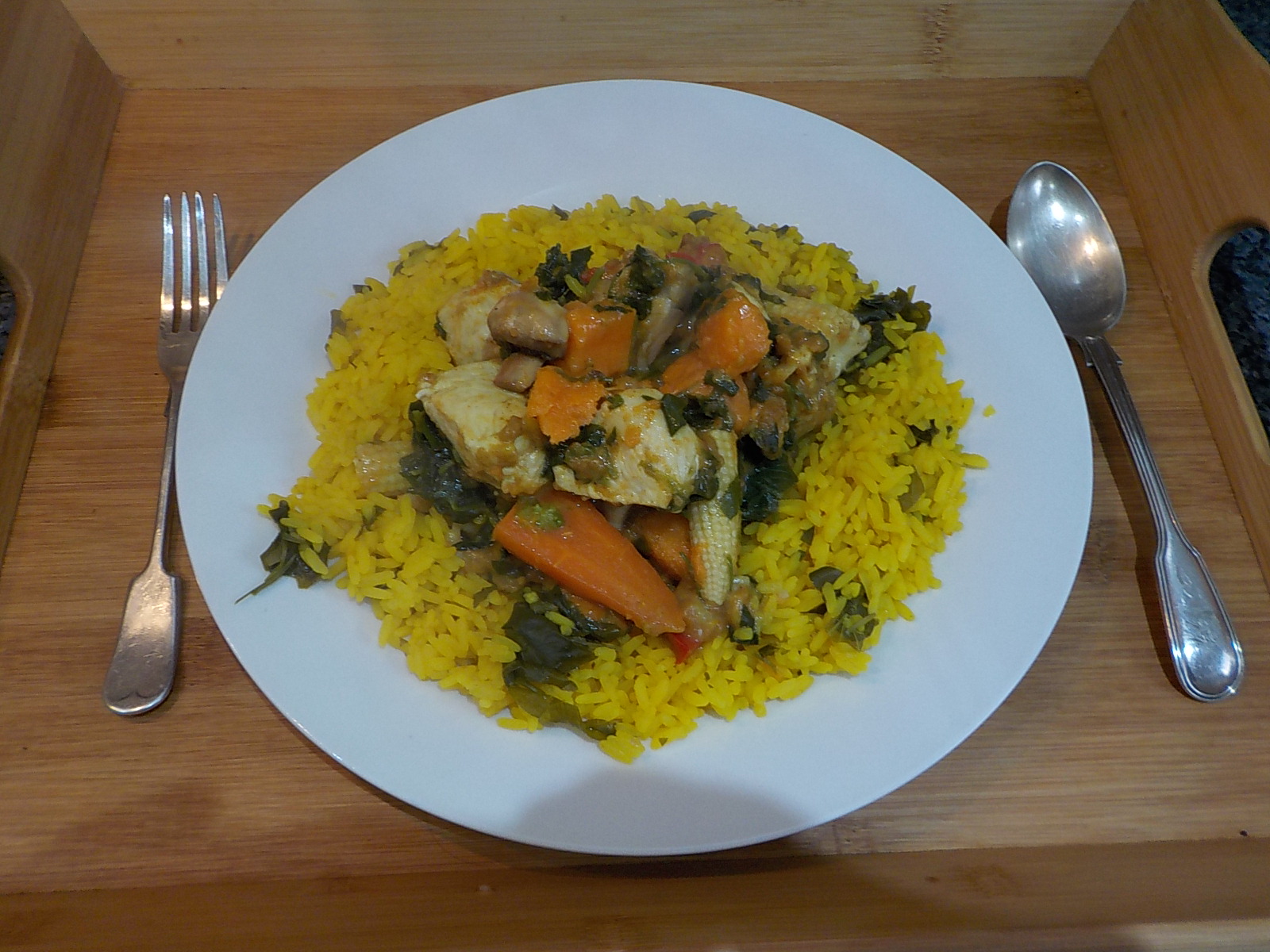
With over sixty wild plants to choose from in May, it's difficult to choose which ones to favour. A lot of them, including hawthorn flowers, can be added to salads but if you're in the mood for something hot, here's a recipe for a Green Curry (not Thai) that I made with two of my favourite hedgerow plants: Lesser Celandine and Garlic Mustard.

This month's wine will be Red Campion flower.


Steve's Books


Chubby's Crematorium & Burger Bar

A book of humorous poems to cheer, amuse and entertain your friends with.

The Quick Guide to Creepy-Crawlies

All you need to know to identify any type of insect, spider, worm or snail very simply and find out more about it.


The Eggs of Saramova

A science fiction novella for those who don't like science fiction. A fast-paced thriller that is, literally, out of this world (and it starts right here in Crete).


Not Just For Twisted Women

A light-hearted look at life through the eyes of the fairer sex.


See sample pages of all my books and keep abreast of latest publications here:

http://author.to/SteveDaniels


All the best,


Steve


Monday, 31 January 2022

The European Nature Almanack - February 2022


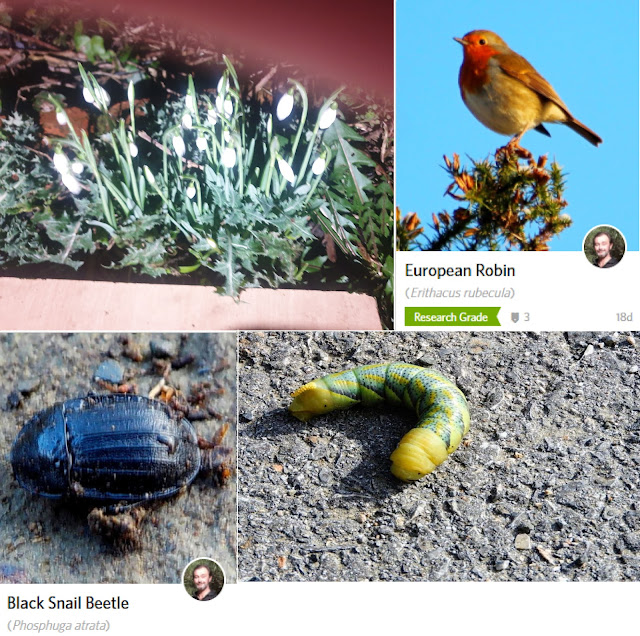
Before we get on to what delights are in store in February, let's have a quick look back at January, starting with the flowers. Can anybody claim an earlier sighting of snowdrops than the 18th when Ishbel spotted these in Cumbria? Congratulations to Yvonne Payne in Crete, who won the #overwintering_insects challenge with her find of a Death's Head Hawk Moth caterpillar. I managed to find a Black Snail Beetle under a rock, and hopefully, we all managed to spot a robin.


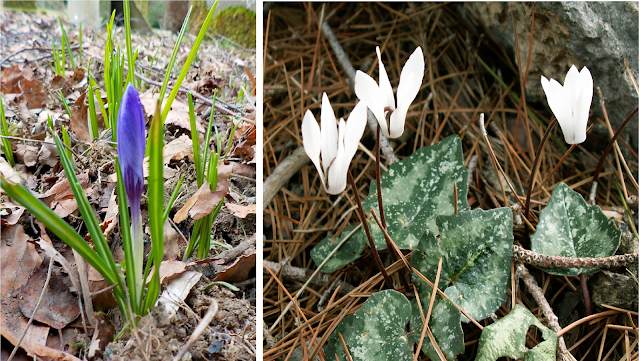
This month's flowers to spot are crocuses in Northern Europe and cyclamens in southern Europe. As usual, send your pictures to Naturalists (the facebook page that accompanies this blog). #FebruaryFlowers. Around The Mediterranean you'll start to see many more flowers now.


Insects will be hard to find in the north, but Crane flies (which are true flies with only one pair of wings) are about and are very beautiful when looked at up close. Their wings are like stained glass windows. Down around The Mediterranean, it is olive harvesting season, so keep an eye out for the olive fruit fly. Luckily they are not a serious pest, but like all fruit flies, they have an annoying habit of diving into your drink when you're dining al fresco.

If you're photographing insects with your phone, you may well be interested in this bit of kit which I have on order. It's a clip on 60x microscope lens. It should be arriving today so I'll let you know how I get on with it. Click on image for details.


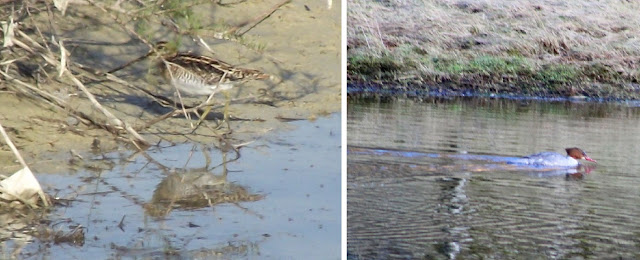
February is a good month for bird watching at lakes and reservoirs. The snipe, on the left, I photographed in Crete a few winters back, and the Goosander, I snapped here on the river Derwent last February. Send your pictures to Naturalists . #BirdsAndWater


As for reptiles and amphibians, this is a subject that I would normally leave until next month, which is when frogs and toads traditionally start to spawn. But as the climate warms we are starting to see them spawn as early as January occasionally. So, this month's Challenge is simply Spawn. Send your pictures to Naturalists . #FebruaryChallenge.


Usually, when I take a stroll around Cockermouth cemetery, I'm sure to spot a pair of red squirrels and maybe a rabbit or two. Yesterday however, there wasn't a sign of life. The cemetery was dead, so to speak. That notwithstanding, I'm after your photos of #MammalsInCemeteries (you know where to post them now).


The best photos from the #FebruaryChallenge, #BirdsAndWater and #MammalsInCemeteries will be featured in next month's Almanack. 

Best mammal photo from January came from 

Sougato Bhattacharyya in India. It is of a Sambar Deer and her calf. A vulnerable species native to the Indian subcontinent, South China and South east Asia.


Steve's Wild Kitchen


There is plenty to forage in February, even up in the northern latitudes. All sorts of things from ash seeds to yarrow, whilst down around the Mediterranean the fields are awash with the bright yellow flowers of wood sorrel, the roots of which can be used as a substitute for bean sprouts in Asian cookery (see Chicken Chow Mein with Wood Sorrel Root). My forage plant of the month, which you can find almost anywhere in Europe at this time of year is Cleavers, those sticky stemmed plants that cling to your legs as you attempt to walk through them. When cooked they are excellent in curries and similar dishes such as Cleaver Cumbry. Meanwhile, the gorse flower wine from last month is bubbling away nicely in the demijohns, which means that the fermenting bin needs replenishing. February's wine is going to be Young Nettle Wine. You can use the Generic Country Wine recipe for this but you must simmer the nettles gently for about half an hour before putting them in the fermenting bin and topping it up to 8 litres.


That's all for this month. Dont forget to share your nature thoughts, photos and comments on Naturalists (the facebook page that accompanies this blog), or leave a comment in the box below.


Steve's Books


Click on a cover to read the first few pages.
All books except The Quick Guide are yours for FREE on Kindle Unlimited!


A book of humorous poems to cheer, amuse and entertain your friends with.


All you need to know to identify any type of insect, spider, worm or snail very simply and find out more about it.


A science fiction novella for those who don't like science fiction. A fast-paced thriller that is, literally, out of this world.


A light-hearted look at life through the eyes of the fairer sex.


See sample pages of all my books and keep abreast of latest publications here:

http://author.to/SteveDaniels


All the best,


Steve


Wednesday, 29 December 2021

The European Nature Almanack - January 2022


Welcome to the first edition of The European Nature Almanack in which we'll be discovering the things to look out for in the coming month in this wonderfully diverse continent. All of western and southern Europe are classified as temperate (according to the
Köppen-Geiger climate classification map of Europe) whereas eastern and northern Europe are classified as cold. We'll be concentrating primarily on western and southern Europe (because that's where I've lived and studied) but I'd welcome observations from northern and eastern Europe as well.


In the northern hemisphere we are in the grips of winter which becomes colder and more severe the further up you go, either in terms of latitude or altitude. In the plant world, it is mainly a time of dormancy and up here in Cumbria we are looking out for the first Snowdrops, whereas down in the Mediterranean, Anemones are the go to flowers. Snowdrops, which are part of the Amaryllidaceae family and related to daffodils, can be found at most altitudes from Stockholm, 59oN, down to central France and Germany above about 48oN. Below those latitudes you have to go into the Apennine, Pyrenees or Pindos mountain ranges to find them (unless you know different). Anemones, which are part of the Primulaceae, or Primrose family, can be found all around the European Mediterranean and also on the Atlantic coast of Portugal.


There are not so many insects around in the winter, which is not surprising as they are ectothermic creatures that cannot generate their own heat. The further south you go, the warmer the temperature, the more insects you'll find. Down in Crete you'll even find butterflies, such as the Red Admiral, on the wing in January. It is no coincidence that snowdrops reproduce asexually, mainly from bulb division, whereas anemones are insect pollinated. Up here in Cumbria you have to look under rocks or dig into the soil to find insect eggs or larvae taking refuge from the cold winter temperatures. Many insects, such as Caddisflies (not true flies but Trichopterans), have aquatic larvae which can be found at the bottom of ponds below the surface ice. January's Challenge for northern Europeans is to look for overwintering insect larvae, and for southern Europeans it is to spot butterflies on the wing.


I'm going to take as my bird of the month, the European Robin, which is familiar to us all across Europe. Although their diet is predominantly worms, spiders and insects, they are very adaptable and will eat winter berries when the ground is frozen and invertebrates are hard to find. There are various subspecies within the continent and southern birds tend to be more wary of humans than their northern counterparts. This may be because southern birds are less reliant on human activities (note the difference in foliage in the two pictures: and where you have foliage you have invertebrates), or, just possibly, it's because we don't have a habit of shooting them up north. It is called the European Robin to differentiate between other, unrelated, birds called Robins in other parts of the world, notably the American Robin which is a type of thrush and the Australasian Robin which is a member of the family Petroicidae and is slightly more closely related.


Reptiles and amphibians, being ectothermic, are all in hibernation at this time of year (even on Crete) but mammals are out and about. They are often easier to spot at this time of year as there is less vegetation to conceal them. The Red Squirrel is an animal I've been very pleased to get acquainted with since moving up to Cumbria and, although they have been largely displaced by the introduced grey squirrel, they are making a comeback in the UK due to dedicated conservation efforts. Elsewhere in Europe they can be found across the continent although they are rarely seen in either southern Italy or Greece. In northern latitudes they are to be found in coniferous forests whereas further south broad-leafed woodland seems to be preferred.


Steve's Wild Kitchen


Each month, apart from chatting about what we can see around Europe, I'll be giving you some ideas about what you can do with what you find while you're out and about. I've decided to try and become self sufficient in wine this year because it's a ridiculous price in the UK and most of it is imported from long distances which adds to my carbon footprint. Adding a bit of foraging into your diet is fun as well as being economically and environmentally sensible so why not make it one of your New Year's Resolutions? This is my generic recipe for country wine. Gorse flowers are good in the north while oranges (which need to be chopped up before mashing) are in season down south. Happy New Year.


Share your nature thoughts, photos and comments on Naturalists (the facebook page that accompanies this blog), or leave a comment in the box below.

Watch for updates on Steve's Nature + or follow me on Twitter (@cretenaturalist) or Instagram 


Steve's Books


If you're struggling with what to do with all those Amazon vouchers you got for Christmas, here are a few ideas.


Chubby's Crematorium & Burger Bar

A book of humorous poems to cheer, amuse and entertain your friends with.

The Quick Guide to Creepy-Crawlies

All you need to know to identify any type of insect, spider, worm or snail very simply and find out more about it.

The Eggs of Saramova

A science fiction novella for those who don't like science fiction. A fast-paced thriller that is, literally, out of this world (and it starts right here in Crete).

Not Just For Twisted Women

A light-hearted look at life through the eyes of the fairer sex.


See sample pages of all my books and keep abreast of latest publications here:

http://author.to/SteveDaniels


All the best for 2022


Steve

Wednesday, 11 September 2019

Strasbourg to Lugano


After that beautiful stopover in Strasbourg we are now burrowing our way through The Alps like a maggot through Swiss cheese, emerging from long, dark tunnels into beautiful vistas of lakes and snow capped mountains. A quick change at Basle and then on to Lugano on the Swiss Italian border.


Hitched a lift on the local bus up into the mountains and was told where to get off by a beautiful young music student who sat next to me. (No, literally: she informed me where to disembark as her stop was a few before mine). This is the Pensione Agra run by Annemiek and Fritz and was my favourite place of the whole tour.


Surrounded on three sides by Lake Lugano it is a magnificent place for hiking through upland meadows and woodland and we have another free day with which to explore. Walking through the village, lizards scurry along the walls through clumps of Ivy-leaved Toadflax.


Butterflies are everywhere, along with a whole host of other inverterbarates while in the woodlands songbirds of every description orchestrate the air but remain firmly out of sight in the dense summer canopy.


A weird humming noise fills the air which I took to be a swarm of beetles such as this fellow but it turned out to be hundreds of bicycle tyres on tarmac as dozens of Swiss clockmakers hurtled down the hill to make sure that they got to work on time.


Crete Nature Catch-up

Steve's Books (well, just the one at the moment but 'The Quick Guide to Creepy-Crawlies' is nearly complete and I hope to publish it later this month).

Not Just For Twisted Women by Steve Daniels 


A light-hearted look at life through the eyes of the fairer sex.

Kindle Edition 1.99 pounds sterling (or equivalent).

Click on the link to the right to read two complete stories for free.

Paperback Edition 4.99 pounds sterling (or equivalent)..  Read snippets, samples and stuff at Steve's Books


*********************************************************************
LINKS:
Share your nature thoughts, photos and comments on Naturalists (the facebook page that accompanies this blog)

Explore the region with the #CreteNature interactive Hiking and Nature Map


Wednesday, 14 August 2019

Hook of Holland to Koblenz


An 8am disembarkation at the Hook of Holland and straight into an early morning initiative test. There are four train changes between here and Schiedam and first we have to find the station. But what is this? A bus going to Schiedam – I wonder if they take Interrail tickets? No they don't, they don't take cash either but what a nice lady and such expressive eyes. A quick glance towards an empty seat conveys 'sit down, shut up, and look as though you've got a ticket.' We'll be in Koblenz in time for a late lunch.


And here we are on the banks of the Rhine complete with the world's only horse drawn cable-car. There's no-one at the hotel, just some sort of entry keybad and instructions in German which are beyond my limited ability to order a beer. Thanks to a helpful and bi-lingual neighbour we are now installed. A bit cheap and cheerful but it's only for one night and it's clean. It's also handily placed for a lively looking street cafe so bier and wurst all round I think.


A couple of hours R&R after the five hours travelling this morning and then we'll go and explore the river bank. Plant wise it's a little barren, mainly grasses struggling up between the stones, the odd sedum plus wild rose and ivy on the city walls. But we've got a magnificent pair of Egyptian Geese here (Alopochen aegyptiatica). These, as their name suggests, are African birds mainly from the Nile valley and the sub-Saharan but there are many escapees from bird collections dotted around mainland Europe and also in the U.S.


8 o'clock, time for dinner and the second problem of the day; it would appear that everything on the west bank closes at seven, apart from the ferry to the east bank which shuts down at six thirty. I did notice a rather grand looking hotel along the bank and that looks like our only option. The meal will probably cost more than the hotel.


OK, so the meal cost a lot more than the hotel but it was delicious though, wasn't it? A good night's rest and it's on to Strasbourg tomorrow. And here's problem number three; the hotel door is jammed. The keypad is glowing green when I enter the number but the doorknob has come loose and the door is determinedly remaining where it is. Don't suppose you've got a screwdriver on you? Oh well, the benches don't look too uncomfortable and there's quite a nice view of the river at night from here.


Post Script. Shortly after midnight another friendly neighbour came and brought me a couple of pillows. I explained my predicament and showed him that the keypad was working. He turned the knob and, you've guessed it, the door opened (somewhat smugly I thought). Off he went with his pillows , laughing and muttering 'crazy English' leaving me to stomp up the four flights of stairs muttering something along the lines of 'Vorsprung durch bl**dy Technik.' Needless to say I only offered them a token twenty euros for the night and that included a fairly decent breakfast.


Crete Nature Catch-up

Steve's Books (well, just the one at the moment but 'The Quick Guide to Creepy-Crawlies' is nearly complete and I hope to publish it next month).


A light-hearted look at life through the eyes of the fairer sex.

Kindle Edition 1.99 pounds sterling (or equivalent).
Click on the link to the right to read two complete stories for free.

Paperback Edition 4.99 pounds sterling (or equivalent)..
Read snippets, samples and stuff at Steve's Books


*********************************************************************
LINKS:
Share your nature thoughts, photos and comments on Naturalists (the facebook page that accompanies this blog)

Explore the region with the #CreteNature interactive Hiking and Nature Map


Recent Posts