Showing posts with label sea birds. Show all posts

Wednesday, 19 July 2023

Where in the World?


If you follow me on facebook or instagram, then you'll know that I've been teasing you all week with clues as to where this week's blog post is set. The first picture I posted gave rise to guesses of Crete and Cyprus. Sandy beach, brilliant blue sky, fantastic rock formations. It is, in fact, Marsden Beach, on the north east coast of England, between the mouths of the rivers Tyne and Wear. Given the ridiculous temperatures around the Mediterranean at the moment, it makes sense to stay in England for the summer holiday and leave the Med for a bit of winter sun. Besides, there's a wealth of sea birds to see. Great Cormorants sunning themselves on the rock stack, Black-legged Kittiwakes nesting on the cliffs, gulls and terns a-plenty, and the occasional Guillemot or two.


Human history, as well as natural history, is also well represented, with the Beamish Living History museum. A grand day out for all the family. I thoroughly enjoyed seeing some of Steve's Vintage Collectables in their natural setting, and I learnt a thing or two. Last year, I wrote a series of blogs called Steve's History of Things. I think it's time to resurrect it. (Just follow this blog to get notifications of new posts from both blogs).


Staying with the historical theme for a moment, The National Glass Centre in Sunderland is well worth a visit. Sunderland has been the centre of the British glass making industry ever since Benedict Biscop brought French glaziers over from Gaul in the 7th century to make some stained glass windows for St. Peter's church (which is still standing and is one of the oldest churches in England). Again, I found that there was more to glass than I ever knew, so you can expect an expansion in SVCs Glorious Glass section, as I hunt around for interesting items.


But to return to natural history; my final teasing picture appeared to be a picture of The Acropolis, which I said was taken from Washington. It is Sunderland's Penshaw Monument and the picture was taken from Washington Wetlands, which is where we're off to next. Incidentally, there is not only a Washington in Tyne and Wear (George Washington's ancestral home) but also a Philadelphia and a New York. But back to the wetlands, which is a full day out and, as you would expect there are plenty of waterfowl, both native and non-native species, bird hides from which to view them and a good scattering of information boards, so you know what you're looking at and why. At the furthest point of the reserve, tucked away in a quiet corner, are the amphibian ponds. Here you will find the rarest of Britain's three newt species, The Great Crested Newt. Their numbers have declined drastically in the past fifty years, as their ponds have been filled in, built over, or just polluted.


And finally, a walk around the estate. By which, I mean housing estate. I was greatly impressed by the amount of green spaces around Sunderland. This massive hay meadow, surrounded by houses and tower blocks, provided a wealth of insects from all different orders – Lepidoptera (butterflies and moths), Hymenoptera (bees, ants, wasps and sawflies), Hemiptera (true bugs), Diptera (flies) and Odonata (dragonflies and damselflies). Sunderland may not be the first place you think of for a summer holiday, but it certainly shouldn't be the last.

Steve's Vintage Collectables. (click to visit)


Steve's Books (click to visit)


Follow me on Steve's Nature Plus and also on Twitter (@Steve's Nature), Facebook (Steve Daniels),and Instagram (Steve Daniels Cumbria)

Or why not join the 2.5k members of our Naturalists group?


All the best,

Steve


Friday, 23 September 2022

Hanging on to Summer


Quite a lot of people suffer from SAD, Seasonal Affected Disorder. It's 8.30 in the morning as I write, it's tipping it down outside, it barely got light an hour ago, but there's something warming and comforting about viewing the outside world from my study window, all snug inside (even if the current energy crisis makes it injudicious to put the heating on!). Astronomically speaking, it is still Summer, at least until tomorrow (Friday 23rd September). The equinox is a late one this year. The date varies because the calendar year is 365 days but the Earth actually takes 365 and a quarter days to travel around the Sun. But although the clocks go back at the end of next week, let us embrace the Autumn, season of mists and mellow fruitfulness as Keats put it, get out and about when we can and snuggle down when we can't.


Autumn is a great time for foraging. The brambles are laden with blackberries, hazelnuts are ripening nicely and the woods are full of delicious fungi. For those of you with gardens, it's harvest time, and one of my favourite places at this time of year is the kitchen. Stuffed marrow is on the menu tonight. Recipe in Steve's Wild Kitchen plus Stuffed Halloween Pumpkins.


Autumn is also a lovely time of year for bird watching. Taking Mattie for a walk, down on Parton beach earlier in the week, turned up a couple of Gull species, a Little Egret, a Redshank and a Curlew, plus a Northern Wheatear. This bird holds the record for the longest migration of any songbird at 9,000 miles each way from Alaska to sub-Saharan Africa and back.


Insects are still about too. In the past week I've seen grasshoppers, leafhoppers, beetles and butterflies and quite a number of the large, furry Fox Moth caterpillars. They are out and about looking for leaf litter in which to hibernate over winter. They will emerge in the Spring as fairly large moths, reddish brown in the case of the male and greyish brown in the female. Both sexes have two creamy lines across their wings.


Tips From Yesteryear


I try to live life simply, here at The Old Corn Mill, and often think back to how my grandparents used to do things (and I'm old enough to be a grandparent myself, so we're going back a bit). They didn't live in the throwaway age and nothing was ever wasted. Potatoes that had sprouted too much for the pot were returned to the earth where one potato produced a handful. The roots cut off spring onions were placed in a pot on the kitchen windowsill to produce another spring onion. It wasn't called recycling then, it was just what people did.


Talking of yesteryear, I'm pleased to say that my little on-line antiques shop, that I started at the beginning of the year, is doing rather well. This is in no small part due to the series of blogs I've been writing called 'Steve's History of Things', which gives some fascinating insights into the history of everyday objects. Here's a list of the series so far, and feel free to browse around the shop: Steve's Vintage Collectables


Steve's History of Things 1


Introduction

Steve's History of Things 2


5 Good Reasons to Buy EPNS


Steve's History of Things 3


Fielding's Musical Tankards

Steve's Hstory of Things 4


Jasperware

Steve's History of Things 5


Blood Pressure Monitors

Steve's History of Things 6


Chodov Porcelain

Steve's History of Things 7


The Pottery Detective


Next week:

Royal memorabilia


Happy Equinox,


Steve


Beetles and Butterflies; spiders and scorpions; woodlice and worms. How do you tell them all apart? To say nothing of crane flies, dragonflies, bee flies and yet more butterflies. Are they all flies? If not, why call them so? If you're fascinated but confused by the beautiful world of the very small, then this is the book for you.


82 pages of information on all aspects of the world of minibeasts, with over 100 photographs and illustrations, this book will help you track down and identify any arthropod, in its adult or juvenile state, anywhere in the world.


See all of my books at author.to/SteveDaniels


Follow me on Steve's Nature Plus

and also on


Steve's Nature


Steve Daniels Naturalists


Steve Daniels Cumbria


Monday, 13 June 2022

Arran Special - 1. Arrival


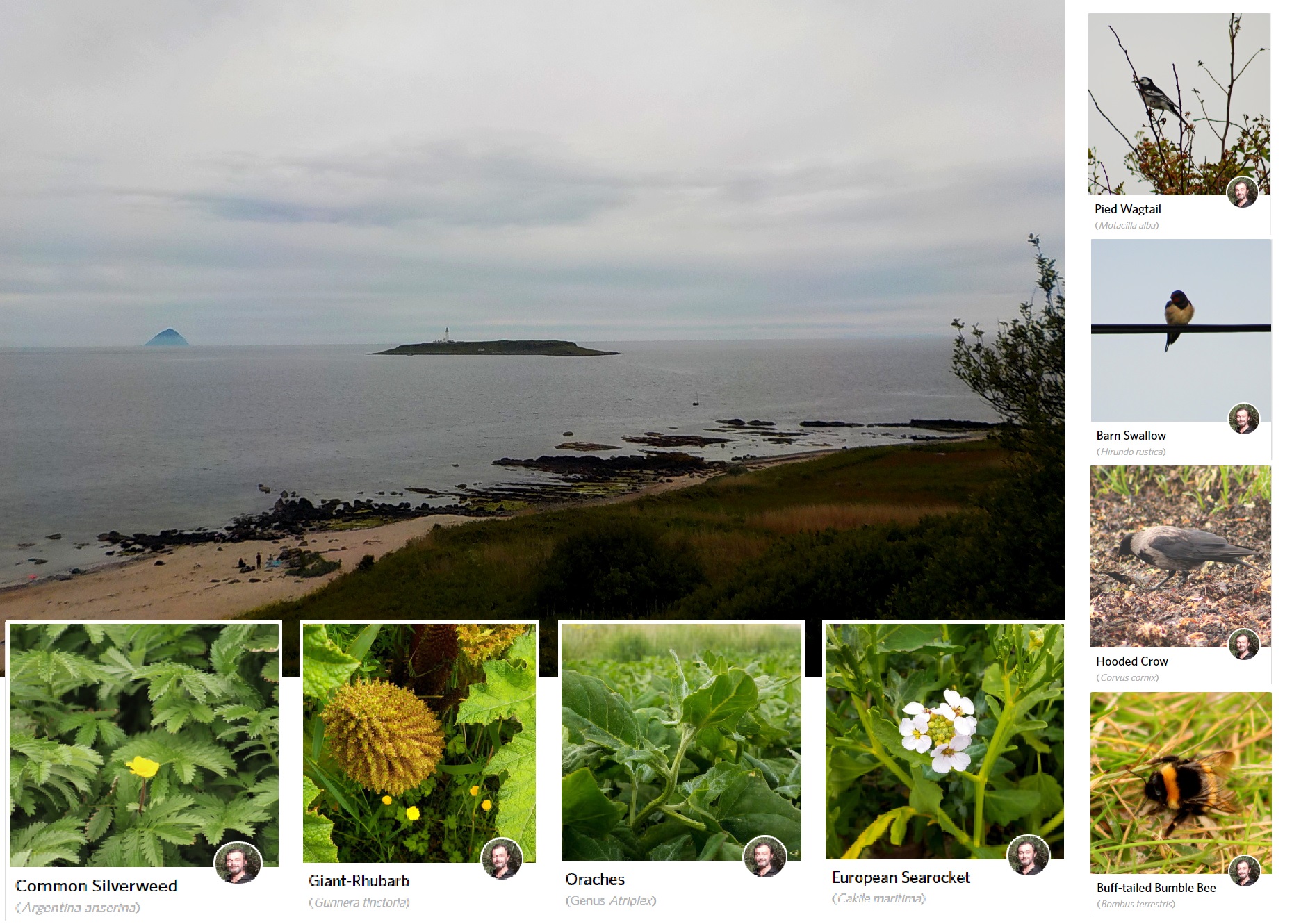
The Isle of Arran lies off Scotland's west coast, nestling securely in the Firth of Clyde, and it's to be our home for the next six days. Described as 'Scotland in Miniature', it boasts a wealth of wildlife including Arran's big 5: Red Deer, Seals, Golden Eagles, Red Squirrels and Eurasian Otter. So, join Ishbel, Mattie and me as we pitch up on the island's south coast, at the encouragingly named Seal Shore Campsite, and we'll see how many of the big 5 we can find.


The ferry from Ardrossan on the mainland takes an hour and there are plenty of opportunities for a spot of bird watching from the top deck. As our sister ship steams past, with the islands of Padda and Ailsa Craig in the background, we have a couple of Greats: Black-backed Gull and Cormorant; Guillemots, both Common and Black as well as Common Gulls and Common Eider. And look! There's a Porpoise – he was there, honest.


Here we are at the campsite and what a glorious view. There's a story behind those black rocks out there. Once upon a time, a very long time ago, about 200 million years ago in fact, the supercontinent of Pangea began to break apart. As the continental plate was stretched ever thinner, cracks began to appear, and boiling hot magma erupted, flaming, through the surface. These black rocks are the remains of that monumental event. The continents of North America and Eurasia were born here. That's a pretty awesome way to start a holiday. Maybe someone should put up a blue plaque or something.


The other good thing about this site is that it's on the Arran Coastal Way which encircles the island in a 65 mile (105km) loop. I don't propose that we attempt the whole lot tonight, but we could all do with stretching our legs after the long journey, so let's explore a bit of it. I make no claims to be a coastal botanist, but most of the shoreline seems to be bounded by Common Silverweed and some sort of Orache, interspersed with Giant Rhubarb (with stalks and leaves above head height) and Sea Rocket. There are a fair number of Bumble Bees about, doing the pollinating. Buff-tailed, by the looks of it, and the evening birds include Pied Wagtails, some Hooded Crows prodding about in the seaweed and a few Swallows pretending that it's summer. In truth, it's getting a bit chilly, so let us repair to the local hostelry, conveniently situated next door, and see what's on the menu.


If you're into camping this summer, here are a few things on offer that you may like:

Pair of Padded Chairs


Fire Pit and Gloves

Was £21.99 Now £15.79


Solar Charger

Was £19.99 Now £18.99


Pair of Padded Chairs

Was £79.99 Now £67.99


Until tomorrow,


All the best,


Steve


Arran Special 2 – In Search of Seals https://bit.ly/snb17-1-2

#nature #wildlife #birds #flora #insects #mammals #rockpooling


Follow me on Steve's Nature Plus


and also on


Steve's Nature


Steve Daniels Naturalists


Steve Daniels Cumbria


Recent Posts