Showing posts with label Grasshopper. Show all posts

Friday, 23 September 2022

Hanging on to Summer


Quite a lot of people suffer from SAD, Seasonal Affected Disorder. It's 8.30 in the morning as I write, it's tipping it down outside, it barely got light an hour ago, but there's something warming and comforting about viewing the outside world from my study window, all snug inside (even if the current energy crisis makes it injudicious to put the heating on!). Astronomically speaking, it is still Summer, at least until tomorrow (Friday 23rd September). The equinox is a late one this year. The date varies because the calendar year is 365 days but the Earth actually takes 365 and a quarter days to travel around the Sun. But although the clocks go back at the end of next week, let us embrace the Autumn, season of mists and mellow fruitfulness as Keats put it, get out and about when we can and snuggle down when we can't.


Autumn is a great time for foraging. The brambles are laden with blackberries, hazelnuts are ripening nicely and the woods are full of delicious fungi. For those of you with gardens, it's harvest time, and one of my favourite places at this time of year is the kitchen. Stuffed marrow is on the menu tonight. Recipe in Steve's Wild Kitchen plus Stuffed Halloween Pumpkins.


Autumn is also a lovely time of year for bird watching. Taking Mattie for a walk, down on Parton beach earlier in the week, turned up a couple of Gull species, a Little Egret, a Redshank and a Curlew, plus a Northern Wheatear. This bird holds the record for the longest migration of any songbird at 9,000 miles each way from Alaska to sub-Saharan Africa and back.


Insects are still about too. In the past week I've seen grasshoppers, leafhoppers, beetles and butterflies and quite a number of the large, furry Fox Moth caterpillars. They are out and about looking for leaf litter in which to hibernate over winter. They will emerge in the Spring as fairly large moths, reddish brown in the case of the male and greyish brown in the female. Both sexes have two creamy lines across their wings.


Tips From Yesteryear


I try to live life simply, here at The Old Corn Mill, and often think back to how my grandparents used to do things (and I'm old enough to be a grandparent myself, so we're going back a bit). They didn't live in the throwaway age and nothing was ever wasted. Potatoes that had sprouted too much for the pot were returned to the earth where one potato produced a handful. The roots cut off spring onions were placed in a pot on the kitchen windowsill to produce another spring onion. It wasn't called recycling then, it was just what people did.


Talking of yesteryear, I'm pleased to say that my little on-line antiques shop, that I started at the beginning of the year, is doing rather well. This is in no small part due to the series of blogs I've been writing called 'Steve's History of Things', which gives some fascinating insights into the history of everyday objects. Here's a list of the series so far, and feel free to browse around the shop: Steve's Vintage Collectables


Steve's History of Things 1


Introduction

Steve's History of Things 2


5 Good Reasons to Buy EPNS


Steve's History of Things 3


Fielding's Musical Tankards

Steve's Hstory of Things 4


Jasperware

Steve's History of Things 5


Blood Pressure Monitors

Steve's History of Things 6


Chodov Porcelain

Steve's History of Things 7


The Pottery Detective


Next week:

Royal memorabilia


Happy Equinox,


Steve


Beetles and Butterflies; spiders and scorpions; woodlice and worms. How do you tell them all apart? To say nothing of crane flies, dragonflies, bee flies and yet more butterflies. Are they all flies? If not, why call them so? If you're fascinated but confused by the beautiful world of the very small, then this is the book for you.


82 pages of information on all aspects of the world of minibeasts, with over 100 photographs and illustrations, this book will help you track down and identify any arthropod, in its adult or juvenile state, anywhere in the world.


See all of my books at author.to/SteveDaniels


Follow me on Steve's Nature Plus

and also on


Steve's Nature


Steve Daniels Naturalists


Steve Daniels Cumbria


Wednesday, 10 June 2020

Life on the Littoral


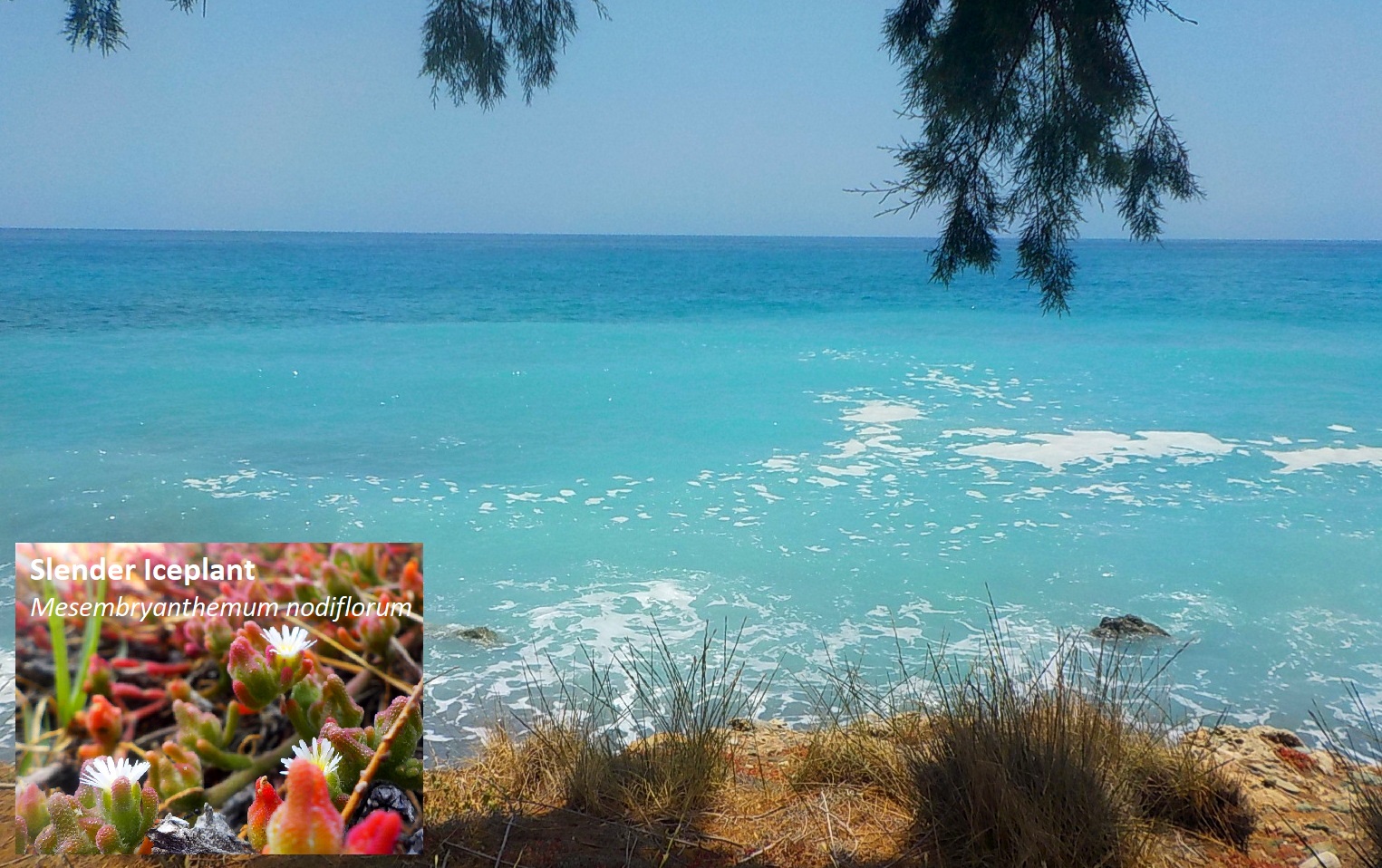
One of the major ecotourist attractions on the south east coast of Crete is Red Butterfly Gorge which we visited back in February 2014. Much less visited, but still worthy of our attention, is the narrow strip of land opposite the gorge entrance, between the road and the sea. The sea shore, the cliffs and the cliff tops constitute a habitat called the littoral zone and today we are going to look for life on the littoral.

This is one of the hottest and driest areas on the island, the ground is stony and the vegetation is sparse; hardy pines, mastic bushes and thyme predominate but, here and there, sunshine yellow Fumana flowers burst through. It is also a favourite haunt of grasshoppers, such as this Calliptamus (he of the rear end pincers for use in mating) which we met in the Uplands in October 2016.


That isolated beach down there is where we want to get to next, and there would appear to be no obvious route. We did, however, cross a tiny gully a little while back, which would seem to be a good place to start. If you want to get to the sea; follow the water course. Some very spiny and scratchy plants on the way through but, not to worry, the blood will wash off in the sea and we have loads of rock pools to explore.

OK, so we burnt our feet on the sand, the rock pools were alternately razor sharp then smooth and slippery, and we only found a few Sea Slaters. Life’s like that sometimes. Thalassotherapy time - we’ll sit and watch the waves crashing in for a bit and then try further down the coast.

What a difference a few hundred yards makes. That, and the fact that the stream which flows through Butterfly Gorge reaches the sea at this point, means that there is a lot more going on here. We have some beautiful Silverleaf Nightshade, Solanum elaeagnifolium, and exploring the leaves, a Blister Beetle, Mylarbis kodymi. Interestingly, both the plant and the beetle can be poisonous to horses. I wonder if there’s a connection?


Moving on, and we have a marvellous spread of Globe Thistles, Echinops spinosissimus. These are really attracting the Hymenopterans this morning, in particular, Honey Bees, Apis melifera, and Mammoth Wasps Megascolia maculata. These are well named; worker bees are 10-15mm long, Mammoth Wasps are 4 to 6 times bigger at 60mm! I have read that they have a sting to match, but like most animals; ‘you leave them be and they’ll leave you be’, as my grandmother taught me.

Note: If you do get stung, the Hymenoptera page of The Quick Guide To Creepy-Crawlies has a medical treatment section. What do you mean, you haven’t bought a copy yet? Come along, come along, what else are you going to do with all that money you’ve saved over the last three months?


As it is now getting extremely hot, I suggest that we sit in the shade of this Tamarisk tree and explore the world at our feet. The most obvious thing is this mat of red foliage, giving the landscape a somewhat Martian appearance. It is the Slender Iceplant, Mesambryanthemum nodiflorum. Wikipedia declares this to be “native to Israel, Palestine, and Jordan, as also endemic to southern Africa.” This confuses me a bit because, to the best of my knowledge, a native plant exists naturally in the named areas (e.g. Israel, Palestine and Jordan) whereas, an endemic plant exists naturally only in the named area (e.g. southern Africa). By my logic a plant cannot be both endemic and native to different areas. Thoughts and clarification from any etymologically inclined botanists please. 

And on that little puzzler we’ll make our way back to the car as we have a lunchtime get together to attend in order to celebrate the re-opening of tavernas, post lockdown. Do not confuse the little bottles of hand sanitizer with the little bottles of raki.

And finally… I’ve had a lot of correspondence recently from people discovering giant spiders in their houses. I too, have had one as a house guest recently. They are Huntsman spiders, Eusparassus walckenaeri. Firstly, they are totally harmless to us humans so don’t throw your slipper at them. They are useful in the house because they eat insects and are particularly partial to the odd cockroach. If you have an inherent abhorrence of spiders this is a good one to get to know. It likes to live high up on walls and on the ceiling (so you always know where it is and it is not going to surprise you by suddenly appearing from under a cushion, or running across your feet). It is also large enough to be regarded as a small pet, like a mouse. Say hello and then leave it be, it will leave you be, in return.


See sample pages of all my books and latest blogs, and keep abreast of latest publications here:


All you need to know to identify any type of insect, spider, worm or snail very simply and find out more about it.
Yvonne: This was a gift for a family so that the children can understand what they see on days out. The second was for me. Logical and easy to use. If you know anyone who likes nature you can be confident that gifting this book will give years of pleasure.


The Eggs of Saramova
A science fiction novella for those who don't like science fiction. A fast-paced thriller that is, literally, out of this world (and it starts right here in Crete).
Too new for reviews yet!


A light-hearted look at life through the eyes of the fairer sex.
Janet: If you are short on time but enjoy reading and are maybe not into long extended novels then Not Just For... Twisted Women provides readers with concise stories that stand alone and most certainly entertain with their ultimate twists. Loved it.
Helen: A very good read! Well written and entertaining!
Margaret: Each quick tale gives a glimpse into a character's life and has an often humorous twist at the end. I would love to read more.
Yvonne: These days many people find it hard to find the time to read a novel, so this book of short stories is ideal to dip into. It is also makes a good gift.


Crete Nature Catch-up
*********************************************************************
LINKS:
Share your nature thoughts, photos and comments on Naturalists (the facebook page that accompanies this blog)

Explore the region with the #CreteNature interactive Hiking and Nature Map


Recent Posts