Showing posts with label mushroom. Show all posts

Friday, 23 September 2022

Hanging on to Summer


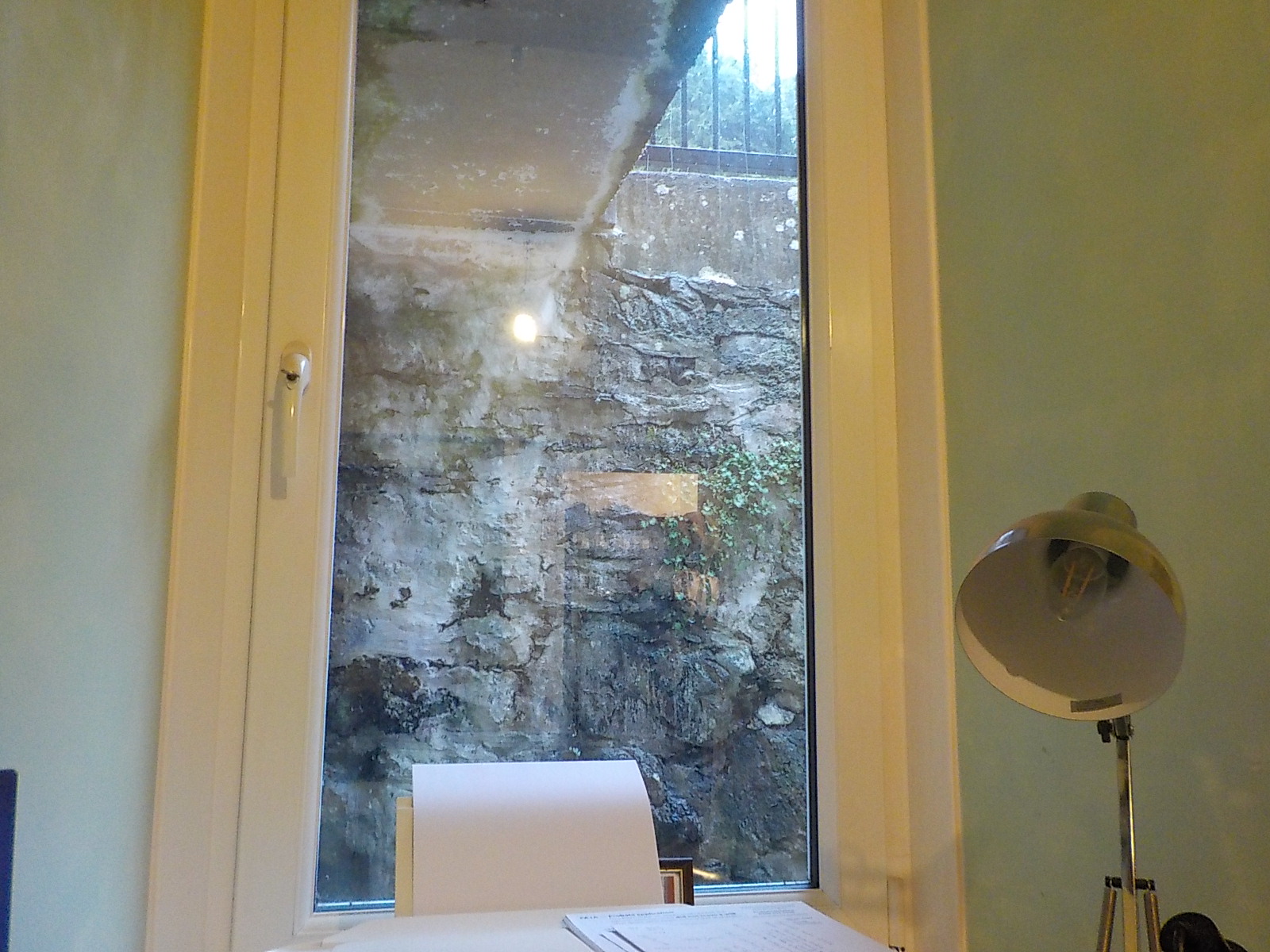
Quite a lot of people suffer from SAD, Seasonal Affected Disorder. It's 8.30 in the morning as I write, it's tipping it down outside, it barely got light an hour ago, but there's something warming and comforting about viewing the outside world from my study window, all snug inside (even if the current energy crisis makes it injudicious to put the heating on!). Astronomically speaking, it is still Summer, at least until tomorrow (Friday 23rd September). The equinox is a late one this year. The date varies because the calendar year is 365 days but the Earth actually takes 365 and a quarter days to travel around the Sun. But although the clocks go back at the end of next week, let us embrace the Autumn, season of mists and mellow fruitfulness as Keats put it, get out and about when we can and snuggle down when we can't.


Autumn is a great time for foraging. The brambles are laden with blackberries, hazelnuts are ripening nicely and the woods are full of delicious fungi. For those of you with gardens, it's harvest time, and one of my favourite places at this time of year is the kitchen. Stuffed marrow is on the menu tonight. Recipe in Steve's Wild Kitchen plus Stuffed Halloween Pumpkins.


Autumn is also a lovely time of year for bird watching. Taking Mattie for a walk, down on Parton beach earlier in the week, turned up a couple of Gull species, a Little Egret, a Redshank and a Curlew, plus a Northern Wheatear. This bird holds the record for the longest migration of any songbird at 9,000 miles each way from Alaska to sub-Saharan Africa and back.


Insects are still about too. In the past week I've seen grasshoppers, leafhoppers, beetles and butterflies and quite a number of the large, furry Fox Moth caterpillars. They are out and about looking for leaf litter in which to hibernate over winter. They will emerge in the Spring as fairly large moths, reddish brown in the case of the male and greyish brown in the female. Both sexes have two creamy lines across their wings.


Tips From Yesteryear


I try to live life simply, here at The Old Corn Mill, and often think back to how my grandparents used to do things (and I'm old enough to be a grandparent myself, so we're going back a bit). They didn't live in the throwaway age and nothing was ever wasted. Potatoes that had sprouted too much for the pot were returned to the earth where one potato produced a handful. The roots cut off spring onions were placed in a pot on the kitchen windowsill to produce another spring onion. It wasn't called recycling then, it was just what people did.


Talking of yesteryear, I'm pleased to say that my little on-line antiques shop, that I started at the beginning of the year, is doing rather well. This is in no small part due to the series of blogs I've been writing called 'Steve's History of Things', which gives some fascinating insights into the history of everyday objects. Here's a list of the series so far, and feel free to browse around the shop: Steve's Vintage Collectables


Steve's History of Things 1


Introduction

Steve's History of Things 2


5 Good Reasons to Buy EPNS


Steve's History of Things 3


Fielding's Musical Tankards

Steve's Hstory of Things 4


Jasperware

Steve's History of Things 5


Blood Pressure Monitors

Steve's History of Things 6


Chodov Porcelain

Steve's History of Things 7


The Pottery Detective


Next week:

Royal memorabilia


Happy Equinox,


Steve


Beetles and Butterflies; spiders and scorpions; woodlice and worms. How do you tell them all apart? To say nothing of crane flies, dragonflies, bee flies and yet more butterflies. Are they all flies? If not, why call them so? If you're fascinated but confused by the beautiful world of the very small, then this is the book for you.


82 pages of information on all aspects of the world of minibeasts, with over 100 photographs and illustrations, this book will help you track down and identify any arthropod, in its adult or juvenile state, anywhere in the world.


See all of my books at author.to/SteveDaniels


Follow me on Steve's Nature Plus

and also on


Steve's Nature


Steve Daniels Naturalists


Steve Daniels Cumbria


Wednesday, 19 September 2018

Crete Nature Almanack 2018 Autumn


Autumn is nearly upon us and the birds are already flying south from northern Europe and either staying or passing through Crete on their way to sub-Saharan Africa. Find any stretch of water and you are likely to see birds such as Ruddy Turnstones, Arenaria interpres (top left); Common Sandpipers, Actitis hypoleucos (top right); and possibly even a Spotted Redshank, Tringa erythropus (bottom right). Look out also for the first appearance of the Black Redstart, Phoenicurus ochruros (bottom left), which usually arrives down here on the south east coast somewhere between late October and the end of November.


The flowers will start to appear after the first autumnal rains which have been getting gradually later over the past five years; from September 16th in 2013 to September 29th in 2017. I have chosen just three of them, but can you spot the connection? The first one is the Autumn Buttercup, Ranunculus bullatus, which grows throughout the Mediterranean, including north Africa. The second is the Autumn Squill, Prospero autumnale, which although it can be found throughout southern Europe and the Middle East, for some reason can also be found in Great Britain according to Kew Garden's world checklist. The third one is Crocus laevigatus, which is endemic to Crete and is one of a number of crocuses sometimes known as the Autumn Crocus as, like the others, it flowers at this time of year.


The rains also bring forth the snails, of course, and the familiar Garden Snail, Cornu aspersum, starts to appear in considerable numbers in gardens and supermarkets across the island. Apart from being edible did you know that its yucky, slimy secretions are used in American skin creams? The second one is the Chocolate-band Snail, Eobania vermiculata, which also appears in gardens but not so often in supermarkets. They are edible but considered inferior to Garden Snails by the Greeks so we export them to France (mind you, that little nugget of information is 37 years old, so don't quote me on it). Finally, the Green Garden Snail, Cantareus apertus, which has a shell that can vary from creamy yellow, through olive green, to almost black but is easily recognisable if you pick it up. It will blow bubbles all over your hand which reeks of slightly off garlic and lasts for days. Incidentally Wikipedia notes that In Crete this species is active for 3–4 months after the first rainfalls in October.” Rubbish; I've found them out and about at the end of March.


As the seasonal rivers and streams start to fill, listen out for the a capella amphibian assembly after dark. The frogs and toads become very vocal in the autumn. The main singers being the Green Toad, Bufotes viridis, (left) which I think is a very dull name for such a beautiful animal, the endemic Cretan Frog, Pelophylax cretensis (middle). This is a particularly vivid specimen, they are usually much duller, and the diminutive European Tree Frog, Hyla arborea, which, although small, certainly holds his own in the croaking stakes.


Autumn also sees the opening of the mushroom season and lets hope we have a better one than last year when they were very few and far between. In fact, the only ones I found were these Mica Caps, Coprinellus micaceus, a nice, edible mushroom but you have to get them in the pan within the hour and, given the other caveats (see Voila - Turkish Delight ) one wonders whether they're worth collecting at all. Hopefully, this year we'll find a few more species.

That's it for the almanack; next week sees the start of Steve's Sunday Strolls and for those of you who are on the island during the next fortnight here is where you can join me:

Sunday 23rd September
11 am
Sisi
(see last week's post for details).


Sunday 30th September
11 am
Ag. Charalampos, Lassithi Plateau


A gentle stroll around one corner of the Plathini-Lagkada Wildlife Refuge and a handy village taverna where we can chat about what we have seen afterwards.


The Extra Bit

A big thank you to all who have taken the time to investigate my book of short stories and an even bigger thank you to those of you who have actually bought a copy (Amazon Kindle £1.99 or currency equivalent).


Photographic Bit

Many of you have asked me what photographic equipment I use so for details of aperture settings, shutter speeds etc. my pictures will be on Flickr within a few days and that has all the geeky stuff.Pictures were edited with FastStone Image Viewer and combined with Microsoft Paint.


*********************************************************************
LINKS:
Share your nature thoughts, photos and comments on Naturalists (the facebook page that accompanies this blog)

Explore the region with the #CreteNature interactive Hiking and Nature Map


Wednesday, 11 November 2015

The Hills Are Alive


Galatella (Galatella) and Autumn Squill (Prospero)

When faced with a valley leading into exciting looking mountains many people are tempted to grab the Nordic walking sticks and stride off towards the horizon. Naturalists, however, do not stride; they potter and probe and poke about which is what we shall do today by ignoring the peaks for the moment and turning due east to clamber up the side of the valley. It’s steep but not particularly high at this point although I’m sure that the views from the top will be worth the modicum of effort involved.

We have some nice little autumn flowering plants on the way up. This little yellow job with the strange projections is a Galatella; part of the daisy family which you will only find in East Crete, Karpathos, Rhodes and south west Turkey. The mauve flower on the other hand is a bit of a botanists nightmare as it comes in many different forms (known as a ‘cryptic species complex’). It’s an Autumn Squill and is closely related to the Sea Squills (see In An Octopus's Garden).

Sage (Salvia)                         Cistus (Cistus)
Whilst we’re on the subject of plants you may have noticed on our climb that we have stumbled over, round and through a number of cistus bushes, but down here by my foot there’s a little sage bush just starting out in life and, as you can see, the leaves are very similar. So how do you tell the difference? Touch and smell. The sage is soft and velvety with an aromatic smell whereas the cistus is rough and slightly sticky and, to my nose, odourless. Despite their similarities they are not even in the same family.

Plants of the same species that look unrelated and unrelated plants that look the same – who’d be a botanist?

Spiky Leaf Beetles (Hispella)
Meanwhile, sitting on a cistus leaf, looking as though they’re intently watching something going on below them, we have a couple of Spiky Leaf beetles. I haven’t come across these before, gently pass me one up would you and we’ll have a look at him under the hand lens. Apologise for disturbing him, we’re all part of Earth’s great panoply of life, so he’s a distant relation. Just look at those spines on the wing cases, a predator would think twice about picking him off as a snack. I’ll just put him back with his companion and let them continue watching whatever it is that they are finding so fascinating.


Mushroom (Russula), Millipede (Julidae), Scorpion (Euscorpius)
This looks like a nice spot to sit and rest our legs awhile with the autumn sun filtering through the trees and dappling the ground. There may not appear to be much going on but if we scrabble about in the pine litter at the base of the trees we may just find…ah, here’s one… a Russula mushroom. The trees and the fungi, as we’ve previously discussed (see A Kingdom In The Pine Woods) have a symbiotic relationship so there’s a strong connection here. There is another connection if you look into the base of this clump I’ve just unearthed, a host of Snake-like Millipedes curled up in the bottom. It would appear that they simply adore these mushrooms. You can’t take these things for granted of course, maybe the mushrooms repel would-be predators such as the scorpions you’ll find in those rocks over there and thus offer the millipedes a safe habitat. As far as I know the relationship hasn’t been studied.  It may seem tranquil here but there’s interconnected activity between plants, fungi, primary consumers and predators happening all around us if we take the time to observe it and there is still so much that we don’t yet know about the world around us.

Common Darters (Sympetrum)
It’s nice to see that the dragonflies are still with us so late in the season. Have you noticed how the males and females choose different places in which to rest? Darters like these are difficult to catch on the wing as their flying skills are superb but they are vulnerable when they land. The brick red male has lined himself up with the dead pine needles whereas the greenish gold female has chosen a dangling posture against a backdrop of drooping green leaves, both of them opting for camouflage suitable to their colouration.


There’s a bit of a view of the rest of the valley over here. We may well reach those chunky, exciting looking mountains eventually. It all depends upon what we find to amuse us on our way. This valley is as new to me as it is to you so who knows? Until next week – happy hunting.


See all the pictures including insets in detail on Flickr

Crete Nature Blog is sponsored by:


  www.belissario.com                      www.cretanflora.com                               Naturalists
  Ferma's premier hotel              Cretan flora - Illustrated guide                    Facebook Group  

To sponsor this blog and have your link displayed as above contact me at daniels@hotmail.gr


***********************************************************************************
LINKS:
Naturalists (the facebook page that accompanies this blog)
Aquaworld Aquarium

Recent Posts