Showing posts with label gulls. Show all posts

Friday, 23 September 2022

Hanging on to Summer


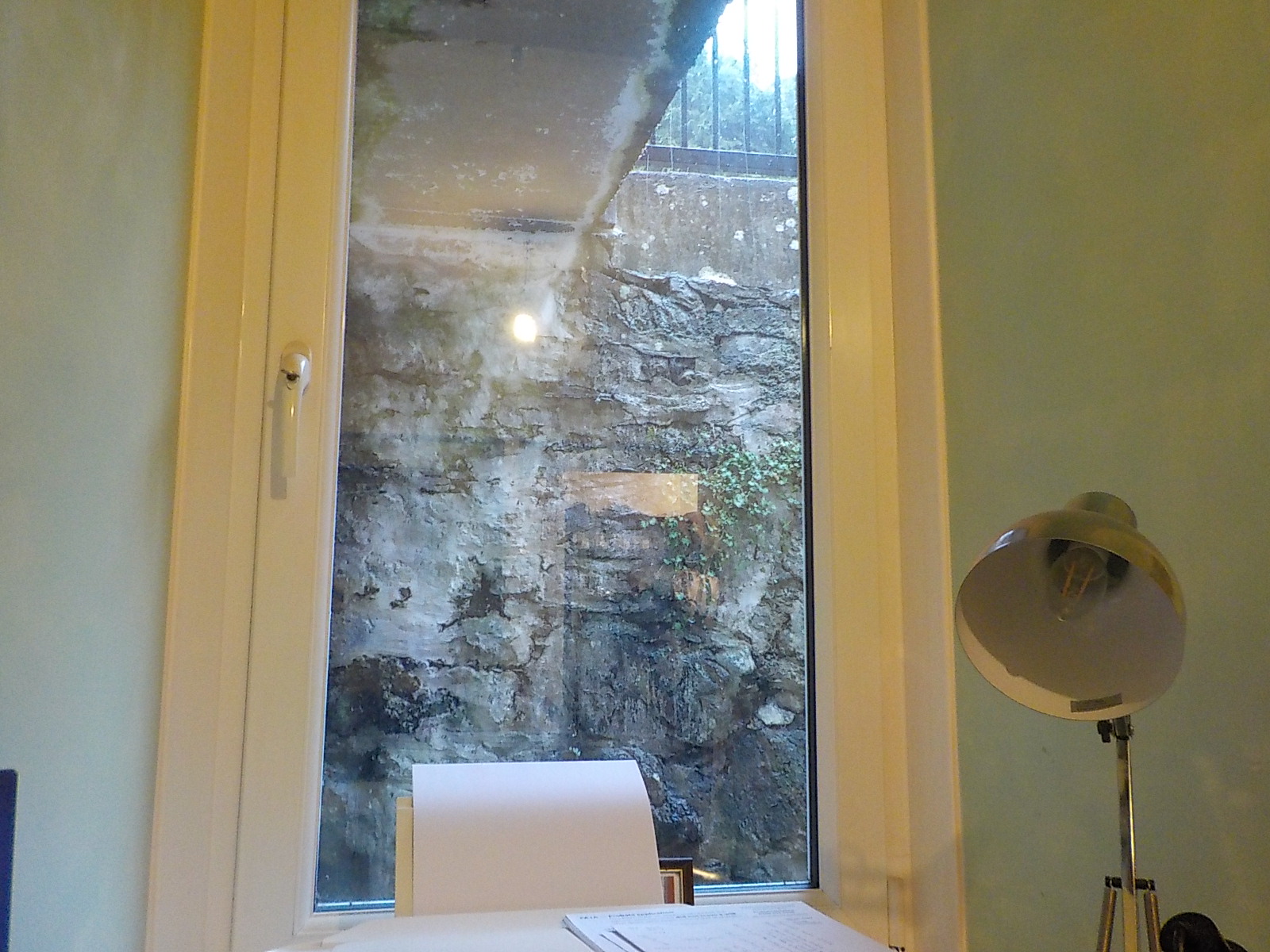
Quite a lot of people suffer from SAD, Seasonal Affected Disorder. It's 8.30 in the morning as I write, it's tipping it down outside, it barely got light an hour ago, but there's something warming and comforting about viewing the outside world from my study window, all snug inside (even if the current energy crisis makes it injudicious to put the heating on!). Astronomically speaking, it is still Summer, at least until tomorrow (Friday 23rd September). The equinox is a late one this year. The date varies because the calendar year is 365 days but the Earth actually takes 365 and a quarter days to travel around the Sun. But although the clocks go back at the end of next week, let us embrace the Autumn, season of mists and mellow fruitfulness as Keats put it, get out and about when we can and snuggle down when we can't.


Autumn is a great time for foraging. The brambles are laden with blackberries, hazelnuts are ripening nicely and the woods are full of delicious fungi. For those of you with gardens, it's harvest time, and one of my favourite places at this time of year is the kitchen. Stuffed marrow is on the menu tonight. Recipe in Steve's Wild Kitchen plus Stuffed Halloween Pumpkins.


Autumn is also a lovely time of year for bird watching. Taking Mattie for a walk, down on Parton beach earlier in the week, turned up a couple of Gull species, a Little Egret, a Redshank and a Curlew, plus a Northern Wheatear. This bird holds the record for the longest migration of any songbird at 9,000 miles each way from Alaska to sub-Saharan Africa and back.


Insects are still about too. In the past week I've seen grasshoppers, leafhoppers, beetles and butterflies and quite a number of the large, furry Fox Moth caterpillars. They are out and about looking for leaf litter in which to hibernate over winter. They will emerge in the Spring as fairly large moths, reddish brown in the case of the male and greyish brown in the female. Both sexes have two creamy lines across their wings.


Tips From Yesteryear


I try to live life simply, here at The Old Corn Mill, and often think back to how my grandparents used to do things (and I'm old enough to be a grandparent myself, so we're going back a bit). They didn't live in the throwaway age and nothing was ever wasted. Potatoes that had sprouted too much for the pot were returned to the earth where one potato produced a handful. The roots cut off spring onions were placed in a pot on the kitchen windowsill to produce another spring onion. It wasn't called recycling then, it was just what people did.


Talking of yesteryear, I'm pleased to say that my little on-line antiques shop, that I started at the beginning of the year, is doing rather well. This is in no small part due to the series of blogs I've been writing called 'Steve's History of Things', which gives some fascinating insights into the history of everyday objects. Here's a list of the series so far, and feel free to browse around the shop: Steve's Vintage Collectables


Steve's History of Things 1


Introduction

Steve's History of Things 2


5 Good Reasons to Buy EPNS


Steve's History of Things 3


Fielding's Musical Tankards

Steve's Hstory of Things 4


Jasperware

Steve's History of Things 5


Blood Pressure Monitors

Steve's History of Things 6


Chodov Porcelain

Steve's History of Things 7


The Pottery Detective


Next week:

Royal memorabilia


Happy Equinox,


Steve


Beetles and Butterflies; spiders and scorpions; woodlice and worms. How do you tell them all apart? To say nothing of crane flies, dragonflies, bee flies and yet more butterflies. Are they all flies? If not, why call them so? If you're fascinated but confused by the beautiful world of the very small, then this is the book for you.


82 pages of information on all aspects of the world of minibeasts, with over 100 photographs and illustrations, this book will help you track down and identify any arthropod, in its adult or juvenile state, anywhere in the world.


See all of my books at author.to/SteveDaniels


Follow me on Steve's Nature Plus

and also on


Steve's Nature


Steve Daniels Naturalists


Steve Daniels Cumbria


Wednesday, 1 June 2022

Beautiful Barrow-in-Furness


Okay, so beautiful is not the first adjective that springs to mind when you conjure up an image of Barrow-in-Furness, but like most industrial northern towns, it is not without its charms. There is some stunning architecture to be seen, tranquil waterways, and the wildlife has, um shall we say, character. In truth, apart from the occasional “are-you-lookin'-at-me?!” stare, the seagulls gave us no problems at all. I say 'seagull' but scientifically, there is no such bird. This one, for instance, is one of the Large White-headed Gulls of the genus Larus. Probably a Herring Gull, but possibly a Lesser, or Greater, Black-backed Gull. We can't see quite enough detail to be sure and it's difficult to determine the size of a single gull.


When it comes to heavy industry, it doesn't come much heavier than building nuclear submarines and the massive BAE Systems building dominates the town. Barrow has been building and launching submarines since 1886 and a wander around The Dock Museum (the triangular building, centre) gives a fascinating insight into this little known industry. But back to those gulls. They are carnivores and scavengers, and one of the reasons they appear to be aggressive is that we delight in feeding them. Consequently, they associate humans with food, and don't really care whether you agree with them or not. However, when they're not pinching your chips, they're quite happy to find their own food such as this whelk which I picked up just round the corner from here. There's a lovely promenade walk just behind us, so let's see what else we can find.


That's a nice stand of Rosemary just there, being pollinated by a carder bee. Rosemary is the herb of remembrance and, for us British at least, forever associated with roast lamb. Personally, my favourite way of using it is in Goat Chops & Rosemary Casserole, the recipe for which you can find in Steve's Wild Kitchen. Carder Bees, (who's name derives from the trade of carding, or combing, wool), comb material into their nests to protect their developing larvae. These days, a carder is someone who steals information from your credit cards. A carder bee has never been known to do this. They are quite easy to recognise from their bright orange thorax. The only other British Bumblebee to share this feature is the Tree Bumblebee which has a white bottom.


Looking out across the water, we have a good view of Walney Island, a small sliver of land that boasts two nature reserves, which we must definitely visit at some point in the future. Meanwhile, back on this side of the water we have a Pill Woodlouse. Not an insect (far too many legs and no wings), but an Isopod. Isopods have 7 pairs of legs and 11 body segments and most of them live in the water, but woodlice are one of the few that are terrestrial. In America, children keep them as pets. They are covered on pages 66 and 67 of The Quick Guide to Creepy-Crawlies. And talking of books, here are a couple more suggestions for your nature library. 


Paperback £15.38 Kindle £13.00


Hardback £7.99 Paperback £4.50

Paperback £14.99

Build Your Own Nature Library


Next week, we're off to the Isle of Arran for a few days, so I'll tell you all about it when we get back. (I see that Mattie has got in before me with this announcement – see Mattie's Page).


All the best,


Steve


Follow me on Steve's Nature Plus

and also on


 Steve's Nature


 Steve Daniels Naturalists


 Steve Daniels Cumbria


Wednesday, 10 February 2021

Wonderful Wintery Whitehaven


We're not walking far today, just around Whitehaven Harbour, as Jack the Navigator Hound is recovering from a minor op..

  “You wouldn't call it a minor op. If you'd had one of your boll..”

OK, so maybe not such a minor op. from your point of view but the point is, Jack, your fans will want to know why you're not bounding round the fells as usual.”

Which is why we're wandering around Whitehaven, hoping to see the odd dolphin or porpoise. The sea is dead calm, which would be good for spotting if there were anything out there... but there isn't. We do have plenty of birds though, Gulls, Oystercatchers, Swans, Geese, Jackdaws and even a Cormorant. And here on the quayside, rooting around in the debris, a Rock Pipit, Anthus petrosus. These are predominantly coastal birds, related to the wagtails in the family Motacilladae.


One of the problems with bird identification is that they don't come out of the egg looking like the pictures in the bird book. Take these Herring Gulls, Larus argentatus, for example. In their first winter, they are mainly brown and heavily streaked. This one is in his second winter: his head and underparts are beginning to whiten and he's starting to turn grey. Next year he'll look almost adult but he'll still have a few brown feathers in his wings and dark markings on his bill rather than the red spot of the adult. Swans are similar. We all know the song about the ugly duckling with his feathers all stubby and brown, who turns out not to be a duckling at all, but a cygnet who turns into a beautiful swan. The reason, of course, is protective camouflage. It doesn't pay to advertise when you're young.


The last time Britain was invaded was in 1778. I bring this up because it happened right here where we're standing. It was an American invasion, but not a particularly successful one. Led by one Commander John Paul Jones, he was after the 400 British merchant ships which were anchored here, but totally misjudging the currents, a one hour lighting raid in two rowing boats turned into a six hour marathon and one of the boats turned back when the sailors 'heard a noise'. Jones did manage to set fire to the southern fort and the subsequent conflagration engulfed the entire town.


More recently, in the mid 1800s, this castle-like structure was built, along with that tall chimney-looking object, affectionately known as The Candlestick. The 'castle' was the entrance lodge to Wellington coal pit and 'The Candlestick' was a ventilation shaft. There was a major mining disaster here in 1910 when methane ignited and 132 lives were lost, a consequence of which was the invention, by Humphrey Davey, of the safety lamp, which was tested here.

Back to natural history and I see that the Feral Pigeon still holds sway in Whitehaven, repulsing the invasion of the Collared Dove with true Cumbrian grit. Down on the harbour wall, however, an invader from the far east has claimed a roothold. This is Buddleja davidii, the well know butterfly bush, which is now classified as an invasive species in the UK.


News From The Old Cornmill


Just a few miles downriver from the Cornmill another river, The Marron, joins The Derwent. I went out there at first light yesterday and found a scene of absolute peace and tranquility. Just me, the river, a robin and a blue tit. You can keep up with all my sporadic wanderings and more by visiting my website at Steve's Nature Plus.


Steve's Books


The Quick Guide to Creepy-Crawlies

All you need to know to identify any type of insect, spider, worm or snail very simply and find out more about it.

Yvonne: This was a gift for a family so that the children can understand what they see on days out. The second was for me. Logical and easy to use. If you know anyone who likes nature you can be confident that gifting this book will give years of pleasure.


The Eggs of Saramova

A science fiction novella for those who don't like science fiction. A fast-paced thriller that is, literally, out of this world (and it starts right here in Crete).

Now available in paperback priced £7.50


Not Just For Twisted Women by Steve Daniels 

A light-hearted look at life through the eyes of the fairer sex.

Janet: If you are short on time but enjoy reading and are maybe not into long extended novels then Not Just For... Twisted Women provides readers with concise stories that stand alone and most certainly entertain with their ultimate twists. Loved it.

Helen: A very good read! Well written and entertaining!

Margaret: Each quick tale gives a glimpse into a character's life and has an often humorous twist at the end. I would love to read more.

Yvonne: These days many people find it hard to find the time to read a novel, so this book of short stories is ideal to dip into. It is also makes a good gift.


Paperback £4.99


Recent Posts