Showing posts with label bees. Show all posts

Wednesday, 5 October 2022

Watching Out For Watercress


Just to the south of St. Bees, in an area known as Seamill (named after a now demolished grain mill by the sea), Pow Beck flows into the Irish Sea. Our reason for visiting here today is to look for watercress. I know it can be found here because I searched 'watercress' 'Cumbria' on iNaturalist and up popped a picture of watercress and a map showing its location. (iNaturalist is a very useful app. for foragers). Unfortunately, I can't see any about today, only some Fool's Watercress, which often grows in conjunction with true watercress. Fool's watercress is edible, and is harvested in many Mediterranean countries, but it can be confused with the similar looking Lesser Water Parsnip (Berula erecta). Although an infusion of this plant is said to be good for Athlete's Foot, it is probably best not to eat it.


There is also some Comfrey growing along the bank, being pollinated by a busy Carder Bee. This is another medicinal plant, known in the olden days as Knitbone. Other cultures have similar names alluding to its efficacy in healing broken bones. And whilst we're looking at insects, there's a pair of Small Whites mating over there. The female, with the single wing spot, is underneath, and the male, with the double wing spot, is on top. And now, my annual plea to gardeners: please don't cut your ivy back. Ivy is one of the late flowering plants that is a godsend to nectar feeding insects at this time of year. This bush, near my home, had no less than seven Red Admiral butterflies feeding on it the other morning.


Now, that's strange. It looks to be a perfectly normal waymarking stone, of the type found all over Cumbria, but Mattie won't go anywhere near it. Indeed, she's very reluctant to even walk past it. Has anyone else had similar experiences with their dogs?

What's up, Mattie? Have you been eating those mushrooms back there?”

I ask, because those mushrooms are Liberty Caps, and they contain three different psychoactive compounds. Back in 1799, a family accidentally included these, which they'd collected in Green Park in London, in a family meal, and got more than a trip to the park. The effects are similar to, but not as intense, as LSD. And just in case you're thinking, 'I might just go and find me some of those', beware! There are some very similar looking poisonous fungi out there. In Austria, a healthy young man confused them with Deadly Webcaps and required a kidney transplant.


We're on much safer ground with seaweed (see Umami), so let's go and have a look in those rock pools and see what we can find. A fair amount of Irish Moss, also known as Carrageen. It has been used as a food additive to promote gelling since the 16th century. In Europe it is the source of E407. Not all E numbers are unnatural. I'll be putting up a new seaweed recipe in Steve's Wild Kitchen later in the week.


A bit of other news now. Hopefully, if all goes well, my first full length novel, The MONOM, will be released later this month. The MONOM stands for The Magic of Nature of Magic. There are three main characters in the book: A 19th century naturalist called Singent Hellington-White, myself (as narrator) and you, the reader. Of course, we have a Nemesis, and one of your first tasks will be to identify him, her or possibly even, them. You will be in danger. You will be frightened. But always remember Singent's Maxim -


Magic is the application of natural forces that, as yet, we do not fully comprehend”.


For this is a book about the natural, and the supernatural, world. You can keep up with all my blogs, books, recipes, and a lot more by scrolling down to the bottom of Steve's Nature Plus and hitting the Subscribe button.


All the best,


Steve


Beetles and Butterflies; spiders and scorpions; woodlice and worms. How do you tell them all apart? To say nothing of crane flies, dragonflies, bee flies and yet more butterflies. Are they all flies? If not, why call them so? If you're fascinated but confused by the beautiful world of the very small, then this is the book for you.

82 pages of information on all aspects of the world of minibeasts, with over 100 photographs and illustrations, this book will help you track down and identify any arthropod, in its adult or juvenile state, anywhere in the world.

See all of my books at author.to/SteveDaniels

Follow me on Steve's Nature Plus

and also on


Steve's Nature


Steve Daniels Naturalists


Steve Daniels Cumbria


Wednesday, 3 August 2022

The River That Came Back From The Dead


This idyllic scene shows a small beck running into the River Keekle, a few miles to the east of Whitehaven. It has not always been so. It has been the site of two coal mines, one in the 1880s and one in the 1980s. In 2010 a plan was proposed to dump low-level nuclear waste here (which was rejected by Cumbria County Council in 2012). From 2019-2020 the West Cumbria Rivers Trust spent one and a half million pounds removing 150 tonnes of plastic from the river bed. The bed had been lined in the 1990s to protect it from mine water contamination. In the intervening thirty years the liner had degraded with bits of it floating downstream causing blockages and localised flooding. The plastic has now been recycled and some of it used to make the bench by the car park.


After yesterday's constant drizzle, today's occasional outbreaks of sun has brought out the butterflies and moths. Two which can be easily confused are the Meadow Brown and the Gatekeeper. Their colouration and markings are very similar but the Gatekeeper is about half the size of the Meadow Brown. These are both members of the Nymphalidae family (which we used to call the browns) but the third one is a Small Copper which is a member of the Lycaenidae family (which we used to call the blues). When dealing with nature, it's a lot less confusing if you use the scientific names. It's not just naturalists trying to sound clever! There are also a couple of moths about. The small one on the Ragwort is one of the Wave Moths, a Lesser Cream, I think, and the last beauty, with the silver Y-shaped markings on it's wings is called, unsurprisingly a Silver Y.


The river meadows are now re-establishing themselves and the summer wild flowers are abundant. There are a couple of wetland specialists in the Marsh Thistle and Marsh Woundwort (so called because it was used to promote the healing of wounds). There is a good distribution of Yellow Rattle which is hemiparasitic on grasses and helps to keep them in check, allowing other meadow flowers to grow. The Odonites, I'm pretty suris a type of Red Bartsia which is also parasitic on grass roots. 


And finally, we have some meadowsweet which the Flea Beetles seem to adore. They have nothing to do with fleas, by the way, but they have highly developed femora which enables them to jump like fleas. We'll pick some of the meadowsweet on the way back, to make a sweet white wine following the generic wine recipe.


Apart from the butterflies and moths, we have some other pollinators about. We have three of the 25 different species of bumble bee to be found in the UK: The Carder Bee, the Red-tailed Bumble Bee and the Garden Bumble Bee. We also have a couple of hoppers. These are both True Bugs (HEMIPTERA) They're called hoppers because they can leap tremendous distances. They have to release the energy in their hind leg muscles exactly simultaneously, otherwise they'd shoot off at odd angles. In order to do this they have one of nature's evolutionary oddities; they have synchromesh gears. I kid you not. You can see photographs of them here.


It will come as no surprise to learn that I am very fond of creepy-crawlies and find them fascinating. They, in turn, are very fond of me and find me fascinating as well, which is fine, but not when they use me as a mobile restaurant. While I was photographing the hoppers, a Deer Tick decided to take a chunk out of my arm. In entomology, insect bites are an occupational hazard and antihistamines usually do the trick. If you don't have any to hand, look out for plantains, one of the original 'nine wayside herbs' mentioned in The Lacnunga, a 10th century herbal. They remove the itching almost immediately. Luckily, the tick doesn't seem to have been infected with Lyme disease, which is present in Cumbria, as it is in many other counties.


That's it on the nature front for this week but the latest episode in The History of Things looks at the fascinating history of the blood pressure monitor.


Steve's History of Things 1


Introduction


Steve's History of Things 2


5 Good Reasons to Buy EPNS


Steve's History of Things 3


Fielding's Musical Tankards

Steves Hstory of Things 4


Jasperware

Steve's History of Things 5


Blood Pressure Monitors


All the best,


Steve


Beetles and Butterflies; spiders and scorpions; woodlice and worms. How do you tell them all apart? To say nothing of crane flies, dragonflies, bee flies and yet more butterflies. Are they all flies? If not, why call them so? If you're fascinated but confused by the beautiful world of the very small, then this is the book for you.

82 pages of information on all aspects of the world of minibeasts, with over 100 photographs and illustrations, this book will help you track down and identify any arthropod, in its adult or juvenile state, anywhere in the world.

See all of my books at author.to/SteveDaniels


Follow me on Steve's Nature Plus

and also on


Steve's Nature


Steve Daniels Naturalists


Steve Daniels Cumbria


Monday, 13 June 2022

Arran Special - 1. Arrival


The Isle of Arran lies off Scotland's west coast, nestling securely in the Firth of Clyde, and it's to be our home for the next six days. Described as 'Scotland in Miniature', it boasts a wealth of wildlife including Arran's big 5: Red Deer, Seals, Golden Eagles, Red Squirrels and Eurasian Otter. So, join Ishbel, Mattie and me as we pitch up on the island's south coast, at the encouragingly named Seal Shore Campsite, and we'll see how many of the big 5 we can find.


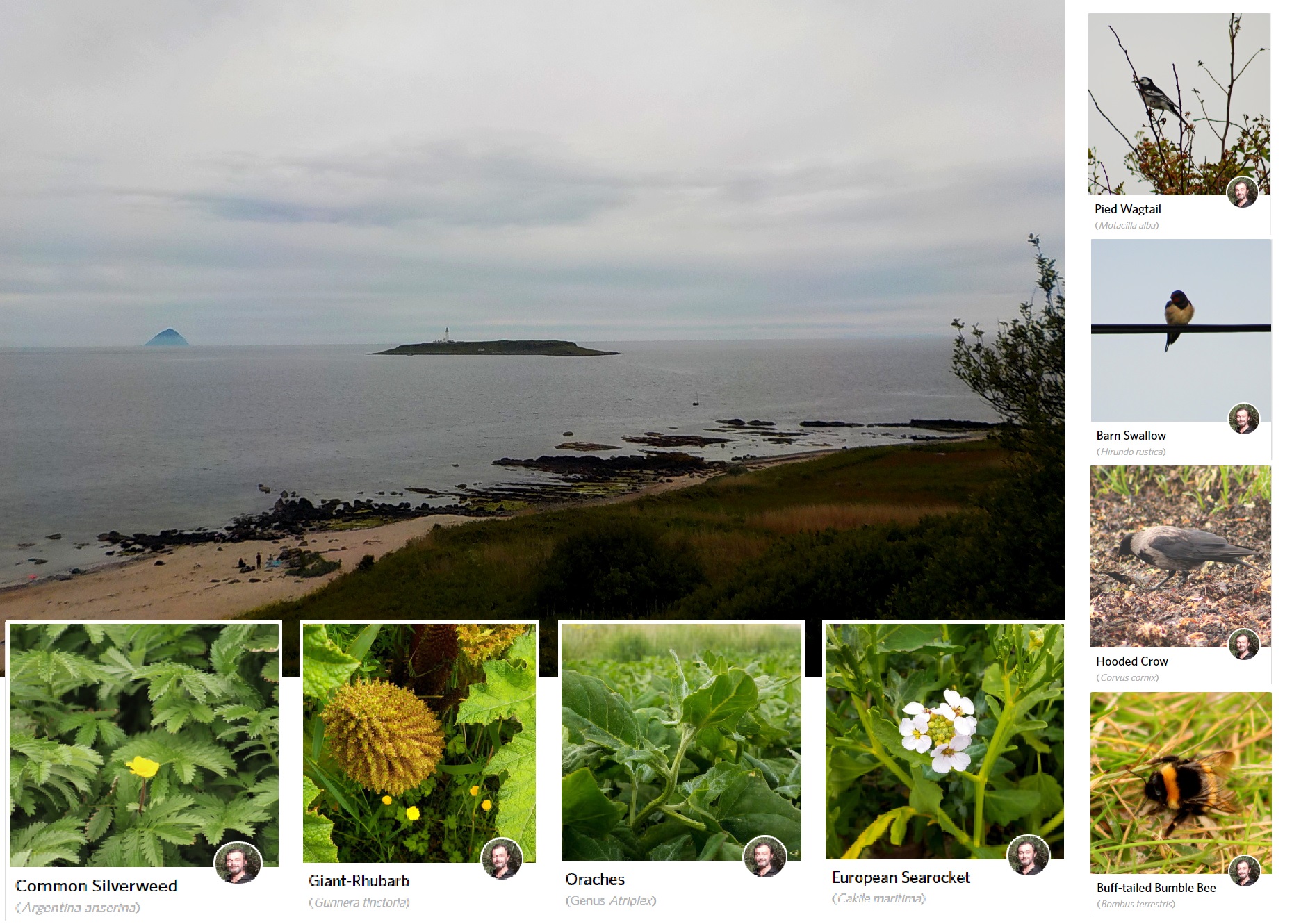
The ferry from Ardrossan on the mainland takes an hour and there are plenty of opportunities for a spot of bird watching from the top deck. As our sister ship steams past, with the islands of Padda and Ailsa Craig in the background, we have a couple of Greats: Black-backed Gull and Cormorant; Guillemots, both Common and Black as well as Common Gulls and Common Eider. And look! There's a Porpoise – he was there, honest.


Here we are at the campsite and what a glorious view. There's a story behind those black rocks out there. Once upon a time, a very long time ago, about 200 million years ago in fact, the supercontinent of Pangea began to break apart. As the continental plate was stretched ever thinner, cracks began to appear, and boiling hot magma erupted, flaming, through the surface. These black rocks are the remains of that monumental event. The continents of North America and Eurasia were born here. That's a pretty awesome way to start a holiday. Maybe someone should put up a blue plaque or something.


The other good thing about this site is that it's on the Arran Coastal Way which encircles the island in a 65 mile (105km) loop. I don't propose that we attempt the whole lot tonight, but we could all do with stretching our legs after the long journey, so let's explore a bit of it. I make no claims to be a coastal botanist, but most of the shoreline seems to be bounded by Common Silverweed and some sort of Orache, interspersed with Giant Rhubarb (with stalks and leaves above head height) and Sea Rocket. There are a fair number of Bumble Bees about, doing the pollinating. Buff-tailed, by the looks of it, and the evening birds include Pied Wagtails, some Hooded Crows prodding about in the seaweed and a few Swallows pretending that it's summer. In truth, it's getting a bit chilly, so let us repair to the local hostelry, conveniently situated next door, and see what's on the menu.


If you're into camping this summer, here are a few things on offer that you may like:

Pair of Padded Chairs


Fire Pit and Gloves

Was £21.99 Now £15.79


Solar Charger

Was £19.99 Now £18.99


Pair of Padded Chairs

Was £79.99 Now £67.99


Until tomorrow,


All the best,


Steve


Arran Special 2 – In Search of Seals https://bit.ly/snb17-1-2

#nature #wildlife #birds #flora #insects #mammals #rockpooling


Follow me on Steve's Nature Plus


and also on


Steve's Nature


Steve Daniels Naturalists


Steve Daniels Cumbria


Wednesday, 30 September 2020

Forever Autumn - Great Clifton


The Autumn Equinox has passed, the nights are drawing in, there’s frost on the grass in the morning, and the gulls are following the plough. Time to don sweaters and boots and enjoy the fruits of autumn. So, a trip out into the countryside today, and a stroll by the river Derwent as we visit the village of Great Clifton. A small village; a church, a shop, a post office and three pubs, at least one of which appears to be still operational. We’re heading for the north east corner of the village, where a footpath leads down to the river.

Right from the beginning, just behind the last houses, we have bushes full of blackberries and this fine stand of Apple Mint. There are a lot of different mints, and a good deal of hybridisation between them, but let me take you over to Greece and tell you the story of the original Mint, or Minthe, as she was then known. Minthe was a nymph, a minor deity in the Greek pantheon, and she was cohabiting with Aidoneus [AKA Hades], who was probably hell to live with. He certainly wasn’t the faithful type, as he proved when he kidnapped Zeus’ daughter, Persephone, and brought her home. Menthe, not being into the Ménage à Trois scene, did what any self-respecting nymph would do, and threw a tantrum. Persephone, already narked at being abducted, promptly trod on her. Being a fully fledged Goddess, it was all she had to do to rid herself of this irritating little nuisance. Minthe disappeared into the ground, and found herself transformed into the plant in front of us. To this day, she struggles to free herself from this enchantment, which is why mint grows so prolifically.


I’m beginning to wish I’d taken a few leaves of mint and rubbed it into my face mask. There’s a small sewage treatment plant down here that’s making it’s presence known. Usually a good place to spot birds, but there are none here today. Plenty of Himalayan Balsam, unfortunately, which we’ve already discussed, but it seems to be attracting some very pale, almost hairless bees. I’ve not seen these before, anyone know what they are? Can’t get a good picture unfortunately.

Thanks to the guys at the Hymenopterists Forum for informing me that it is a wasp, Vespula sp. covered in pollen.


We’ve reached the riverside and not a bird in sight. But wait, over there on those rocks – birds always live on the opposite river bank – it’s a White-throated Dipper. Dippers are fascinating birds to watch, standing on a rock just above the water line, bobbing up and down for reasons best known to ithemselves, and then suddenly plunging into the water. A quick swim around at the bottom of the river, then back up with a mouthful of freshwater shrimp (their favourite), or some other delicate morsel such as a Caddisfly larva. I could watch them for hours if the drizzle hadn’t turned to light rain. Luckily, the next part of the walk takes us up into the trees.


You’d think that it was only in the tropics where you’d get plants with leaves the size of a small occasional table, but we have some here in Britain as well. I’m still not that clued up on British plants yet, but I’m pretty sure that this is Butterbur and not Rhubarb that has escaped from somebody’s garden. It’s a very useful plant, medicinally, but you have to be very careful with it. In amongst its cocktail of potentially lethal chemicals is one called petasin. When extracted from the plant and made safe, it is effective against both migraine and hay fever, but you still have to be very careful. For instance, you shouldn’t take it if you’re pregnant, or if you’re on heart medication, or even if you’re taking other natural supplements such as St. John’s Wort. Definitely not part of a home remedy kit. Oh, and if you’re scratching your head thinking, where have I heard of Butterbur before? Barliman Butterbur was the landlord of The Prancing Pony in Lord of the Rings.


And that leads us back up into the farmlands, where the gulls are still following the plough and the light rain seems to be thinking of turning into something a bit heavier. Shame the pubs aren’t open yet, I could just do with a roaring log fire. Isn’t it time that someone taught those raindrops about social distancing?


Until next week,


Stay safe and be happy,


Steve


Steve's Books


The Quick Guide to Creepy-Crawlies

All you need to know to identify any type of insect, spider, worm or snail very simply and find out more about it.

Yvonne: This was a gift for a family so that the children can understand what they see on days out. The second was for me. Logical and easy to use. If you know anyone who likes nature you can be confident that gifting this book will give years of pleasure.


The Eggs of Saramova

A science fiction novella for those who don't like science fiction. A fast-paced thriller that is, literally, out of this world (and it starts right here in Crete).

Too new for reviews yet!


Not Just For Twisted Women by Steve Daniels 

A light-hearted look at life through the eyes of the fairer sex.

Janet: If you are short on time but enjoy reading and are maybe not into long extended novels then Not Just For... Twisted Women provides readers with concise stories that stand alone and most certainly entertain with their ultimate twists. Loved it.

Helen: A very good read! Well written and entertaining!

Margaret: Each quick tale gives a glimpse into a character's life and has an often humorous twist at the end. I would love to read more.

Yvonne: These days many people find it hard to find the time to read a novel, so this book of short stories is ideal to dip into. It is also makes a good gift.


See sample pages of all my books and latest blogs, and keep abreast of latest publications here:

http://author.to/SteveDaniels


*********************************************************************

LINKS:

Share your nature thoughts, photos and comments on Naturalists (the facebook page that accompanies this blog)


Explore east Crete with the #CreteNature interactive Hiking and Nature Map


Crete

Cumbria

Cretan Flora


Crete Birding


Greek Butterflies and Moths

Cumbria Wildlife Trust

Cumbria Bodiversity Data Centre

Carlisle Natural History Society


Wednesday, 16 April 2014

In Search of a Roman Repast


Beetles, Bugs, Birds and Bees on Kakkos Head

A Seed Bug flies in through one window of the car, settles briefly on the dashboard, and flies out of the opposite window. Seconds later a Flower Chafer Beetle alights on the door beside my elbow. A Blackbird streaks across the bonnet with a strand of Tamarisk trailing from his beak. I think we’re going to have an interesting walk this morning – I haven’t even got my boots on yet! This is Kakkos Headland which juts out into the sea between Ferma and Koutsounari and at the end of it is something rather special I want to show you. But let’s not rush things, take a look around as we push our way through this little line of recently planted Oleanders. Down on the beach a Yellow-legged Gull is calling to us and at our feet the Violet Carpenter Bees are busy pollinating the Sea Figs. It’s a beautiful warm and windless day so we’ll sally forth and see what we can find.


Purple Salsify
We are, in fact, in search of a Roman Repast for reasons which will become clear later. When you think of Cretan history the Minoans automatically spring to mind and true, they were the dominant civilisation here between two and four thousand years ago. But after them the Romans held sway for a while and they had a rather cunning method of fishing so I thought we’d have some fish for lunch today in celebration of our Roman forebears. But first we need something to go with our fish and here, nestling between the lower branches of this Lentisc bush, are just the thing. These seed heads, the size of tennis balls, belong to Purple Salsify. This is also known as the Oyster Plant as its roots supposedly taste of oysters which seems appropriate for a fish dish and the flowering shoots can be used in place of Asparagus.


Common Blue butterflies dance around the flowers
We’re coming down towards the centre of the headland now and notice how, not only are the plants thinning out but they’re also clumping together for protection against the fierce winds that ravage the head in winter. In this low growing clump of Lentisc we have the purple tufts of Cretan Ebony, little yellow heads of Phagnalon which almost look like dried flowers when in full bloom, a clump of yellow Immortelle and the whole ensemble topped off with Thorny Broom. As if that weren’t enough we have a corps de ballet of Common Blue butterflies dancing in attendance. Nothing edible unfortunately but what a splendid table decoration it would make – maybe we’ll have our lunch right here.


A World in Miniature
But first we must collect it so let’s go on towards the end. At this end of the head, which gets the worst of the winds, the whole world goes miniature with tiny plants wedged into protective crevices. They have tiny insects to pollinate them such as that bee fly in the top right inset picture. Despite appearances it is not a bee but a fly using visual cripsis to confuse would be predators and entomologists. (There’s no room to go into detail here so I’ll say more about the inset pictures in the Naturalists Group on facebook which anyone is welcome to visit or join.) What we’re after today is those succulent leaves in the main picture. This is Rock Samphire and we can boil those up to go with our fish. 


Sea Salt
Nearly there now and our final ingredient before the fish. These white crystalline deposits that you see in the dips and hollows is sea salt. Salt, as we all know from schooldays, is composed of sodium and chlorine (NaCl Sodium Chloride). Sea salt may also contain small amounts of other elements such as Magnesium, Calcium and Sulphur as well as traces of algal products which give it its ‘sea’ flavour. The inset picture shows two grains of salt under a microscope. The one on the left is ordinary supermarket table salt and the one on the right is a grain of sea salt sampled from the main picture.


Roman Fish Trap
And finally, right at the tip of the headland, the thing I’ve brought you down here to see. A hole in the ground. OK, it’s not just any hole in the ground, it’s a carefully excavated Roman fish trap. This left hand edge here, which is open to the sea at the bottom, would have had a wooden gate attached which could be raised to allow the fish in on the incoming tide. Then, when the tide turned the gate would be lowered trapping the fish inside the tank. The steps at the back are steep and narrow so I’ll nip down first and get lunch then you can go down whilst I start cooking.


Sea Urchin and tests
Unsurprisingly, as the gate disappeared centuries ago and it is now low tide, there wasn’t so much as an anchovy to be seen. However all is not lost as I did find some sea urchins down there, the roe of which will go a treat with our boiled Rock Samphire and Salsify. You sometimes find the skeletons of these animals (their ‘shells’ are called tests) washed up on the beach so I’ve inserted a couple of pictures in case you’ve come across them and wondered what they were.There are two types of sea urchin common in this area: red sea urchins cover themselves in debris but black sea urchins do not.


The one thing I can’t put into words is the sound down there. If you can imagine sitting in the sound box of a musical instrument whilst waves crash over you then you’re not even close. The best thing is to listen for yourselves:


Ah! There you are, grab a plate. Impressive wasn’t it? I might use it is a screen saver. I thought we might go out to Bramiana again next week and see how it’s looking in Spring. What do you think?
***********************************************************************************
With special thanks this week to Petr Bogusch et al at the Hymenopterists Forum for putting me straight about bee flies.

LINKS:
 

Recent Posts